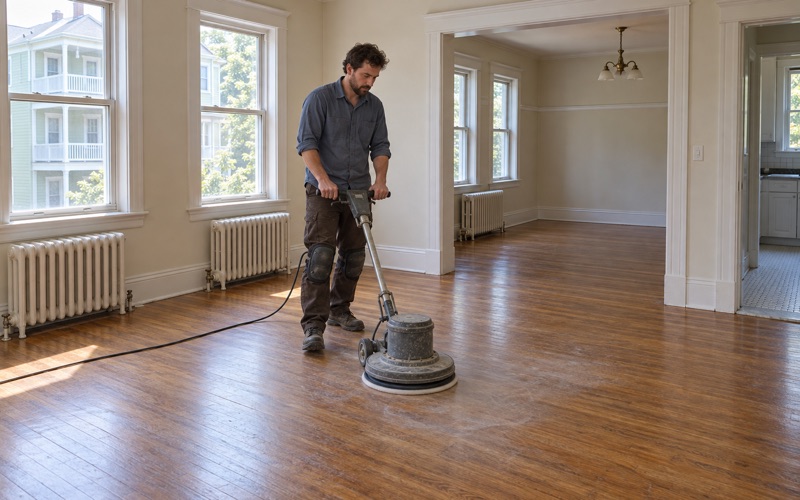
Medford Wood Flooring has spent more than 20 years on wood flooring in Winthrop Town and the rest of the area, and a growing share of our calls here come from a particular kind of household: owners who live in the house and rent a room or a unit of it to short-stay guests. Those floors carry two jobs at once. They are the family’s floors, and they are the first thing a guest photographs, walks on in wet sandals and reviews.
That double duty changes how we plan the work. A refinish in a guest room has to fit between reservations, the finish has to be cured before the next check-in, and the rest of the house has to stay livable while it happens. We sand, repair, recoat and replace hardwood with that calendar in front of us rather than treating the guest space like any other bedroom.
Below is how the town’s rental rules shape that calendar, what we see in the two-family houses where so many hosts live, and how a project usually runs from the first visit to the first booking after it.
What Winthrop’s Short-Term Rental Ordinance Means for a Floor Project
Only owner-occupied homes can host
The Town Council adopted Winthrop’s Short Term Rental Ordinance on July 1, 2025. It defines a short-term rental as a residential dwelling, or any bedroom within a dwelling, of an owner-occupied home, rented for no more than 31 consecutive days. The host has to operate it in their primary residence, and an LLC or corporation cannot hold the permit.
For our purposes, that means nearly every Winthrop rental floor we touch belongs to someone who also sleeps in the building. Accessory dwelling units, income-restricted units and any unit on a parcel that is not owner-occupied are ineligible, so the guest space is almost always a spare bedroom or one apartment of a house the owner lives in. We schedule around a household, not an absentee landlord.
The whole building gets looked at
When an owner applies, the Board of Licensing asks the Health, Inspectional Services and Fire Departments to inspect for suitability and habitability, and that inspection covers the entire building premises, not just the guest room. Licenses expire June 30, and renewal requires another satisfactory inspection by the same three departments.
The ordinance does not name floors among its inspection items, and we will not tell a host that a refinish is needed to keep a license. What we do hear is that owners like to have floor work finished, cleaned up and out of the house before inspectors walk through every room. Sanding dust, stacked furniture and a hallway full of equipment are not how anyone wants a building seen.
A capped number of registrations
Registrations are capped at 1.5 percent of properties town-wide, and each owner gets one registration per dwelling. In a multiunit building, no more than two-thirds of the units may be licensed. Fines run $150 for a first offense and $300 after that, per day.
A scarce license is worth protecting, and hosts tend to treat the guest floor accordingly. We get asked for maintenance recoats on a schedule instead of emergency repairs after a bad review, which is the cheaper way to keep a floor looking right.
Looking for wood-flooring closer to Jamaica Plain? See Wood-Flooring in Jamaica Plain.
Refinishing Around the July 1 Renewal in Winthrop
Picking the window
Because every license renews on July 1 and the renewal needs a satisfactory inspection, late spring is when many Winthrop hosts want floor work done and gone. We book guest-room refinishing into a gap in the reservations, and we suggest leaving a margin before the renewal so the house is back in order before the town’s inspection is scheduled.
The length of the gap decides the scope. A screen and recoat on a floor with sound finish can be sanded, coated and ready for light use quickly, while a full sand through a grit sequence, stain and three coats needs more days and more cure time before furniture and luggage come back.
Screen and recoat or full sand
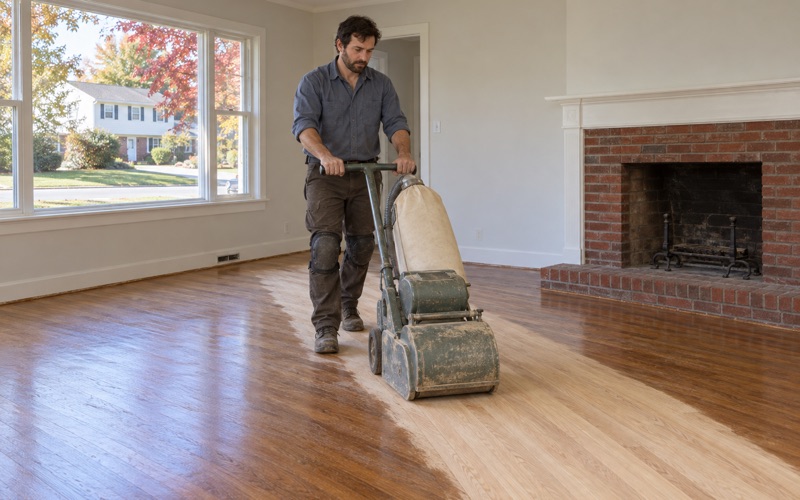
Most guest floors wear in a predictable way: traffic lanes from the door to the bed and the bathroom, scuffs where suitcases get dragged, and gray patches at the threshold. If the finish is worn but the wood is not, we abrade it with an orbital sander and lay a fresh coat. That keeps the floor looking cared for without taking the room offline for long.
When finish is worn through to bare wood, water stains have turned black, or pet urine stains have soaked into the boards, a recoat will not fix it. That floor needs dustless sanding with a drum sander and HEPA vacuum, and sometimes board replacement, which is a job to plan for the longer gap in the season.
Finishes that cure on a schedule
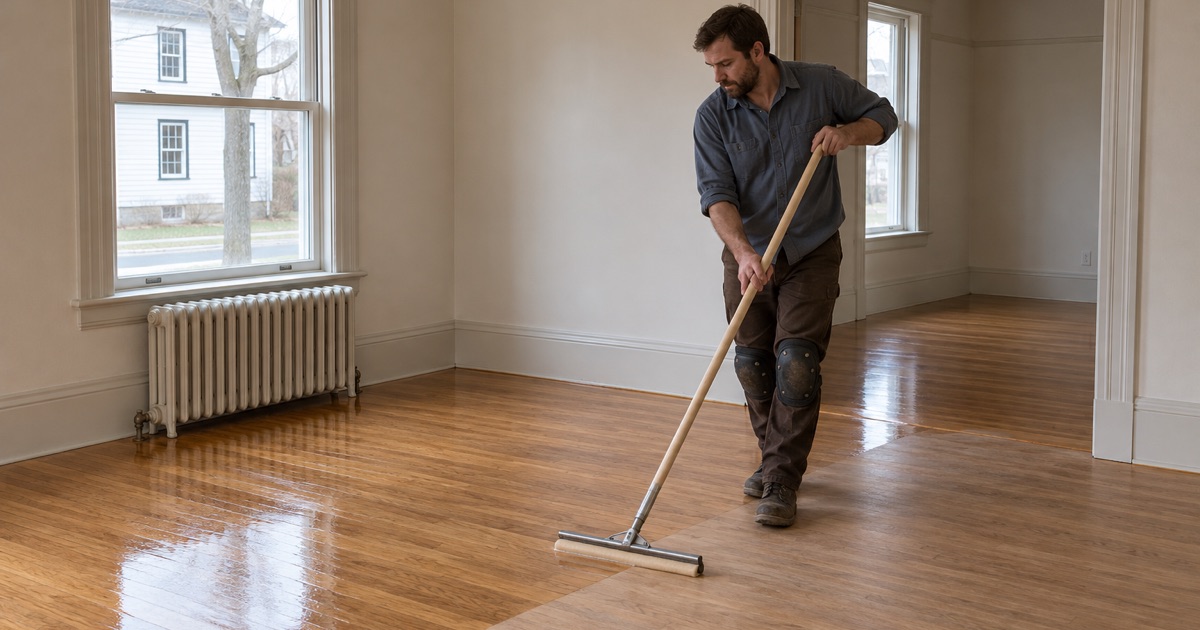
We choose finishes to meet Massachusetts VOC limits for wood coatings under 310 CMR 7.25, which are stricter than the federal ones. For guest rooms, a waterborne polyurethane is usually the practical answer: low odor, fast recoat times and a clear color that keeps light oak from yellowing. Oil-modified polyurethane gives a warmer tone but needs a longer runway before anyone sleeps in the room.
We also talk about sheen level. A satin or matte finish hides the fine scratches that rolling luggage leaves far better than gloss, and it photographs without glare, which hosts notice in their listing pictures.
Guest Units in Owner-Occupied Two-Families
Where hosts live
The census counts 1,056 Winthrop owner households living in two-unit buildings. A two-family where the owner lives on one floor and hosts guests on the other is a natural fit for the ordinance, and the two-thirds limit on licensed units still leaves the owner’s own apartment as the primary residence.
We work those houses one floor at a time. The owner’s unit stays usable while we sand the guest apartment, or the reverse, and we seal off stairways and doors with plastic so dust and finish odor do not travel. Nobody has to move out for a floor job.
Old houses under the finish
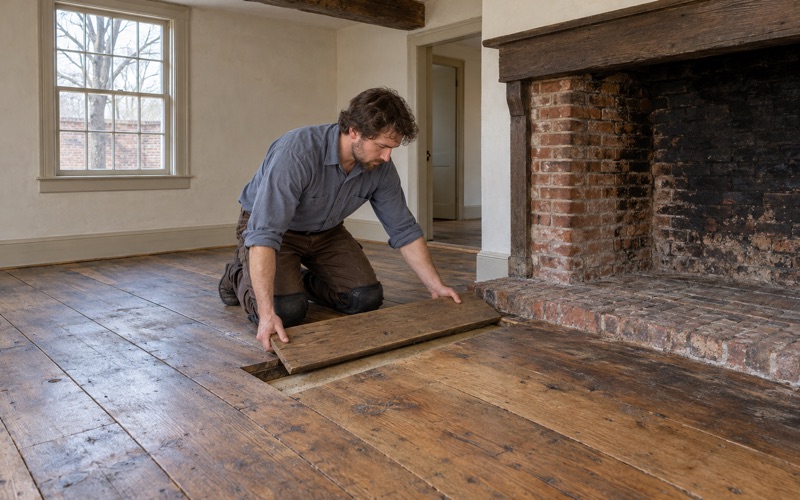
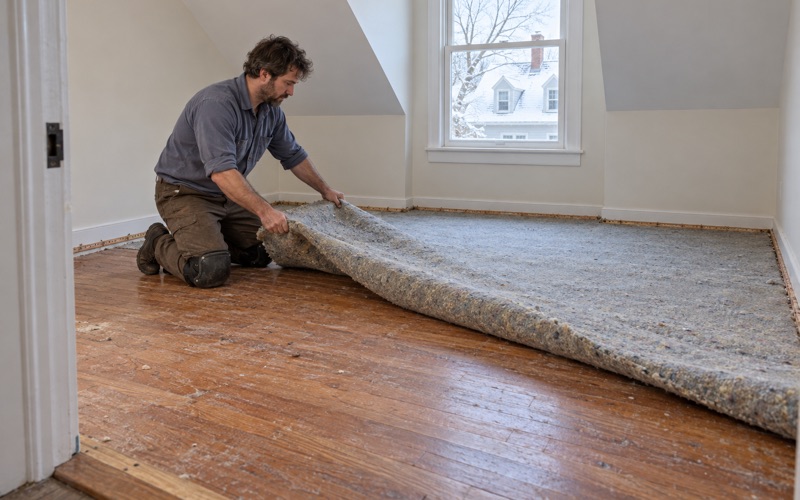
Winthrop’s housing is old: 55.1 percent of homes were built before 1940. Under the carpet pad and tack strip in a guest room, we often find red oak strip flooring, some maple, or a softer eastern white pine in back rooms and upper floors, with face-nailed cut nails in the oldest sections. Board thickness gets checked before any sanding, because an old floor that has been sanded several times may only have one pass left.
We also check the build year and look for painted surfaces before a sander starts. Massachusetts runs its own lead-safe renovation rules for homes built before 1978, and a house that also houses a family and paying guests is the last place for careless dust.
Patching what renovations left behind
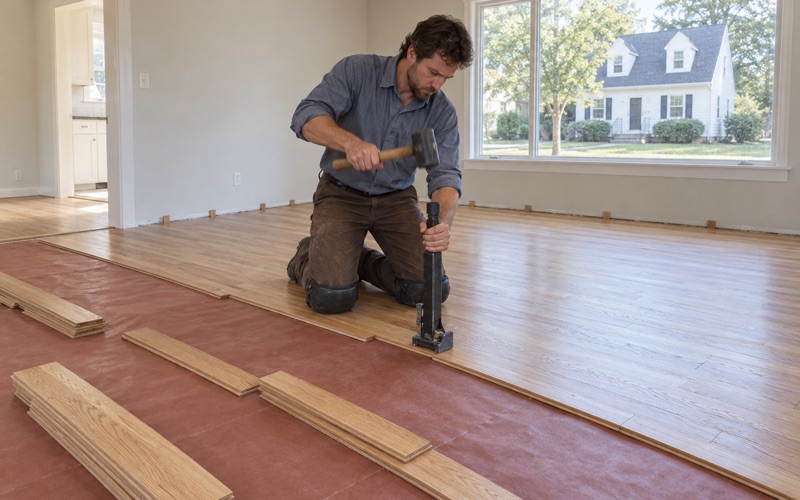
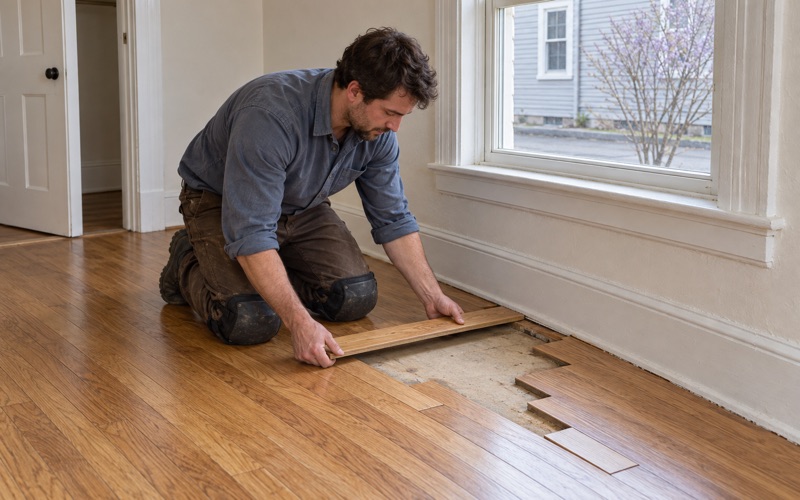
Two-families converted over the decades often carry scars: holes where radiators and pipes came out, a wall moved, or a kitchen floor laid over linoleum and black mastic. We patch radiator removal holes with matching boards woven into the floor rather than a filler plug that shows. A weave-in repair ties new tongue and groove boards into the old pattern so the room reads as one floor.
Old wax residue and cleaning-product buildup are common in rooms that get turned over often, since quick cleaners leave film behind. We test for it and remove it before new finish goes down, so the coat bonds instead of peeling a few months into the season.
Planning a Floor Project in Winthrop
From Winthrop Beach to Point Shirley
The town sits on a peninsula joined to Revere by a narrow isthmus, and our work here runs from Winthrop Center out to Winthrop Beach, Cottage Park and Point Shirley. Parking and staging matter on tight streets, so we plan where the sander and finish buckets will sit before the day starts, especially when guests may still be checking out.
Salt air and summer humidity move wood. Boards that open into winter gaps in January can tighten or show slight cupping in August, and we read the floor with a moisture meter before calling any of that a defect. Seasonal movement is normal; buckling or crowning after a leak is not.
Stain, color and matching
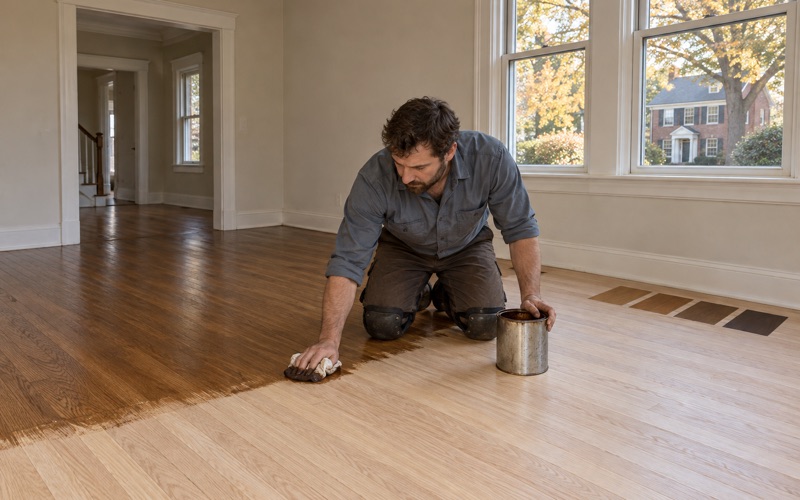
Many hosts want the guest room to match the photos already on their listing, or to finally lose an orange oak tone. We lay stain samples on the actual floor, in the actual light of that room, before a color is chosen. Water popping before stain gives a deeper, more even color on red oak.
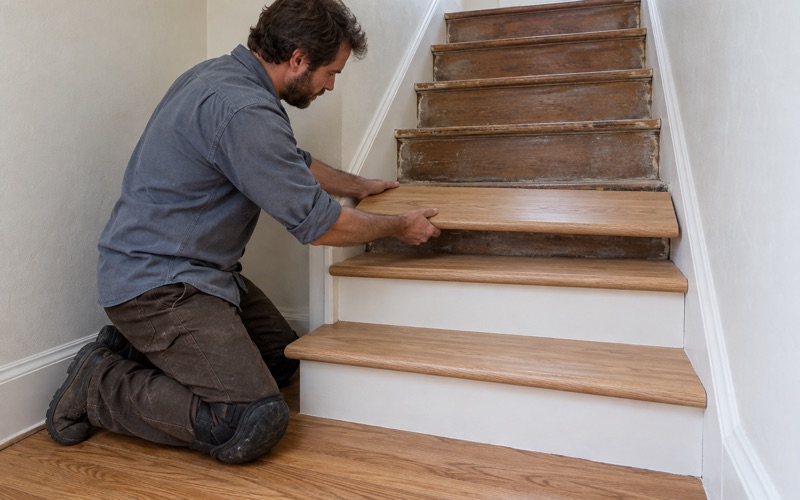
If a board replacement is needed, we match species and width, and we sand the whole room so new and old take stain together. Stairs up to a guest unit are quoted by the tread and riser, not folded into a square-foot price, and worn stair nosing gets the same attention as the landing.
When water gets involved
Guest bathrooms, overflowing appliances and a wet basement are the usual sources of water damage in a rental room. We trace the source, dry the area and read it with a moisture meter before replacing a single board, because a floor installed over wet subfloor will fail again. For an insurance claim, we document the damaged floors room by room for the adjuster.
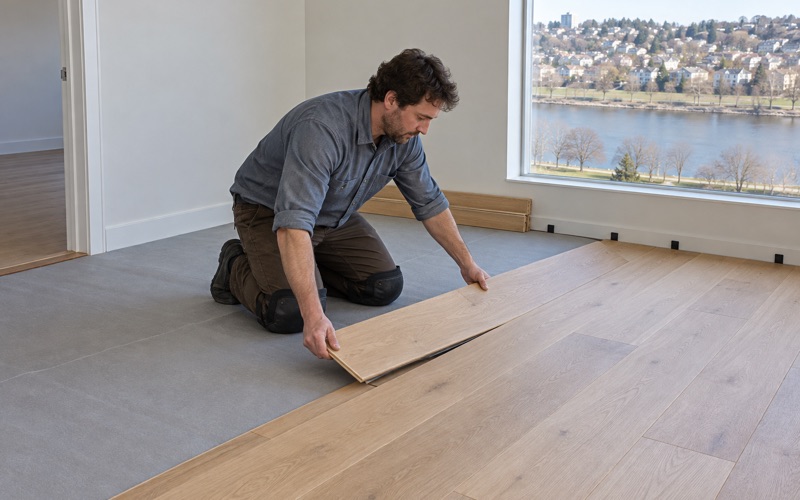
Basement and lower-level guest spaces are matched to the moisture that is actually present, which usually means engineered flooring with a proper vapor retarder rather than solid hardwood below grade. Getting that call right up front keeps a guest space rentable instead of lifting boards every spring.
- 20+ Years in Wood Flooring
- Stairs Priced by the Tread
- Moisture Readings Before Repairs