
Medford Wood Flooring offers a screen and recoat for hardwood floors in Medford, MA, serving surrounding cities including Somerville, Malden, Winchester, Arlington and Everett. It is the lightest service we provide and one of the most useful: a floor whose finish has gone dull and scuffed, but not worn through, can look renewed in a day without the dust, time and wood loss of a full sanding.
The process is simple. We clean the floor, lightly abrade the existing finish with a fine screen or pad so a new coat can grip it, and apply a fresh coat of polyurethane. Nothing is sanded down to the wood, so the floor keeps all of its thickness for future refinishing.
It only works on the right floor, though. In more than 20 years we have seen more recoats fail from wax and cleaning-product residue than from anything else, which is why every recoat we quote starts with a test for what is already on the surface.
When a Screen and Recoat Is the Right Call
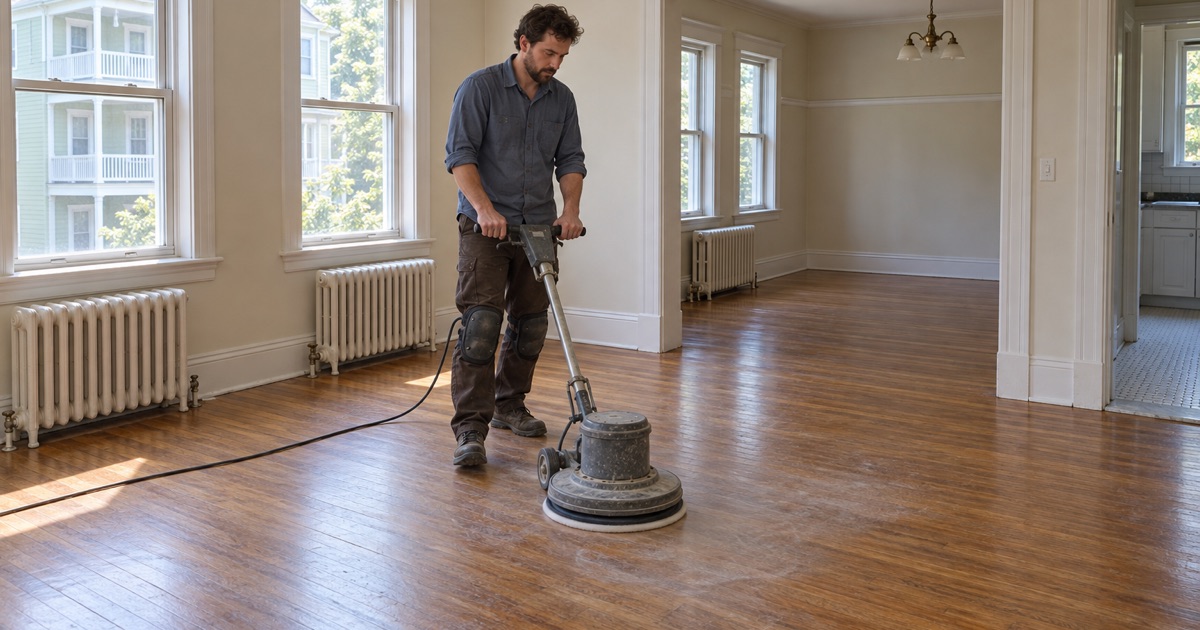
Dull but Intact Finish
The best candidate is a floor where the finish has lost its sheen and picked up fine scratches, especially in traffic areas, but still covers the wood everywhere. The wood itself is not gray, stained or exposed.
On a floor like that, a new coat restores the look and adds a fresh layer of protection. The difference is often dramatic for how little work it takes, and the house is out of use for far less time than with a sanding.
Fine Scratches and Scuffs
Pets, chairs and grit tracked in from outside leave a haze of fine scratches in the top layer of finish. A recoat fills and levels many of them and makes the rest far less visible.
Deeper scratches that go through the finish into the wood will still show, since the recoat does not sand into the wood. We point those out before quoting so the result you expect is the one you get.
Keeping a Newer Floor in Good Shape
A floor that was refinished or installed a few years ago, and has been cared for, is an ideal candidate. A recoat at the right time protects the wood before the finish wears through, which is what forces a full sanding later.
Done this way, periodic recoating keeps a floor looking good for many years. It also saves the wood for the sandings it will eventually need.
Rental Turnovers and Quick Refreshes
Between tenants, or before a house is listed, there is often only a short window to make the floors look their best. A recoat fits that window when the finish is still sound, because it takes a fraction of the time of a sanding and the rooms are usable again quickly.
We look at the floor before move-out where we can, so we know whether it will need a recoat or a full sanding before the lease dates are set. Pet damage and deep scratches found at that visit are easier to plan around than to discover on the day.
When a Recoat Will Not Work
Wax and Cleaning-Product Residue
Paste wax, oil soaps and some floor polishes and cleaners leave a film that polyurethane cannot bond to. A new coat over that residue can look fine for a few days and then peel off in sheets.
We test the surface before quoting any recoat. If wax or incompatible residue is present, the floor needs a full sanding to bare wood instead, and we tell you that plainly rather than recoating and hoping.
Finish Worn Through to Bare Wood
Where the finish has worn away in a traffic lane or at a doorway, the bare wood has usually turned gray and absorbed dirt. A recoat seals over that color rather than removing it, so the worn path still shows.
Water stains, pet stains and deep discoloration are the same: they are in the wood, and only sanding or board replacement reaches them. At that point a full refinish is the right service.
Some Prefinished Factory Finishes
Many prefinished floors carry very hard factory coatings that a new coat does not grip easily. Some manufacturers specify a recoat process with a special adhesion step, and some floors are not suited to recoating at all.
We identify the product where we can and test adhesion in an inconspicuous spot before quoting. That avoids a recoat that looks fine at first and scratches off within weeks.
How We Screen and Recoat a Floor
Cleaning and Testing
The floor is cleaned thoroughly to remove dirt and grime that would otherwise be ground into the finish. We then test for wax and residue and confirm the finish is sound everywhere we plan to coat.
Furniture is moved out of the rooms first. We then check the edges and corners, where old wax often builds up even on floors that seem clean in the middle.
Screening the Finish
A buffer fitted with a fine abrasive screen or pad dulls the existing finish evenly so the new coat can bond, with the edges and corners done by hand. This removes only a thin layer of finish and never reaches the wood.
The dust is fine and collected with a HEPA vacuum, followed by a tack cloth. Any dust left behind would be sealed into the new coat, so this step is never rushed.
Applying the New Coat
A fresh coat of finish is applied evenly across the floor, usually a waterborne polyurethane that dries quickly with little odor. The sheen level can be matched to what you have or changed to something new.
Every finish we use is chosen to meet the Massachusetts VOC limits for wood coatings under 310 CMR 7.25, and we tell you when the floor can take foot traffic, furniture and rugs again.
Afterward, a dry microfiber mop and a cleaner made for polyurethane-finished floors are all the floor needs. Oil soaps, wax, vinegar mixtures and steam mops are best avoided, since their residue is what stops the next recoat from bonding.
- 20+ Years in Wood Flooring
- Stairs Priced by the Tread
- Moisture Readings Before Repairs