Medford Wood Flooring handles wood flooring in Winchester for two kinds of owners at once: the ones moving into a house that was framed last year, and the ones deciding whether the oak under their feet can carry another few decades. We have spent more than 20 years on both sides of that question, installing new hardwood and bringing tired floors back.
Those two jobs call for different habits. A new floor starts with the subfloor, the moisture in the framing and the order the trades finish in. An old floor starts with what is left of it: how much wood sits above the tongue, what finish went down before, and what the last owner patched or covered over.
We price and plan each floor on its own terms. Some rooms need a full sand and site-finished coat, some need only a screen and recoat, and some need boards woven in where a wall or radiator used to stand. The sections below walk through how that plays out in this town.
What Winchester’s Building Permits Mean for Its Floors
Sixteen of Twenty-Four
Winchester is replacing a good share of its houses one lot at a time. Town data reported alongside the Housing Production Plan, which the Select Board and Planning Board approved at a joint meeting on December 16, 2024, show that 16 of the 24 single-family homes permitted in 2023 were replacement units, or 66 percent. Nine more properties were demolished that same year.
The longer view in that reporting is 193 single-family and 269 multifamily units permitted from 2017 through 2023. The draft plan put the tradeoff plainly: teardowns reduce the supply of older, smaller and more moderately priced houses. For a flooring contractor, that means a steady run of brand-new floors going in next door to floors that have been walked on since before the war.
Installing in a House That Did Not Exist Last Year
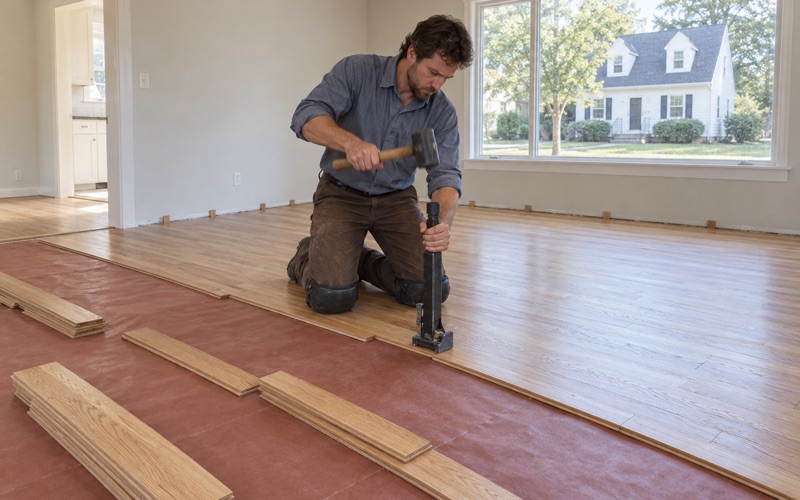
A new house is wet in ways a finished one is not. Framing, drywall compound and fresh concrete all give up moisture for months, so we read the subfloor and the delivered boards with a moisture meter before anything is nailed, and we let the wood go through acclimation in the conditioned space rather than in a cold garage. Installing too early is how a new floor ends up with cupping in its first heating season.
We follow the NWFA Installation Guidelines on fastening, leave a proper expansion gap at every wall, and put down the vapor retarder or underlayment the subfloor calls for. Flooring cleats or flooring staples go in on the schedule the manufacturer specifies, and we time our arrival so painters and trim carpenters are not working over a freshly coated floor.
Picking Species and Finish Without a Template
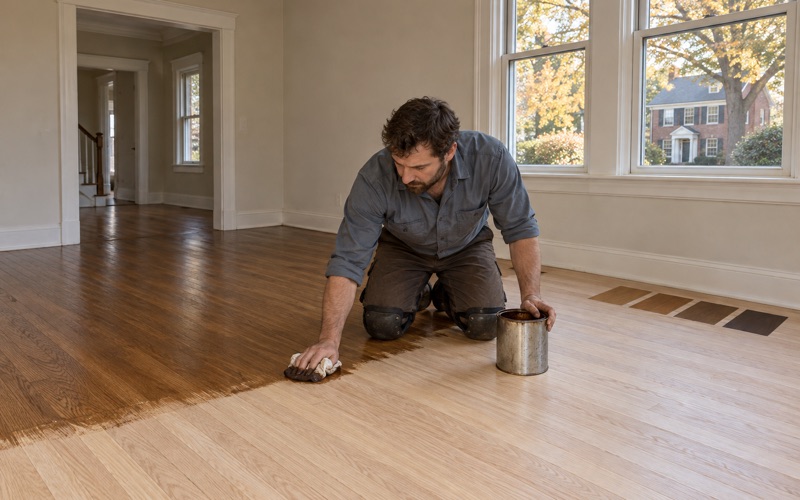
We do not assume what a replacement house should get. Some owners want site-finished white oak so they can choose the color on the floor; others want a prefinished product so the rooms are usable sooner. Red oak strip flooring, maple and hickory each wear differently, and Janka hardness is one useful number when dogs and kitchen chairs are part of daily life.
The finish is the other half of the choice. Waterborne polyurethane stays clearer and cures faster, oil-modified polyurethane ambers the wood, and hardwax oil can be spot-repaired later. Whatever goes on is chosen to fit the Massachusetts VOC limits for wood coatings under 310 CMR 7.25, which run tighter than the federal rules.
Looking for wood-flooring closer to Arlington? See Wood-Flooring in Arlington.
Keep and Refinish, or Start Over?
What the Old Floor Has Left
Most of the houses that stay are not young. Of Winchester’s 8,521 housing units, 3,359 were built in 1939 or earlier, and another 1,160 went up in the 1950s and 1,013 in the 1960s. Only 8.1 percent date from 2000 or later. That is a lot of solid hardwood, much of it tongue and groove oak held down with cut nails or early cleats.
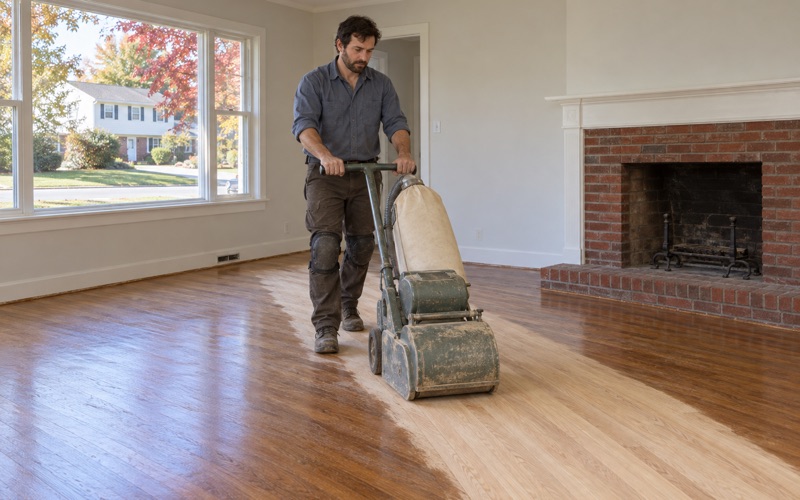
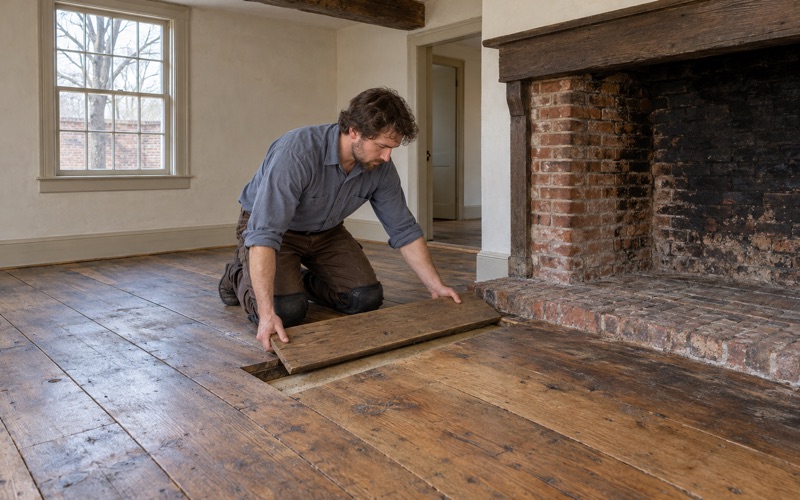
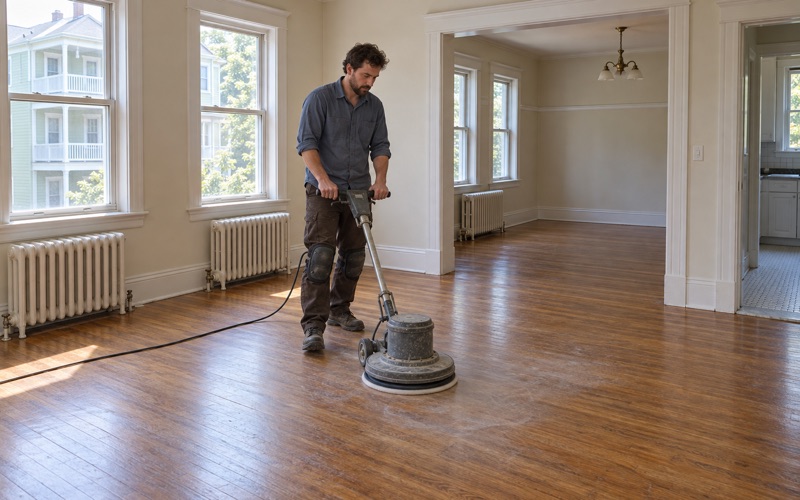
Before we recommend sanding, we pull a register or a threshold and check the board thickness above the tongue. A floor with enough wood left gets a full sand with a drum sander and an orbital sander through a planned grit sequence; one that has been sanded too many times may be better served by a screen and recoat, or by selective board replacement where traffic lanes have worn through.
Old Finishes, Lead and the Build Year
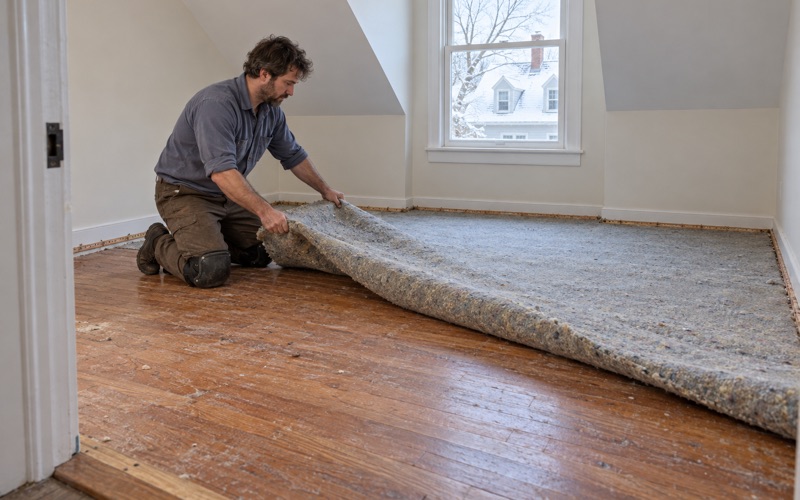
An older floor often carries layers nobody wrote down: shellac finish, decades of paste wax, or cleaning-product film. Wax residue keeps a new coat from bonding, so we test for it and strip it before the first coat goes on. If the answer is carpet pad, tack strip or old linoleum over the oak, we lift it and look for black mastic before deciding how to clean the surface.
The build year matters for another reason. Massachusetts runs its own lead-safe renovation rules for homes built before 1978, so we check the date and any painted trim, stair risers or floor borders before sanding. Dust control with a HEPA vacuum and a dustless sanding setup is part of how we work in those rooms.
Patches Where Radiators and Pipes Stood
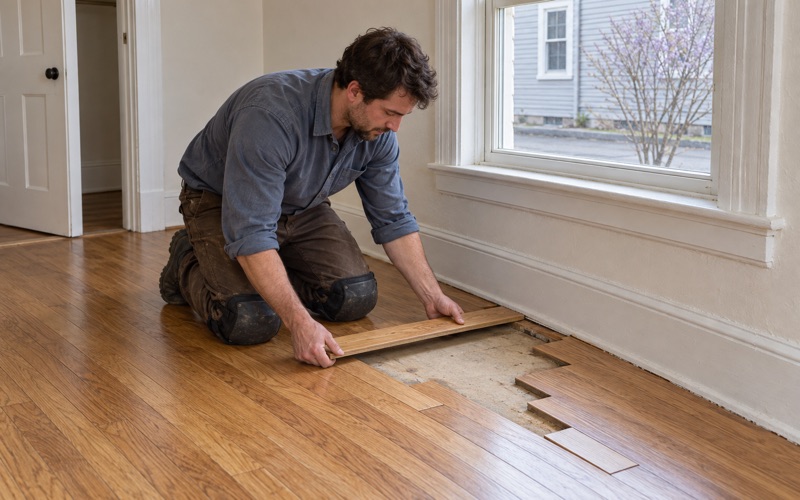
When a radiator or a riser pipe comes out, it leaves a hole and a ring of different-colored wood. We do not fill those. We cut out the damaged ends and weave in matching boards so the patch runs with the grain and disappears once the floor is sanded and coated.
The same weave-in repair handles pet urine stains and water stains that have gone black into the wood. Surface marks usually sand out, but a stain that reaches deep into the board is replaced rather than bleached and hoped over.
Matching New Rooms to Old Floors in a Winchester Addition
Weaving New Boards Into an Old Field
Not every owner tears down. Plenty of Winchester families keep the house and open it up, adding a kitchen, a family room or a second-floor suite. The hard part is the line where the new floor meets the old one, and we treat that seam as its own job.
We match the width, species and cut of the existing boards, then feather new boards into the old field in a staggered pattern instead of stopping at a straight line. Once the whole area is sanded together and finished in one pass, the addition reads as part of the original house.
Stain Samples in the Actual Light
Old red oak has had decades to turn amber, and new red oak has not. A color chosen from a showroom card almost never matches, so we lay stain samples on the real floor in both the old and new sections. A house facing Wedge Pond or the Mystic Lakes shore can get very different light than one tucked into a street near Winchester Center.
We leave the samples down long enough to see them morning and afternoon. Water popping the grain before staining can help new boards take color closer to the old ones, and the sheen level is chosen with the owner, since a satin and a semi-gloss read very differently across one open room.
Stairs, Thresholds and Transitions
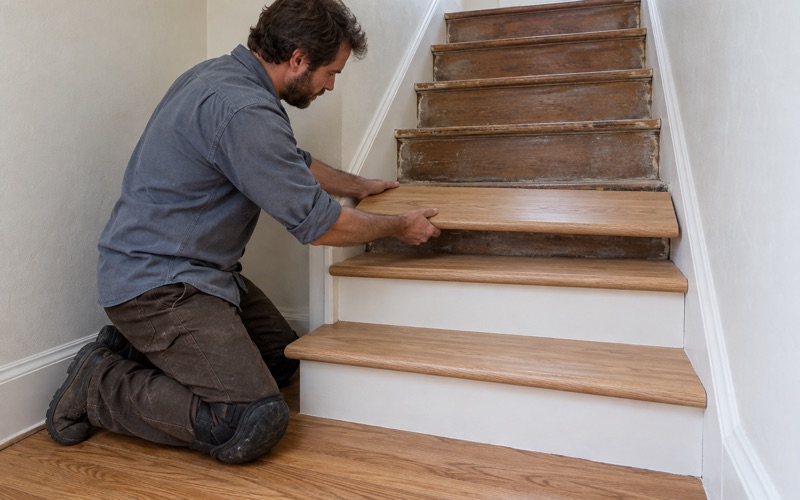
Additions usually bring new stairs. We quote stair treads and stair risers individually rather than folding them into a square-foot price, because each one is cut, fit and finished by hand. Stair nosing is matched to the tread so the front edge wears evenly.
Where hardwood meets tile or stone, we fit a reducer or threshold and finish it with quarter round where the base needs it. Small pieces like these are where a new room most often looks added on.
Planning a Floor Project in Winchester
Living in the House While We Work
Winchester is a town of owners. Census figures count 6,811 of 8,340 occupied homes as owner-occupied, or 81.7 percent, and 5,441 owner households live in detached houses. Most people we work for here are living in the house while the floors get done, so we sequence rooms to keep a kitchen or a bedroom usable.
The town also has 527 two-unit buildings. In an owner-occupied two-family, we work one floor at a time, so the household upstairs or downstairs can stay put while the other level is sanded, coated and cured.
Seasons in Southeast Middlesex
Winchester falls in the National Weather Service’s Southeast Middlesex forecast zone, and its floors move with the New England seasons. Winter heat dries boards and opens winter gaps; humid summers swell them back, and a floor that took on water can show crowning or buckling. Normal seasonal board gapping is not a defect, and we explain which gaps close on their own before anyone replaces a board.
If water from a burst pipe or an overflowing appliance is the problem, we trace it, dry the area and read it with a moisture meter before any board is replaced. We document the damage room by room for the adjuster, and for lower levels we match the product to the moisture that is actually there, which usually means engineered wood with a solid engineered wear layer rather than solid hardwood below grade.
What to Have Ready Before We Visit
It helps to know the year the house was built, whether the floors have been refinished before, and whether any boards were ever painted. If you are building new, tell us where the framing, drywall and trim schedule stands so we can plan around it.
We will walk the rooms, check thickness and moisture, look for signs of powderpost beetle, old house borer or carpenter ants in any damaged boards, and lay out stain samples if color is on the table. From there you get a written plan that keeps the good floors and replaces only what has to go.
- 20+ Years in Wood Flooring
- Stairs Priced by the Tread
- Moisture Readings Before Repairs