Medford Wood Flooring has spent more than 20 years on wood flooring in Watertown, and most of the jobs we see here start with one question: is the original floor worth keeping? In an older house the answer is usually yes. Boards from that era were often milled from dense stock, laid tight over board subfloors, and many still have more than one sanding left in them.
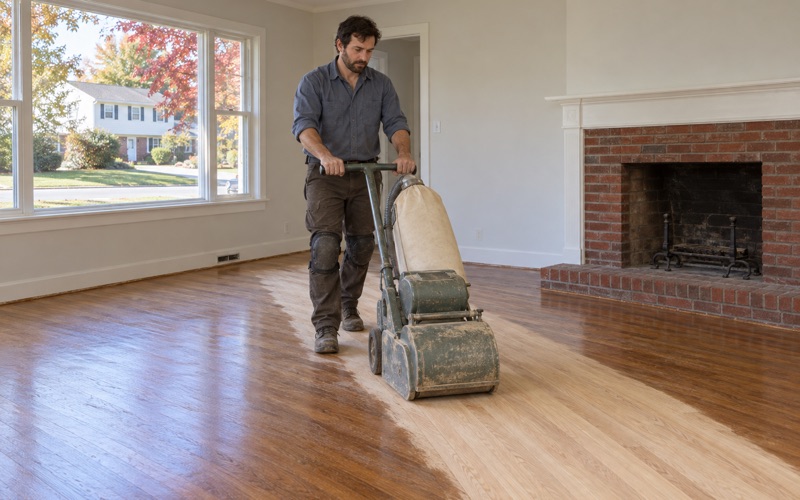
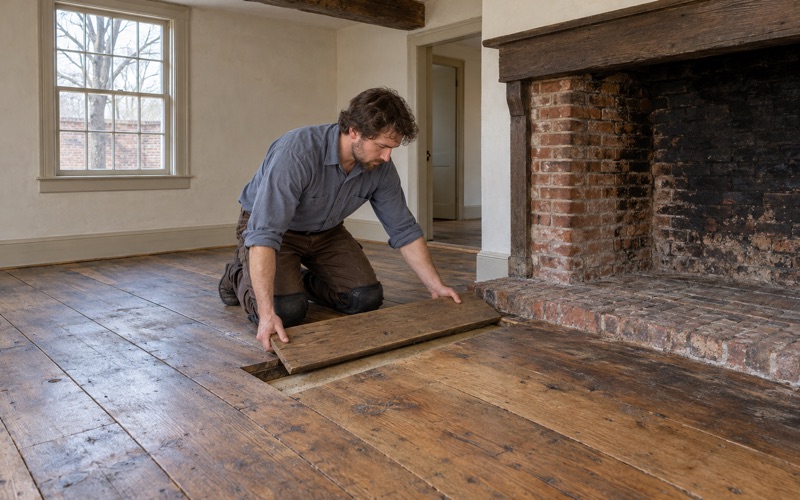
Our work begins by measuring what is actually there. We lift a register grate or pull a threshold to check how much wood sits above the tongue, look for signs of earlier sandings, and find out what finish is on top, whether that is old shellac, a waxed surface or a later polyurethane. Those three readings decide whether a full sand and refinish makes sense or whether a screen and recoat will carry the floor for several more years.
When rooms have changed over the decades, the job shifts from refinishing to matching. A kitchen that lost its boards under linoleum, or a rear wing that was rebuilt, needs wood that sits beside the old floor without reading as a patch. Keeping what is original and matching what is not is the work this page is about.
How Watertown’s East End Grew Around Oakley, 1890 to 1920
A Building Boom Around a New Country Club
Watertown’s East End went through a building boom between about 1890 and 1920. A homeowner’s account of one restoration, published as a reader project in Fine Homebuilding, ties that boom in part to the founding of the Oakley Country Club in 1898. The club’s golf course, designed by Donald Ross, followed in 1901.
Larger single-family houses went up on and near School Street in those years, the houses that same account calls Watertown’s Grande Dames. For a floor contractor, the period tells us what to expect underfoot: tongue and groove boards fastened with cut nails, laid over board subfloors, and first finished with shellac or wax, decades before polyurethane was on the market.
The Charles Hale House on Winsor Avenue
One of those houses is the Charles Hale House at 18 Winsor Avenue, built in 1901 by Walter H. Gleason. It is a Colonial Revival design with Queen Anne and Tudor touches, and during the restoration its owners described, the original rock-maple floors on the first and second floors were kept rather than replaced.
That is one documented house, and we do not treat it as a rule for the neighborhood. Floors from this period can be red oak strip flooring, white oak, maple or eastern white pine, and a single house sometimes mixes species, with the better wood in the front rooms and plainer boards in service spaces. We identify the species in each room before recommending a sanding plan, a stain or a repair.
How Much of Watertown Is This Old
The East End is not an outlier in age. Census estimates put 7,636 of Watertown’s 17,206 housing units, or 44.4 percent, in buildings from 1939 or earlier, and 77.7 percent were built before 1980. With that much prewar housing, a floor that has been walked on for close to a century is a normal starting point for us here.
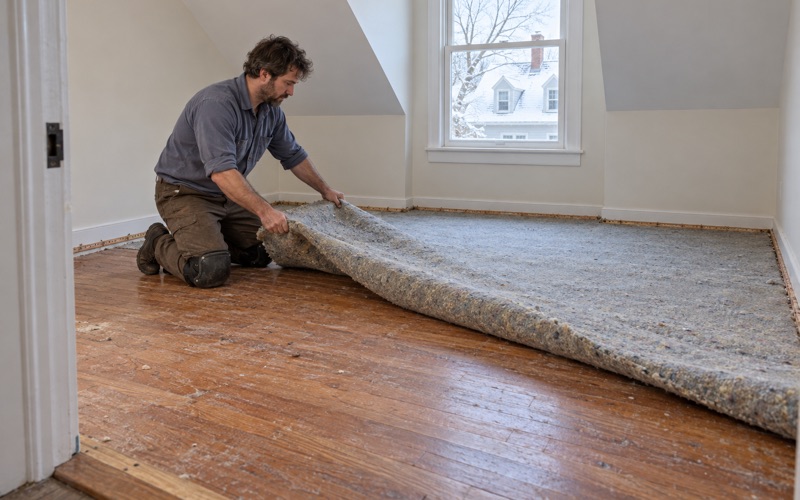
It also means many of these floors have already been through a few rounds of work. Some were sanded aggressively in the middle of the last century, some were carpeted over with a pad and tack strip that left rows of holes along the walls, and some were painted at the edges around old rugs. Each of those histories changes what the next refinish can do.
Looking for wood-flooring closer to Dorchester? See Wood-Flooring in Dorchester.
Keeping Original Floors in a Turn-of-the-Century House
Checking Thickness Before Anything Is Sanded
Every sanding takes wood off the top of the board, and a floor that has been refinished several times can be closer to its tongue than it looks. We check the wear layer at an edge or a register opening first. If there is enough wood, we plan the grit sequence to remove only what the damage requires; if there is not, a screen and recoat or targeted board replacement is the honest answer.
Old floors also carry traffic lanes, water stains near former radiators, pet urine stains and board gapping. Winter gaps that open in the heated months and close again in summer are normal movement, and we do not pack them with filler that will crack out the next season. Cupping or crowning is different, because it points to moisture, so we find the source before we sand.
Old Finishes, Wax and Lead
A floor from the 1900s may still have shellac or wax on it, or several later coats over the original finish. Wax residue and cleaning-product film keep a new finish from bonding, so we test for them and strip them before anything new goes down. Skipping that step is how a fresh coat peels in sheets a few months later.
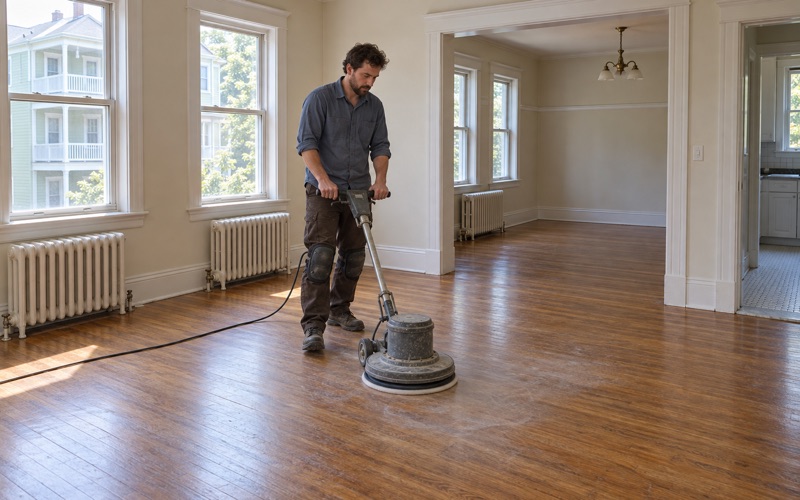
Any house built before 1978 also falls under the lead-safe renovation rules Massachusetts runs on its own, set out in 454 CMR 22.00. We confirm the build year and look at painted baseboards, stair risers and thresholds before sanding starts. Our drum sander and orbital sander run with dust extraction, and cleanup is done with a HEPA vacuum rather than a broom.
Choosing a Finish and a Color
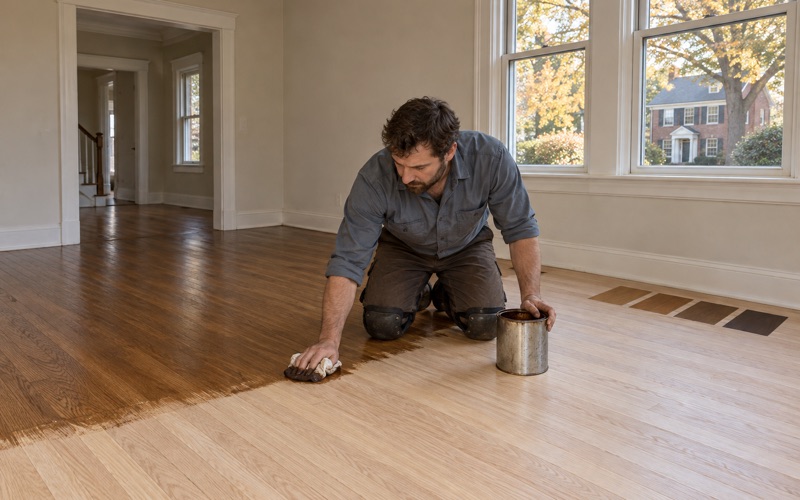
Maple and oak take stain very differently. Maple tends to blotch under darker colors, which is one reason many owners of old maple floors keep them natural, while red oak accepts stain evenly and can be water popped for a deeper tone. We lay stain samples on the floor itself, in the room’s own light, before anyone chooses a color.
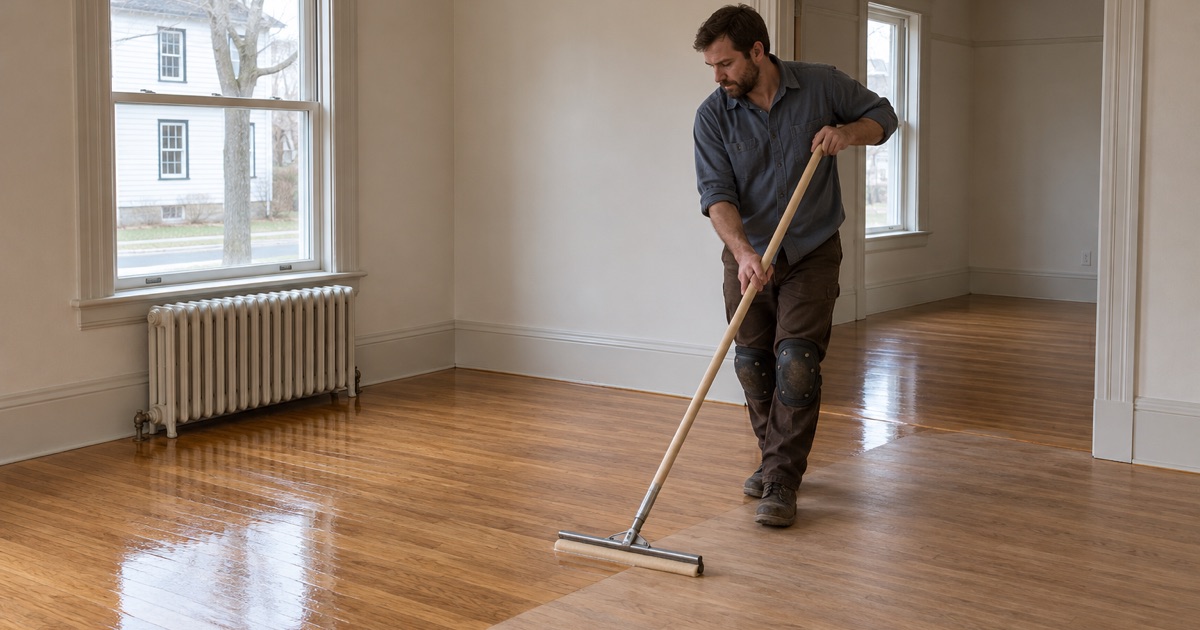
For the topcoat, we choose finishes that meet the Massachusetts VOC limits for wood coatings, which are stricter than the federal limits. Waterborne polyurethane keeps pale maple light, oil-modified polyurethane warms oak toward amber, and hardwax oil suits owners who want a matte surface they can spot repair. Sheen level comes last, and a lower sheen hides wear better in a busy front hall.
Matching Old Boards When a Kitchen or Wing Is Redone
Why Kitchens and Rear Wings Are Different
In houses of this age, the kitchen and rear wing are where the original floor most often gave out. Those rooms took the most water from sinks and appliances, and many were covered with linoleum or later tile glued down over the wood. When one of them is opened up, the boards underneath are sometimes past saving.
The Hale House restoration handled this by laying reclaimed long-plank Douglas fir in the kitchen and rear wing rather than trying to copy the maple. That is one sound approach: a clearly different wood in a clearly separate part of the house, meeting the original floor at a doorway where the change looks intended.
Weaving New Boards Into the Old Field
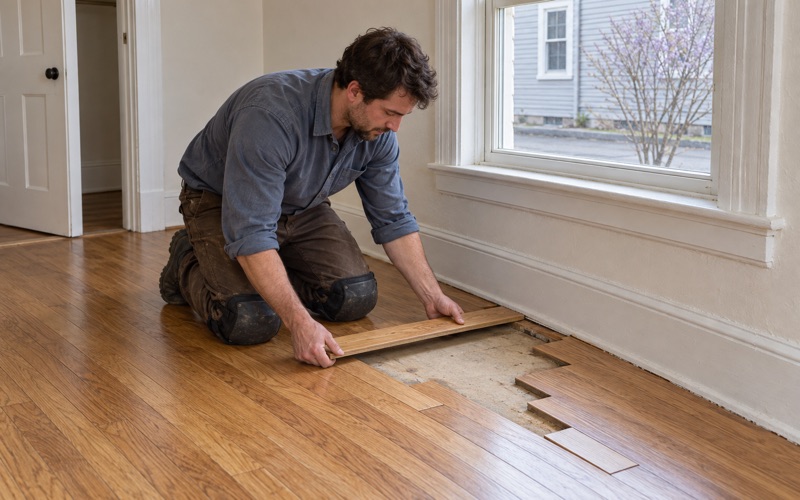
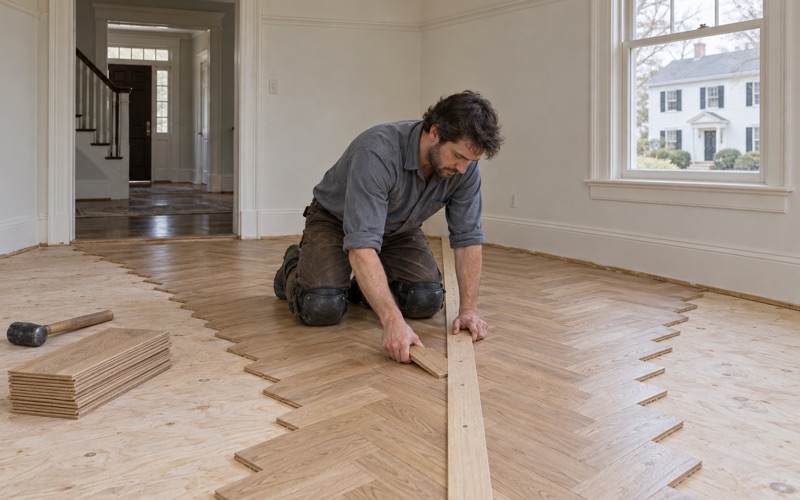
The other approach is to continue the original floor. Where a wall came down, or a radiator or pipe was removed, we weave matching boards into the existing field and stagger the joints so the repair disappears, instead of filling the hole. We look for boards of the same species, width and thickness, and use reclaimed stock with similar grain where we can find it.
Width and thickness matter more than most owners expect. Older strip flooring was often milled to dimensions that do not line up with what is sold today, so new boards may need to be milled down or shimmed to sit flush. Once the old and new sections are sanded together and finished as one floor, they read as one surface.
When the Kitchen Floor Is Replaced Outright
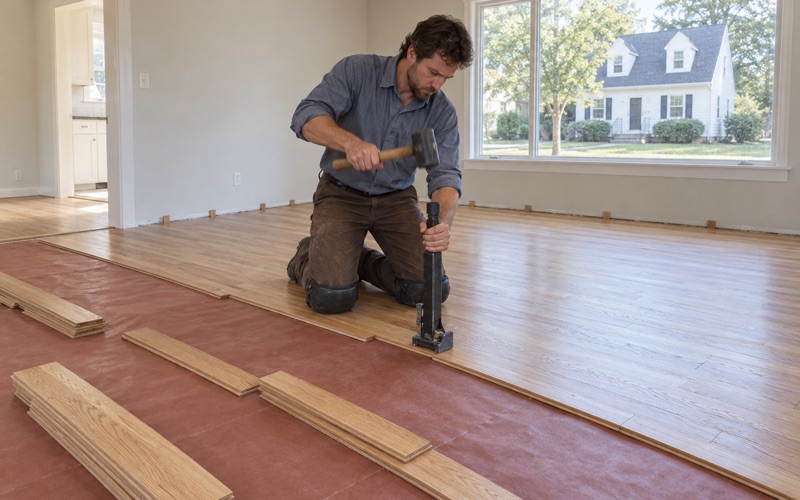
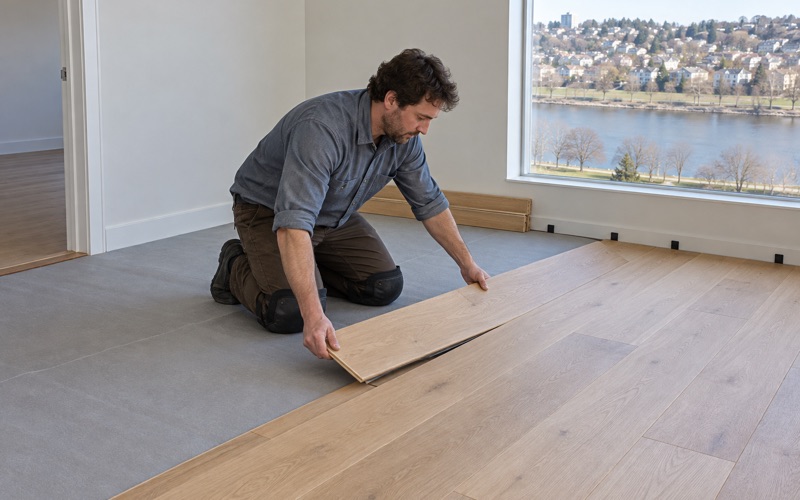
If the kitchen is being rebuilt down to the subfloor, we check that subfloor and take moisture readings before choosing the new wood. Solid hardwood over a sound subfloor with rosin paper is the traditional choice. Engineered wood with a thick wear layer makes sense where the meter shows more moisture than solid boards will tolerate.
Either way, new flooring needs acclimation in the house, an expansion gap at the walls and a clean transition into the original rooms. We plan the reducer or threshold at each doorway so the change in height and species looks deliberate, and we fasten with flooring cleats or staples suited to the board we are laying.
Planning a Floor Project in Watertown
Moisture, Seasons and Timing
Watertown sits in the National Weather Service’s Southeast Middlesex forecast zone, MAZ014, and like the rest of eastern Massachusetts it moves between humid summers and dry, heated winters. Wood moves with it. We read moisture in the boards and the subfloor before installing or sanding, and new wood sits in the house to acclimate rather than going down the day it arrives.
Refinishing works year round. What changes by season is cure time, which we plan around the heat and ventilation the house has at that point, and we tell you before we start how many days each room needs to stay off-limits.
Stairs and Water Damage
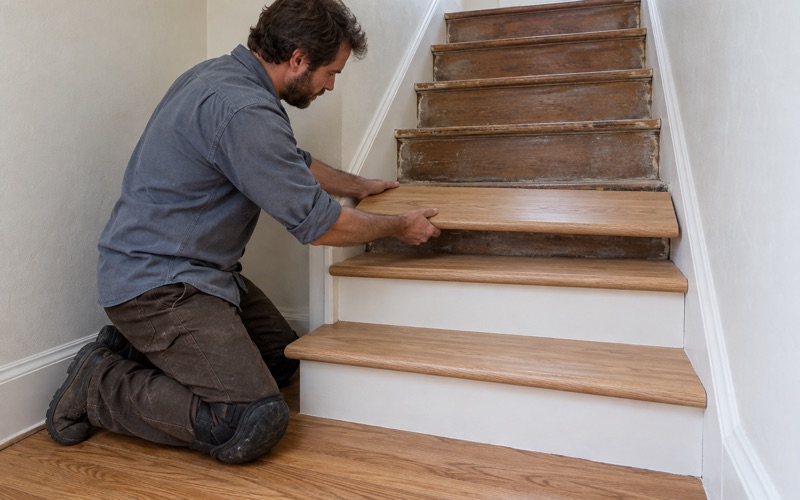
Houses from this era often have a main stair with worn treads, rounded stair nosing and painted risers. We quote stairs by the tread and riser rather than folding them into a square-foot price, because each one is sanded and finished largely by hand.
If a burst pipe or an overflowing appliance has soaked a floor, we trace the water, dry the area and confirm the readings with a moisture meter before replacing any board. We also document the damage room by room, so you have what your adjuster asks for.
What the First Visit Covers
Whether the house is in East Watertown, near Coolidge Square or out in the West End, the first visit follows the same order. We look at the floor, check thickness and finish, identify the species, and talk through whether each room calls for a refinish, a repair or a match. You get a written plan room by room.
It helps to share what you know about the house: the build year, any past refinishing, and whether the kitchen or a wing was added or redone. That history, along with what we find under a register grate, shapes a plan that keeps as much of the original floor as the house can give.
- 20+ Years in Wood Flooring
- Stairs Priced by the Tread
- Moisture Readings Before Repairs