Medford Wood Flooring has handled wood flooring in Waltham for more than 20 years, and much of what we are called to here is older than anyone living in the house. We sand, refinish, patch and replace boards in homes that have been lived in, rented out, divided and redone many times over. Our job is usually to find the floor that is still good underneath all of that and bring it back.
That means we slow down at the start. Before a drum sander touches anything, we check how much wood is left above the tongue and groove, look at what finishes and coverings have been laid down over the years, and confirm the build year. Massachusetts runs its own lead-safe renovation rules for homes built before 1978, and very little of what we see in these streets is newer than that.
What follows is how we approach those floors: what the city’s own survey of its oldest neighborhoods says about the houses, what that means for the boards inside them, and how we plan a job around the owners and tenants who live there while the work is underway.
Floors in Waltham’s Mill Village and Watch Factory Houses
What the 2021 Industrial Period Survey Covered
In 2021 the City of Waltham completed an update to its Industrial Period Historic Properties Survey, prepared by Zachary J. Violette with John Clemson. It looked closely at three areas: the Boston Manufacturing Company village centered on River and Newton streets, the Waltham Watch Company neighborhood on the South Side between Moody and Crescent streets, and the Chemistry neighborhood between Newton, High, Cedar and Calvary streets.
The survey describes all three as densely built up with single, duplex and small multiple family buildings, mostly dating from the second quarter to the end of the nineteenth century. It counted at least 500 industrial-period buildings in those areas and surveyed 166 properties in detail. The Boston Manufacturing Company, established in 1813, was the first integrated textile mill in the United States, and the survey notes that some of its housing, built as ranges of identical or near-identical buildings, may be among the oldest company houses in the nation.
Old Houses, Altered Many Times
The finding that matters most for floor work is a plain one: nearly all the surveyed buildings have had their siding and windows altered. The survey recorded exteriors, photographs and social history, not interiors, so it says nothing about what is under anyone’s carpet. But a house that has been re-sided and re-windowed has usually been reworked inside as well, often more than once.
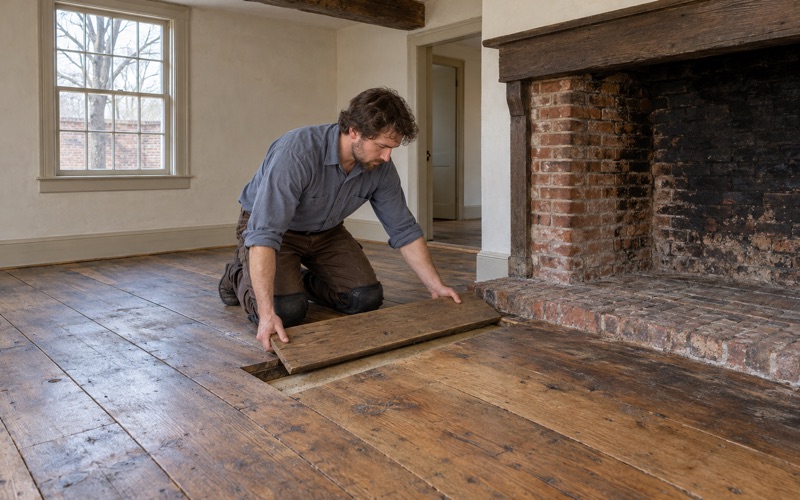
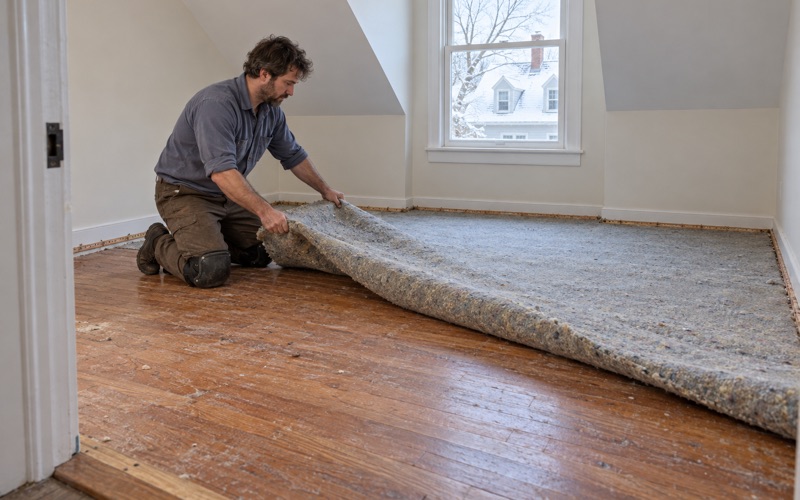
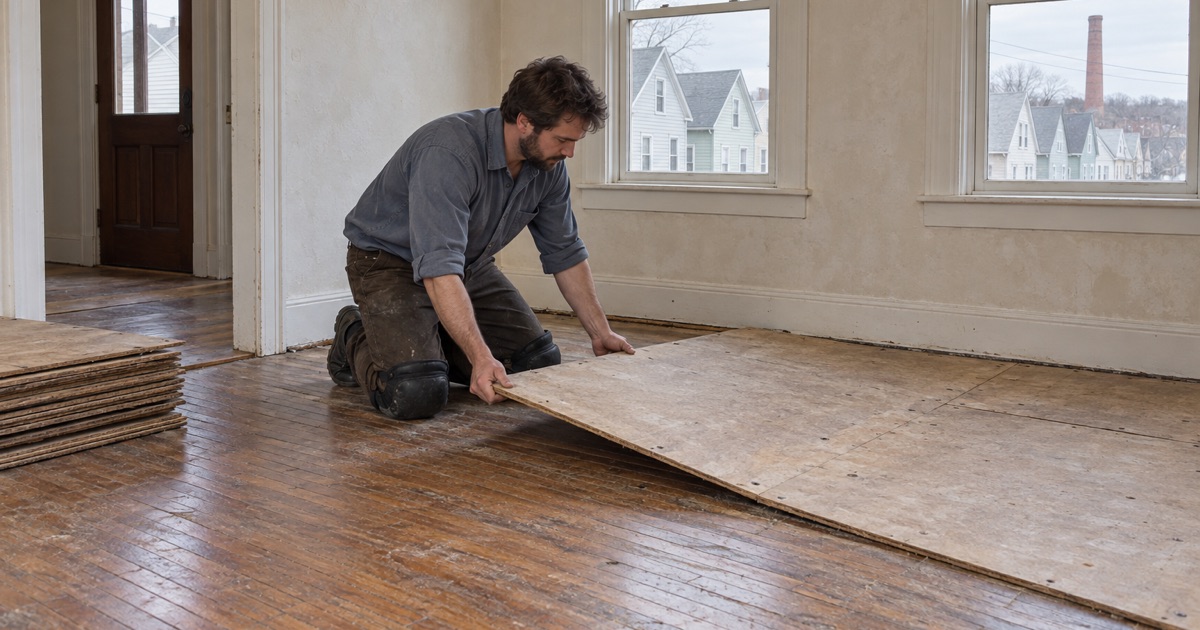
In practice we walk into these houses expecting layers. We find carpet over carpet pad and tack strip, linoleum glued over rosin paper, a later strip floor laid across an earlier one, or a kitchen built up with underlayment until it sits proud of the dining room threshold. We do not assume what species is at the bottom. We lift a corner, pull a floor register or look from inside a closet before we price anything.
Why Keeping a Sound Floor Makes Sense Here
The survey’s authors chose their areas partly because they were experiencing an increasing number of demolitions. Under the city’s Delayed Demolition ordinance, the Waltham Historical Commission advises the Building Inspector on demolition permit applications, and a building found preferably preserved faces a twelve-month delay.
Floor work does not run through that process, and we do not treat it as if it did. What the pattern does suggest is that a sound nineteenth-century floor in a house that is being kept is worth keeping too. Refinishing what is already there is almost always less disruptive than tearing it out, and in an old house the existing boards are often the better floor.
Looking for wood-flooring closer to Boston? See Wood-Flooring in Boston.
South Side Houses from the Watch Company Years
Watch City’s Neighborhood
The Waltham Watch Company opened its factory in 1854 and was the first to make watches on an assembly line, which is how Waltham came to be called Watch City. The survey treats the company’s South Side housing, alongside the earlier mill-village rows, as part of an evolving series of corporate housing solutions. It also notes that much of the South Side’s nineteenth-century housing, a large share of it tied to the watch factory, remains unsurveyed.
So a house between Moody and Crescent streets may have a detailed survey form or none at all. Either way, its floors have lived through well over a century of heating seasons, repairs and new owners, and they tend to show that wear in the same predictable places.
What We Usually Find Underfoot
Old floors in these houses show board gapping that opens in winter and tightens in summer, traffic lanes worn through the finish from the front door to the kitchen, and water stains around old radiator spots and under windows. Where a floor has been covered for decades, we often find black mastic or old adhesive, wax residue from years of paste wax, and either a shellac finish or the orange oak look of an amber coating that has aged.
We check any board that looks powdery or pocked for signs of powderpost beetle or old house borer, and we look for carpenter ants near damp exterior walls. None of that is unusual in a house this age, and most of it is repairable once we know exactly what we are dealing with and how far it runs.
Seasonal Movement in Southeast Middlesex
Waltham sits in the National Weather Service forecast zone MAZ014, Southeast Middlesex. Indoor air dries out once the heat comes on and takes moisture back up through the warmer months, and old solid hardwood moves with both. Winter gaps that close again by late summer are normal behavior for these floors, not a defect.
Cupping, crowning or buckling across a room is a different matter. That is a moisture question, and we answer it with a moisture meter and a look at where the water is coming from before we sand. Sanding a cupped floor flat while it is still wet leaves it crowned once it dries.
Refinishing a Nineteenth-Century Waltham Duplex
Checking the Boards Before Sanding
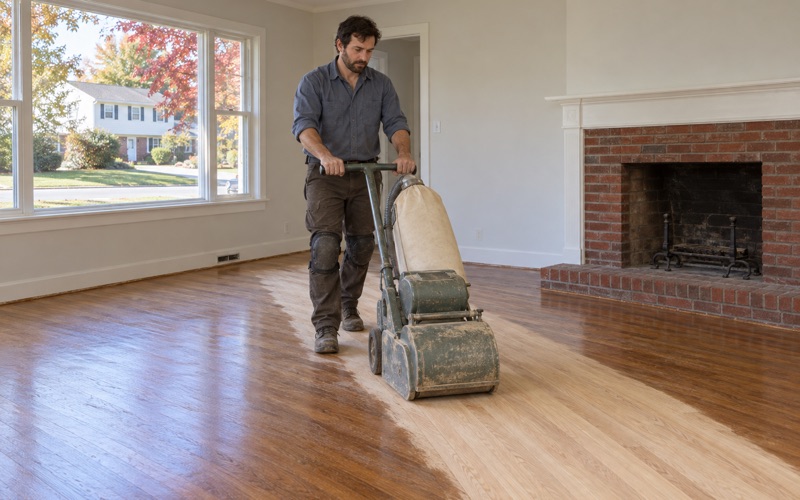
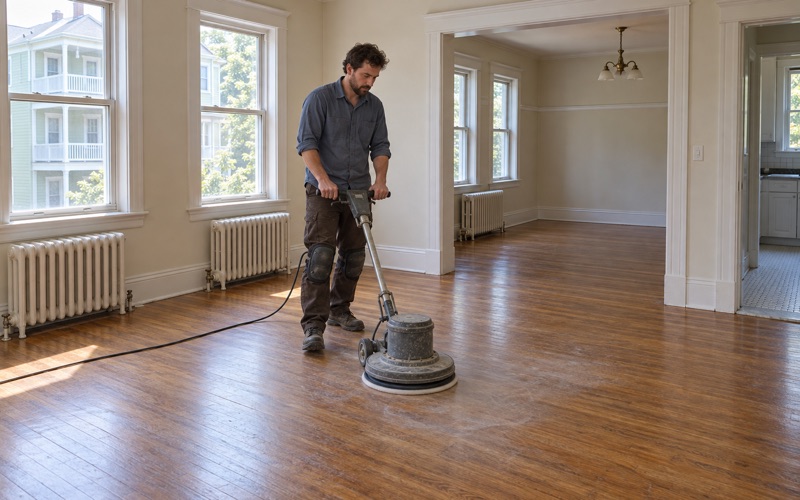
A floor that has been sanded several times may not have much wood left above the tongue. We measure board thickness at a floor register or threshold first, then choose a grit sequence that takes off only what the floor needs. Where a full sanding would expose tongues or nail heads, a screen and recoat or a careful partial sanding is the honest recommendation.
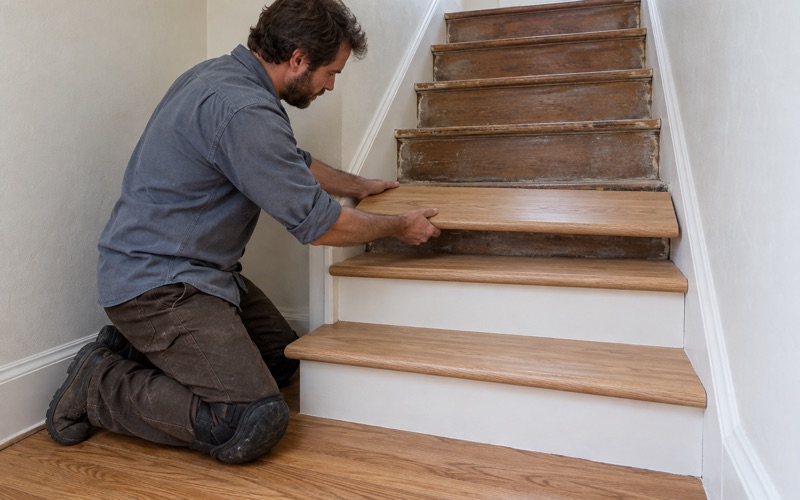
The same care applies to lead. The houses the survey describes date from roughly 1820 to 1900, so we confirm the build year and look for painted surfaces, including painted borders and stair risers, before any sanding starts. We sand dustless, with a HEPA vacuum collecting at the machine, and we choose finishes that fit the Massachusetts VOC limits for wood coatings, which are stricter than the federal ones.
Patching Where Radiators and Pipes Came Out
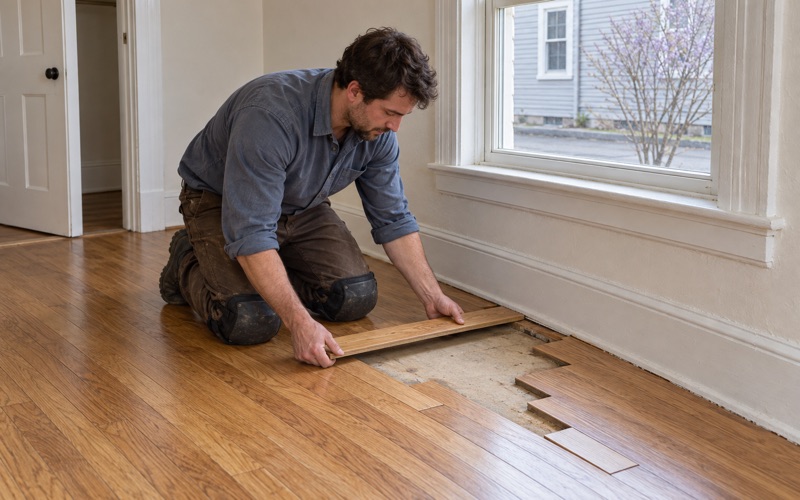
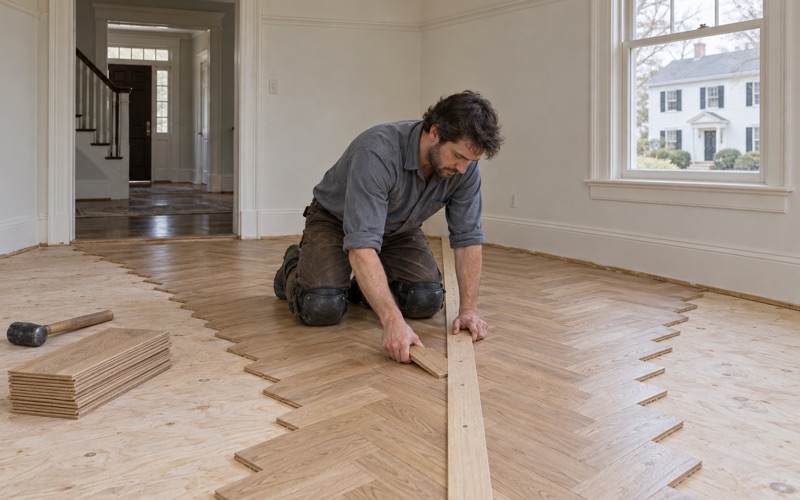
Old worker houses have been replumbed and reheated more than once, and each change leaves holes in the floor. We patch those with matching boards woven into the existing floor, not with filler or a square plug, so the repair runs with the grain and disappears once the room is finished.
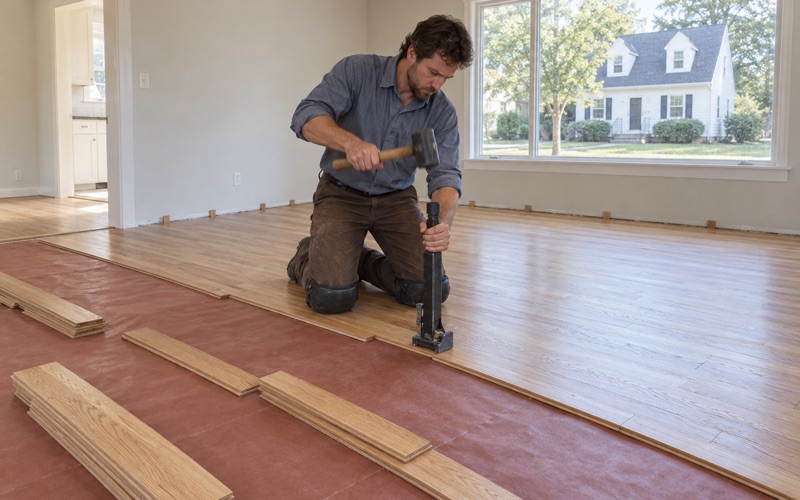
Where damaged boards need replacing, we look for reclaimed stock or the closest match in width and species, and we fasten it the way the floor around it is fastened. In an older floor that can mean face nailing near the walls where the rest of the room was face nailed with cut nails, rather than relying on flooring cleats alone.
Working One Floor at a Time
Duplexes and small multiple family buildings are the typical Waltham house the survey describes, and most of them have people living on more than one level. When the owner lives in one unit, we work one floor at a time, so the household upstairs or downstairs keeps living in the house while we sand and finish the other.
We plan the order of rooms so a path to the kitchen and bathroom stays open as long as possible, and we pick a finish with drying and cure time in mind. Waterborne polyurethane lets a family walk on a floor sooner, while an oil-modified polyurethane or a hardwax oil suits some older floors better, and we talk through that trade-off before choosing.
Planning a Floor Project in Waltham
Owners, Landlords and Tenants
Waltham is close to evenly split: 50.3 percent of its occupied homes are rented, according to the Census Bureau’s American Community Survey. Many of the floors we work on belong to a landlord and are lived on by a tenant, and the schedule has to work for both of them.
For a rental unit we plan around the turnover date or a tenant’s agreed time away, keep the work contained to that unit, and leave a floor that is simple to maintain between tenants. For owner-occupants we plan around the household instead, and the conversation turns to color, sheen level and how long the finish should last.
Choosing Color in an Old House
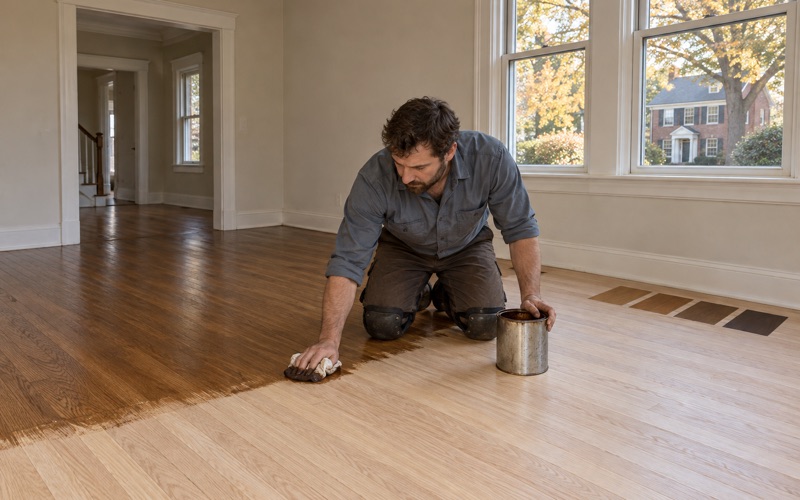
Light falls differently in a narrow nineteenth-century house than it does in a showroom. We lay stain samples on the actual floor, in the actual light of the room, before a color is chosen, and we water pop the grain where a darker, more even tone is wanted on red oak strip flooring.
Before any new finish goes down, we test for wax residue and cleaning-product buildup and remove what we find. A new coat over old wax is one of the most common reasons a finish peels, and houses this old tend to carry decades of it in the corners and along the walls.
Water, Stairs and the Rest of the Quote
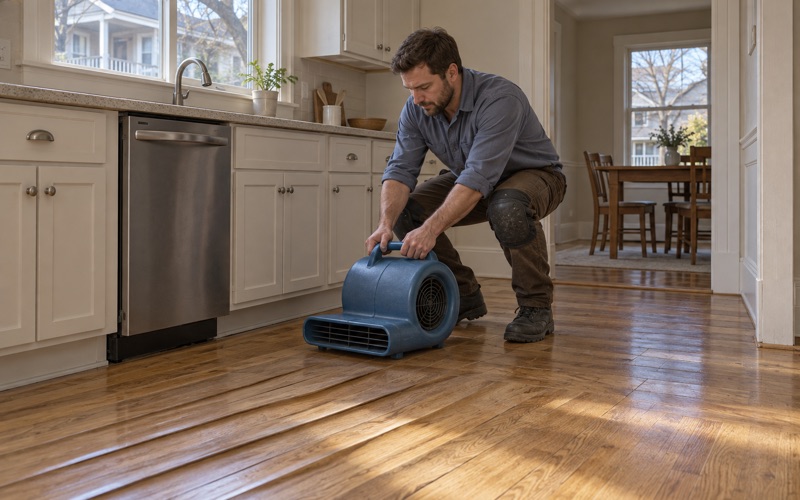
When a burst pipe or an overflowing appliance soaks a floor, we trace the water, dry the area and read it with a moisture meter before any board is replaced. We document the damage room by room for the adjuster, which keeps a claim moving without guesswork about what was lost.
Stairs are quoted by the tread and riser, not folded into a square-foot price, because each tread, nosing and riser takes its own time. The finished quote lists the floors, the stairs, the transitions such as reducers and thresholds, and any quarter round, so nothing is left to guess at when the work begins.
- 20+ Years in Wood Flooring
- Stairs Priced by the Tread
- Moisture Readings Before Repairs