Medford Wood Flooring has been sanding, repairing and refinishing wood flooring in Wakefield for more than 20 years, and a large share of that work lands in one narrow slot: after a house closes and before the new owners carry in a single box. Empty rooms are the best conditions a floor job ever gets, and we plan the whole job around keeping them that way.
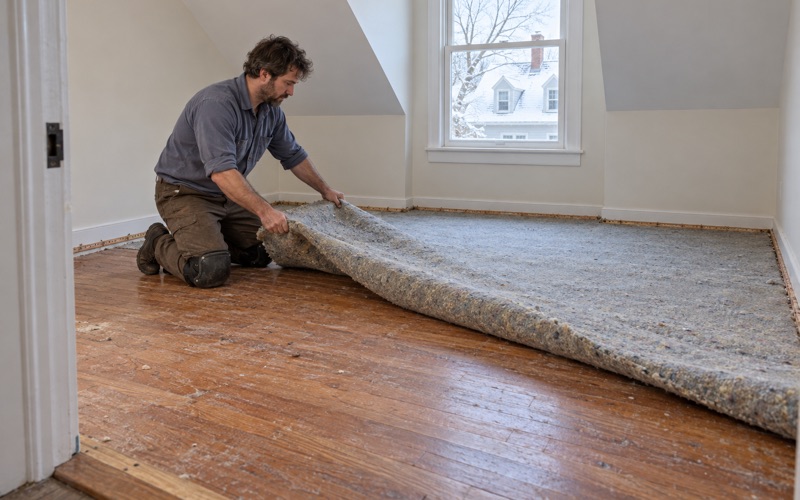
A buyer usually tours a house with someone else’s rugs, furniture and wall-to-wall carpet still in place. What is underneath only shows once the keys change hands, and by then the moving truck is booked. We pull back the coverings, read what is really there, and give you a plan that fits the days you have rather than a generic quote.
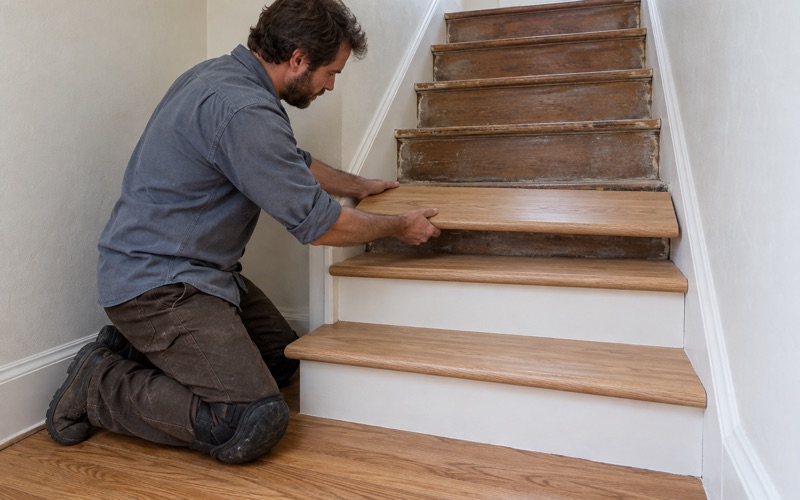
That plan might be a full sand and refinish, a screen and recoat, a set of board repairs, new stair treads, or some mix of all four. Whatever it is, the goal stays the same: floors finished, cured and ready before the furniture arrives, so nobody has to live around a job that could have been done first.
Refinishing a Wakefield House Before You Move In
Houses in Wakefield change hands steadily. Of the 7,968 owner households in the Census Bureau’s 2024 five-year estimates, 51.4 percent moved in during 2010 or later, and 948 of them arrived in 2020 or later. About 31.1 percent of owner households are headed by someone under 45. That is a town with a steady flow of new owners, and new owners are the people most likely to call us in the weeks around a closing.
Why the Empty-House Window Matters
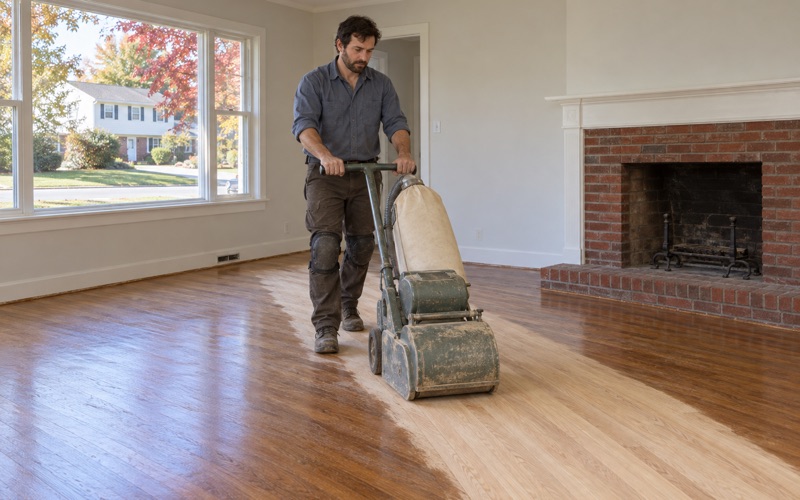
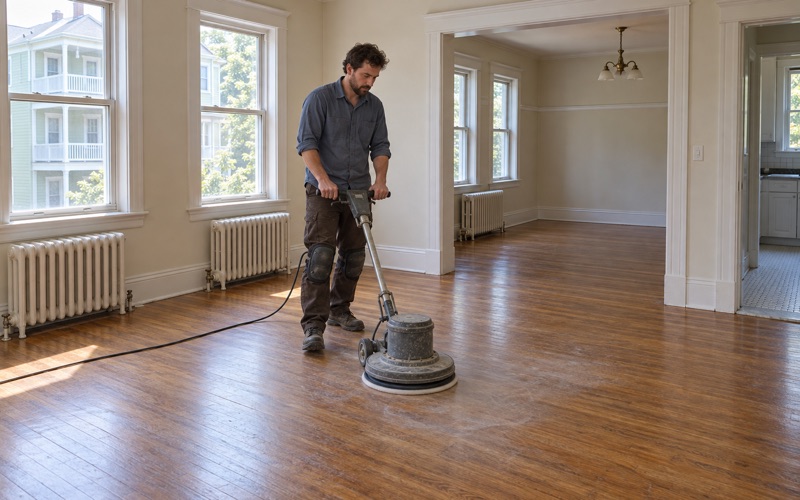
A floor that has been cleared is a floor we can sand wall to wall in one pass. There are no pianos to shift, no mattresses standing on end in the hallway and no family routing around a closed-off room. Every square foot gets the same grit sequence and the same finish, which is how you avoid a visible line where a rug or couch used to sit.
Curing is the other reason. A site-finished floor can take socks and light foot traffic well before it can take furniture and rugs, and a finish loaded too early can mark or hold dents. When the house is empty, the finish gets its full cure time without anyone bargaining over it.
How the Schedule Usually Runs
Most new owners reach us before closing, often working from the inspection report or the listing photos. We can talk through likely scope then, but we prefer to walk the house as soon as you have access, with a moisture meter in hand and a corner of carpet lifted in each room. The quote follows that walk-through, not the photos.
From there the order is usually coverings out, repairs, sanding, stain samples, then finish coats. Painters and electricians often want the same empty rooms, so we plan the sequence with you; in most houses walls go first and floors last, so a drop cloth or ladder never touches fresh finish. Stairs are quoted by the tread and riser, which makes it easy to decide whether they belong in this round or a later one.
Looking for wood-flooring closer to Revere? See Revere Wood-Flooring.
What New Owners Find Under the Previous Owner’s Coverings
Nobody can promise what lies under wall-to-wall carpet until it comes up. In a house of Wakefield’s age the answer could be red oak strip flooring, maple, eastern white pine, a patched plywood subfloor or an older layer of linoleum. Lifting a corner in each room at the walk-through means the quote is based on what is actually there, not on a guess.
Carpet, Pad and Tack Strip
Pulling carpet is quick; what it leaves behind takes the time. Tack strip is nailed around every wall, the carpet pad may be stapled or glued, and the staples are often driven into the wood itself. Each one comes out before a drum sander touches the floor, because a missed staple can tear a sanding belt and gouge the boards.
Tack strip nails leave a row of small holes along the perimeter. They usually sand down partly and fill well, and once quarter round or baseboard goes back on they are hard to find. We point them out at the walk-through so they are not a surprise later.
Linoleum, Black Mastic and Old Finishes
Kitchens and back halls sometimes hide sheet linoleum or tile laid over wood and held down with black mastic. We do not sand through old mastic or unknown adhesives. We identify what is there first and plan the removal around it, and some layers are better covered with new flooring than chased out of the grain.
Wood that was never carpeted carries its own surprises: a shellac finish, years of wax residue or a film left by cleaning products. Each has to be tested and removed before new polyurethane goes down, or the finish can fail to bond and start peeling. Those old coatings are also why an orange oak color does not always sand out as evenly as people expect.
Pet Stains, Water Stains and Traffic Lanes
Carpet protects wood from wear but not from what soaks through it. Pet urine stains often reach deep into the grain and turn gray or black, and sanding lightens them only so far. Water stains near a radiator, a window or a bathroom doorway can be surface marks, or they can mean the boards underneath have cupped.
Where the wood was left bare, traffic lanes worn through the finish are common in hallways and in front of the kitchen sink. A full sand evens those out. Boards that stay too dark or too soft after sanding go on the repair list for the next stage.
Repairing and Matching Boards Before the Furniture Arrives
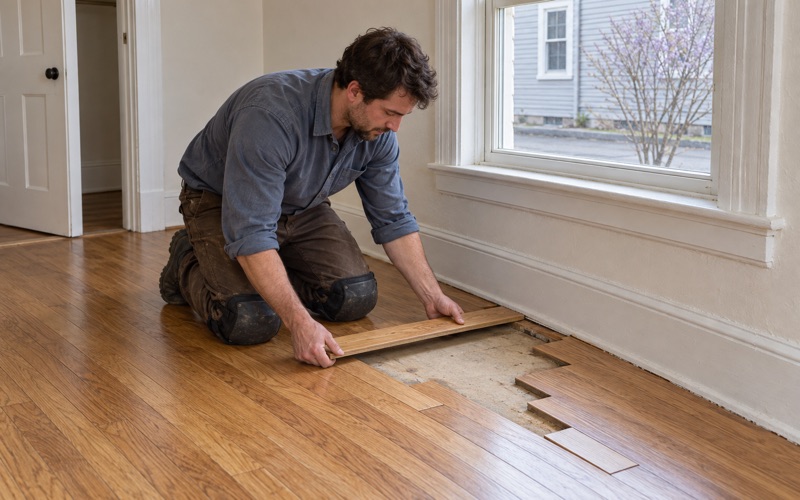
Repairs are easiest in an empty house because we can see the whole floor pattern and, when the grain needs matching, borrow boards from inside a closet. They also have to come before sanding, so the new and old wood are cut down together and finished as one surface.
Weave-In Repairs and Radiator Patches
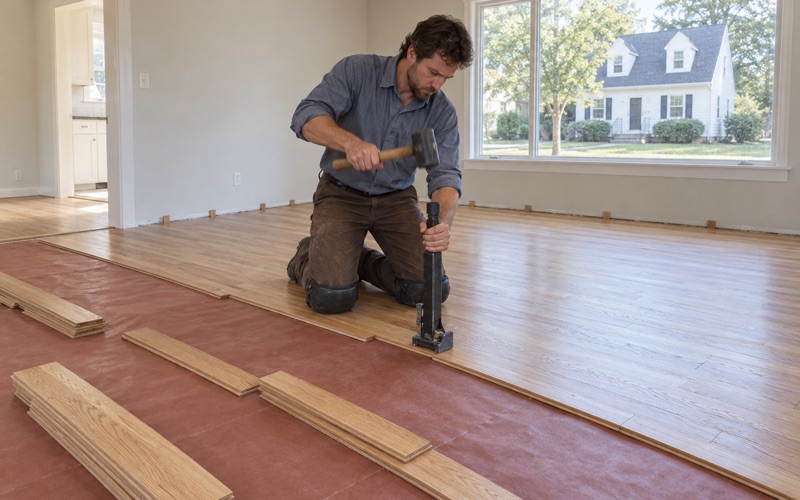
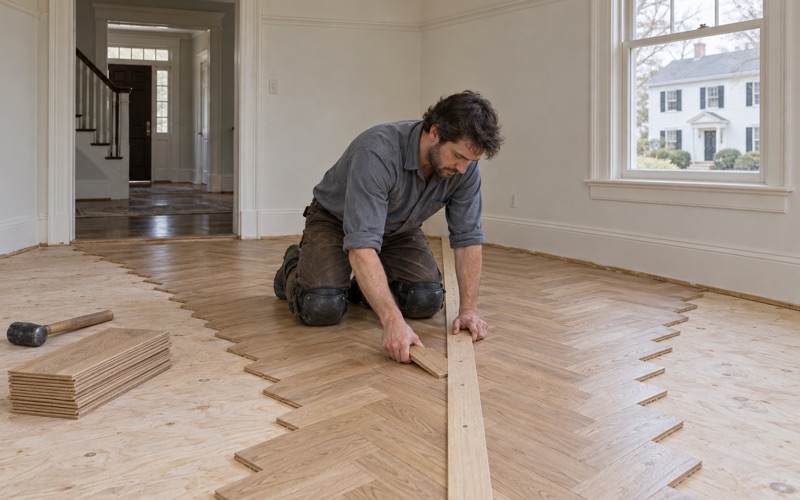
When stained or damaged boards come out, we replace them with a weave-in repair: new pieces of the same species and width, staggered into the existing tongue and groove the way the original floor was laid. A straight rectangular patch reads as a patch forever. A woven one disappears once the floor is sanded and finished.
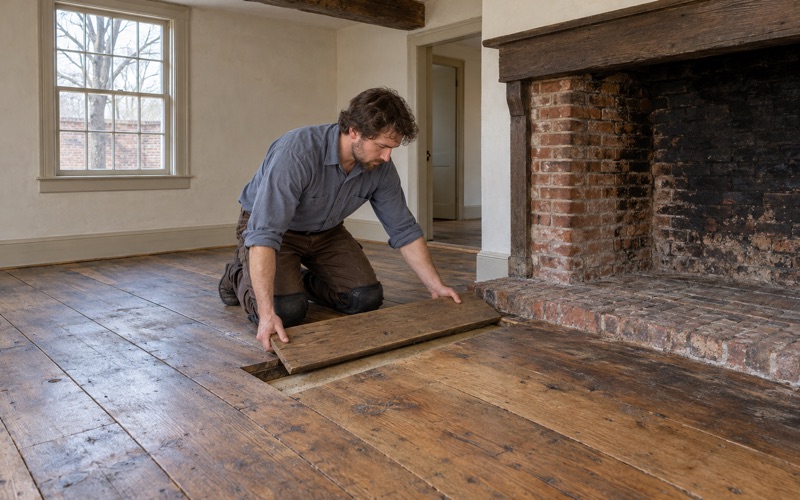
The same method covers holes left where radiators and pipes were removed, which new owners often inherit after an earlier heating change. We fit matching boards into the run instead of filling the gap with putty, and we check that the subfloor under the opening is sound before anything goes back down.
Checking Thickness, Gaps and Movement
Before we sand a worn red oak strip floor, we check how much wood is left above the tongue. A floor that has been sanded several times may have room for one more careful pass, or it may be better served by a screen and recoat. We would rather refinish what is there than tear it out, but only when the remaining thickness supports it.
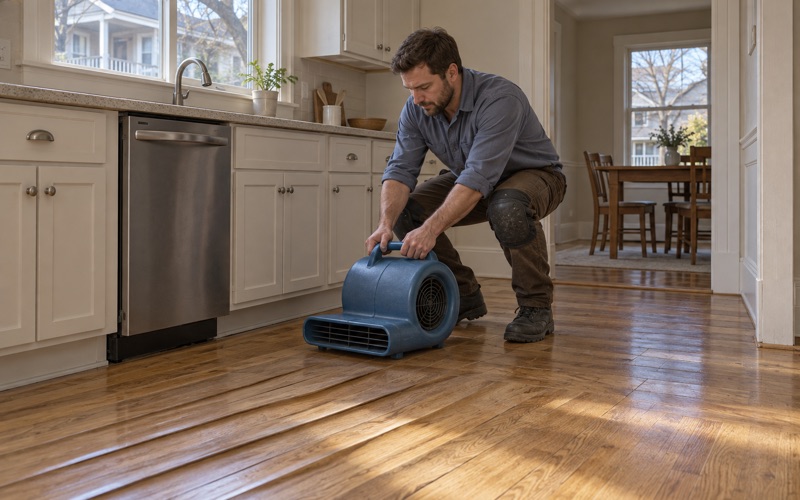
We also look for cupping, crowning, buckling and board gapping, and find the cause before treating the symptom. Winter gaps that close again in summer are normal movement in a heated house. Cupping around a sink or an exterior door usually points to water, which we trace, dry and read with a moisture meter before any board is replaced.
Stain Samples and Finish Choices
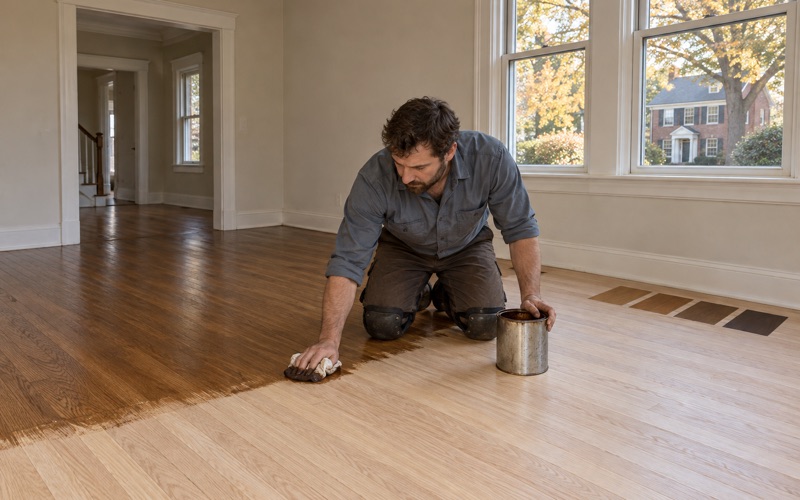
Color is the decision new owners change their minds about most, and an empty room is the right place to make it. We lay stain samples on the actual floor after sanding, so you can see them in morning and evening light and against the paint colors you have already picked.
An empty house also widens the finish options. Oil-modified polyurethane has a longer dry and a stronger smell, which is easier to accept when nobody is sleeping upstairs, while waterborne polyurethane dries faster and stays closer to the wood’s natural color. Either way, we use products that fit the Massachusetts VOC limits for wood coatings under 310 CMR 7.25, which are stricter than the federal ones.
Planning a Floor Job from Greenwood to Lakeside
Wakefield, incorporated in 1812 as South Reading and renamed in 1868 for Cyrus Wakefield, is a town of settled neighborhoods, from Greenwood and Montrose to Lakeside along the 247 acres of Lake Quannapowitt and the streets around Wakefield Square. About 70.7 percent of its occupied homes are owner-occupied, so most of the floors we work on here belong to the people living on them.
Older Houses, Newer Owners
The housing stock is much older than the ownership. Roughly 56.7 percent of Wakefield’s homes were built before 1960, and 1,930 of them went up in the 1950s alone. A buyer moving into one of those houses this year may be inheriting a floor that has already been through one or two refinishes, which is why the thickness check comes before any sanding plan.
Older does not mean worse. A well-kept postwar floor sanded down to clean wood can look as good as anything installed recently. What it needs is a crew that reads the wear, the past repairs and the remaining wood before deciding how aggressive to be.
Lead-Safe Work in Pre-1978 Houses
Renovation work in a home built before 1978 falls under Massachusetts’s own lead-safe renovation rules, 454 CMR 22.00, which run separately from the federal program. Before sanding, we confirm the build year and check painted baseboards, stair risers and thresholds that the job could disturb.
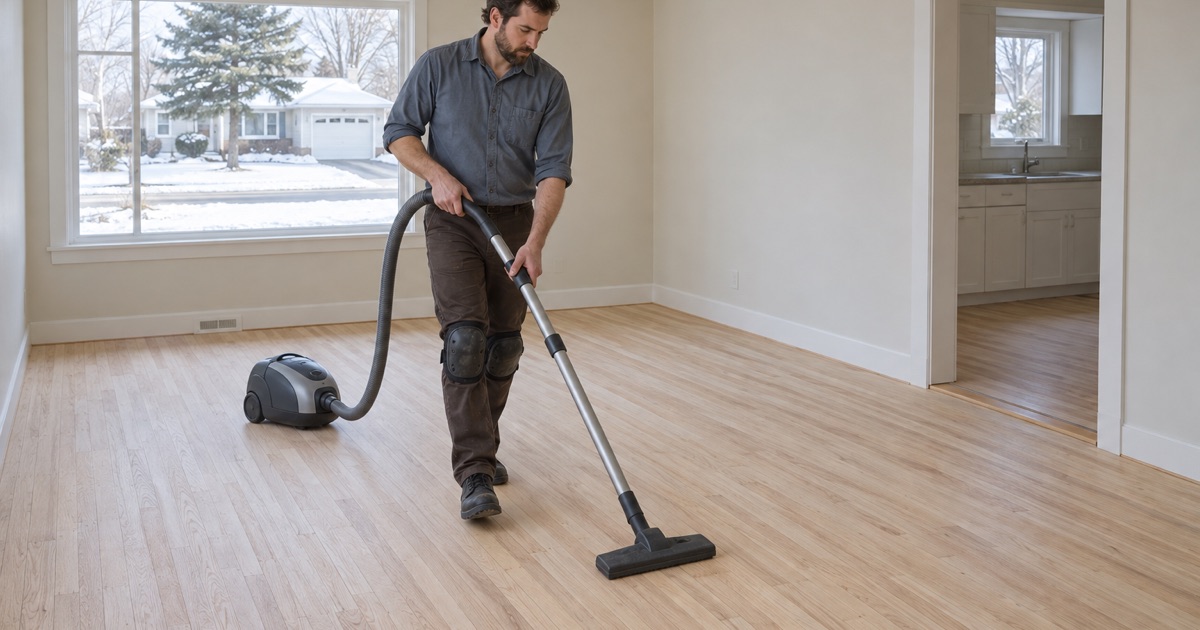
An empty house makes that work simpler, since no children or pets are moving through the rooms while it happens. Our sanding runs with dust collection and a HEPA vacuum cleanup at the end, which also keeps fine wood dust off walls the painters may have just finished.
- 20+ Years in Wood Flooring
- Stairs Priced by the Tread
- Moisture Readings Before Repairs