Medford Wood Flooring has spent more than 20 years on wood flooring in Stoneham and the towns around Medford, and a good share of that work happens in older houses where the floor is worth keeping. Our approach starts from the boards already in the room: we measure what is left, find out what has been done to them, and repair or refinish before anyone talks about tearing out. When replacement truly is the right call, we say so plainly and explain why.
Small rooms change the job more than most owners expect. A narrow bedroom or a front parlor leaves little space to swing a large sander, a threshold can sit at a different height than the hall, and one soft board near a wall can hide damage that runs under the next room. We plan for those details before the first pass, so the finished floor reads as one surface rather than a patchwork.
We also check the history of an old floor before we quote it. The build year tells us whether lead-safe practices apply, the existing coating tells us which finishes will bond, and a moisture reading tells us whether a stained board is dry or still taking on water. The sections below walk through how that plays out in Stoneham’s houses, especially the oldest ones.
Floors in Stoneham’s Shoe-Era Cottages
A Shoemaking Town’s Worker Houses
Stoneham prospered as a major shoe-manufacturing center, and some of the houses its workers lived in are still standing. The C.H. Brown Cottage at 34 Wright Street is one of them: a modest Greek Revival worker’s house, probably built in the 1830s, and one of a limited number of surviving worker houses from that era. The Michael Foley Cottage on Emerson Street belongs to the same story of small, practical homes.
Houses like these were built for working families, not for show, and their rooms tend to be compact. That matters for a floor because every board is visible and there is nowhere to hide a mismatched patch under a large rug or a long run of furniture. We treat a cottage floor as something to read carefully before touching, since whatever was installed, patched or covered over the decades still shows in the boards.
The Ten Footer and the Scale of Shoe-Town Work
Some of the town’s shoe history was built even smaller. The Shoe Shop-Doucette Ten Footer at 36 William Street is a backyard shoemaker’s shop of about 1850, and a ten footer was usually about 10 by 10 feet. A building at that scale is a reminder of how much of Stoneham’s early work happened in modest, hand-built spaces.
Owners of small outbuildings and additions on older lots sometimes ask us about the floors in them as well. The same rules apply: find out what the boards are fastened with, check what sits beneath them, and decide what can be saved before anything is pulled up. Small spaces often turn out to be the best candidates for repair, because the amount of matching material needed stays manageable.
Fifty-Seven Listings on a Single Day
On April 13, 1984, 57 Stoneham buildings went onto the National Register of Historic Places together through a Multiple Resource Area nomination, the Brown and Foley cottages and the Doucette Ten Footer among them. The town has 69 National Register properties and districts in all, from the William Bryant Octagon House on Spring Street to the Central Square Historic District.
A listing is a record of a building’s significance rather than a review of the work done inside it. What it does tell us is where the town’s surviving 19th-century fabric is concentrated, which helps when we are estimating what a floor has been through. When a house carries that kind of history, we lean toward keeping its original boards in service rather than replacing them.
Looking for wood-flooring closer to Belmont? See Belmont Wood-Flooring.
Repairing Old Floors in Small Rooms
Reading the Boards Before Anything Is Cut
Our first visit is diagnostic. We look for cupping, crowning and board gapping, ask whether the winter gaps close again in summer, and lift a floor register or threshold where we can to see the edge of a board. Measuring the wood left above the tongue and groove is the step that decides whether a floor can take another full sanding.
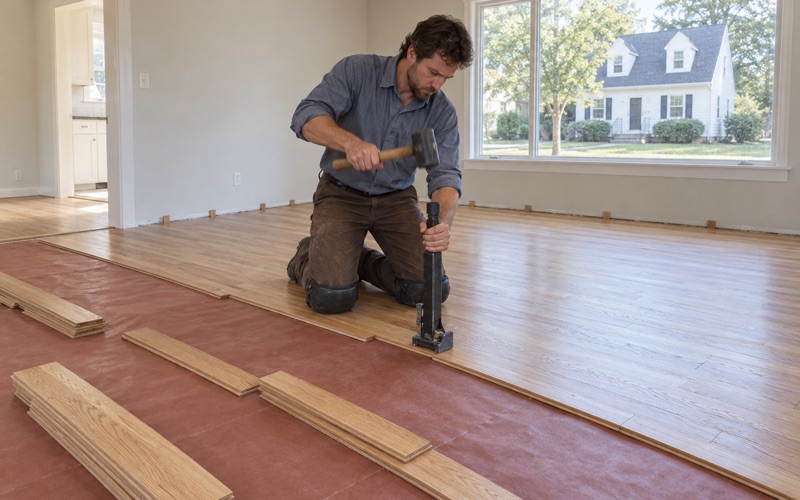
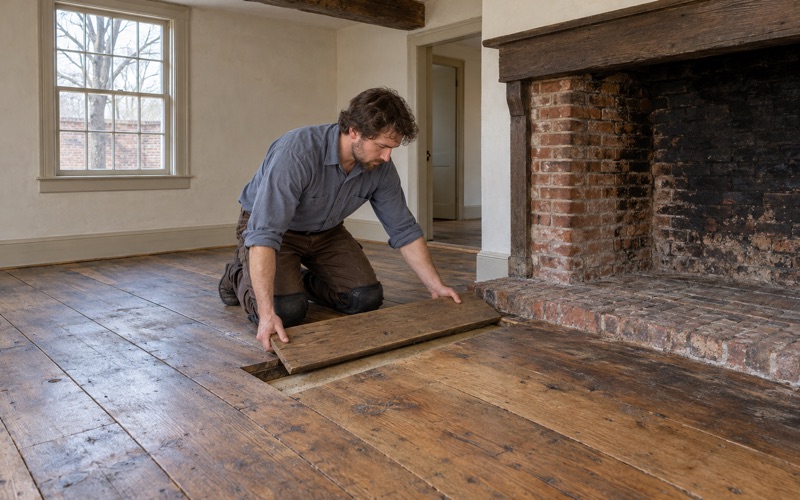
We also note how the boards are held down. Older floors are often face-nailed with cut nails, while later repairs may use flooring cleats or flooring staples, and mixing the two in a patch without planning for it causes squeaks and lifting later. Knowing the fastener pattern lets us match a repair to the way the original installer worked.
Weave-In Repairs Instead of Filler
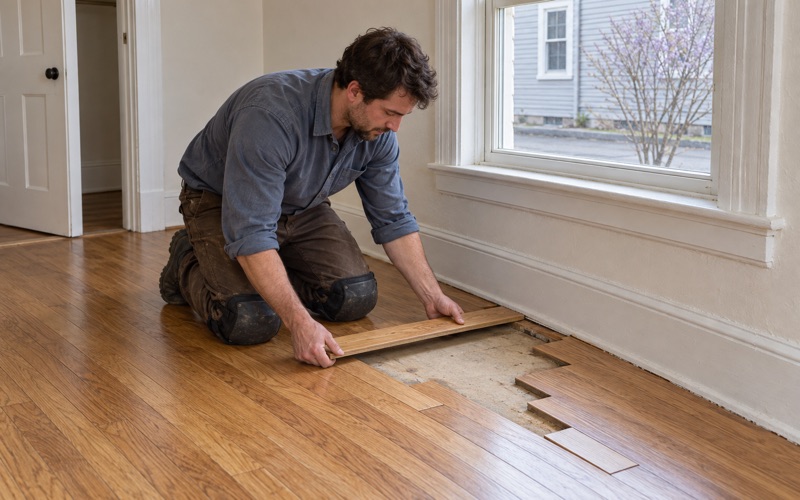
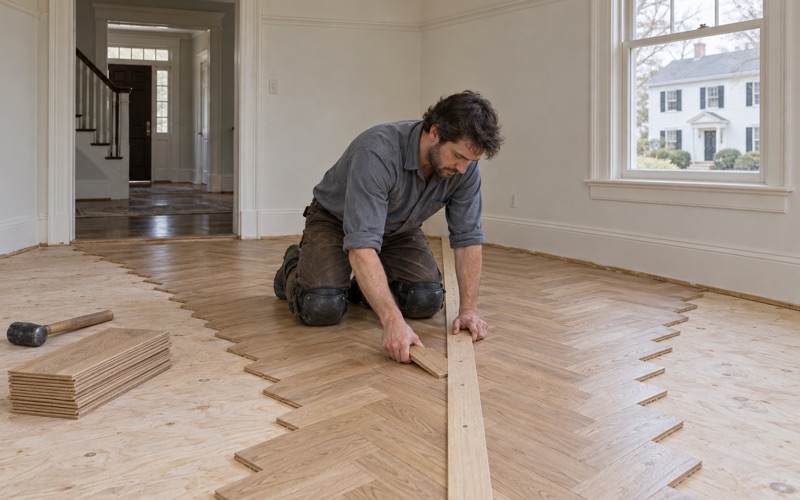
Where a radiator or a pipe came out, the floor is usually left with a hole or a square of mismatched boards. We cut back to staggered joints and weave replacement boards into the existing field, so the patch follows the grain and layout of the room instead of reading as a rectangle. Wood filler has its place in small nail holes, but it does not belong in an opening a radiator used to cover.
Sourcing matching boards is part of that job. We look for reclaimed material or new stock that matches the width, species and grain of the existing floor, and we check each piece against the room before it goes in. In a small room, a well-matched weave-in repair disappears once the finish goes down.
Water, Insects and Hidden Damage
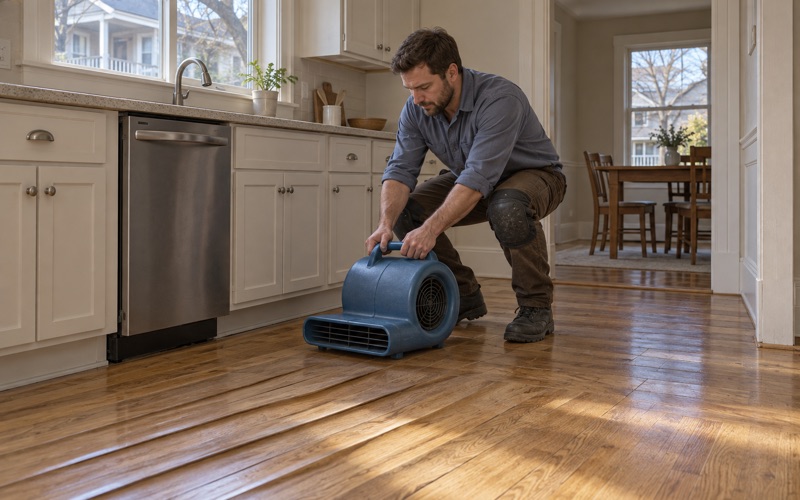
Old floors carry old problems. Water stains near a sink, pet urine stains near a door and dark rings where a planter sat can run deeper than the finish, and we test whether sanding will lift them or whether the board needs replacing. After a burst pipe or an overflowing appliance, we trace the water, dry the area and take moisture meter readings before any board comes out, and we document the damage room by room for your insurance adjuster.
We also look for signs of powderpost beetle, old house borer and carpenter ants in any board that feels soft or shows small exit holes. Most floors we see have none, but it is far better to find activity during the estimate than halfway through a sanding. If we do find it, we explain what we see and what needs to happen before the floor is finished.
Refinishing a 19th-Century Stoneham House
Lead, Wax and What Is Already on the Floor
Any home built before 1978 falls under Massachusetts’ own lead-safe renovation rules. Before sanding, we confirm the build year and check painted baseboards, thresholds and floor edges, because old paint at the margins of a room is common in older houses. That check shapes how we contain dust and which tools we use near the walls.
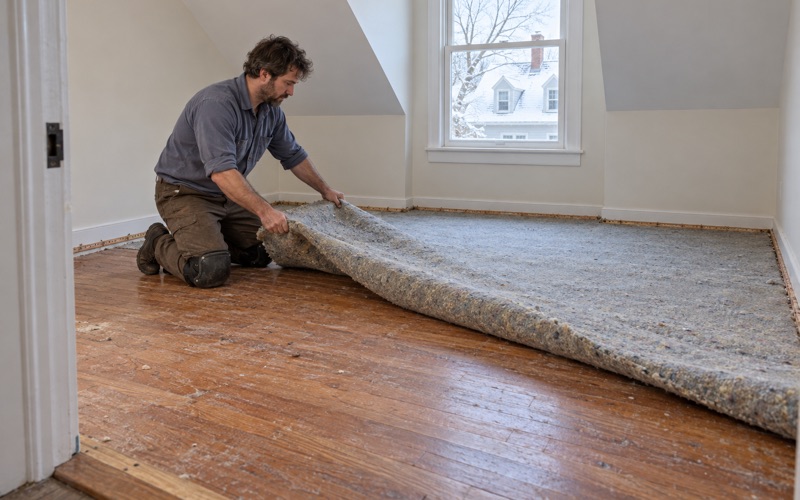
The existing coating matters just as much. An older floor may carry a shellac finish, layers of paste wax or years of cleaning-product residue, and a new finish laid over wax residue will peel instead of bonding. We test for it and remove it completely before any new coat goes down.
Sanding a Small Room Without Losing the Floor
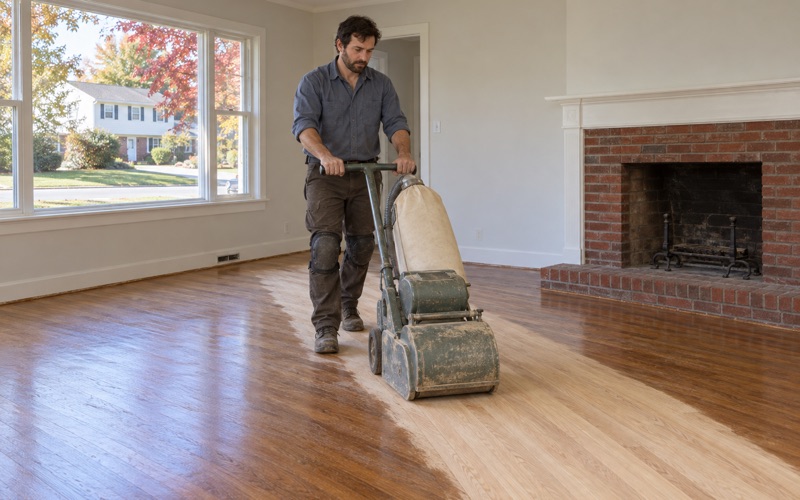
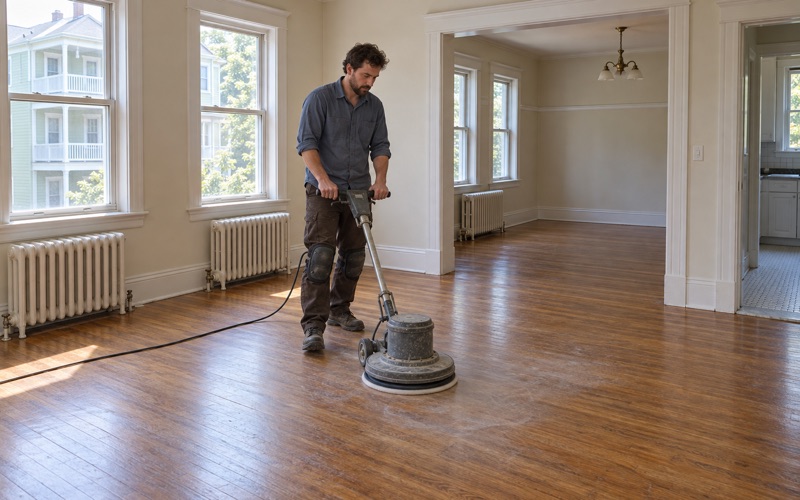
A drum sander removes material quickly, which is exactly why it has to be used with restraint on a floor that has been sanded before. In compact rooms we rely more on an orbital sander along the edges and in tight corners, and we set a grit sequence that takes off only what the surface needs. Dustless sanding with a HEPA vacuum keeps the fine dust out of the rest of the house.
Sometimes a full sanding is not needed at all. A floor with sound color and worn traffic lanes only in the surface finish may just need a screen and recoat, which adds protection without taking wood off the boards. We will tell you when the lighter job is the smarter one.
Stain and Finish Choices
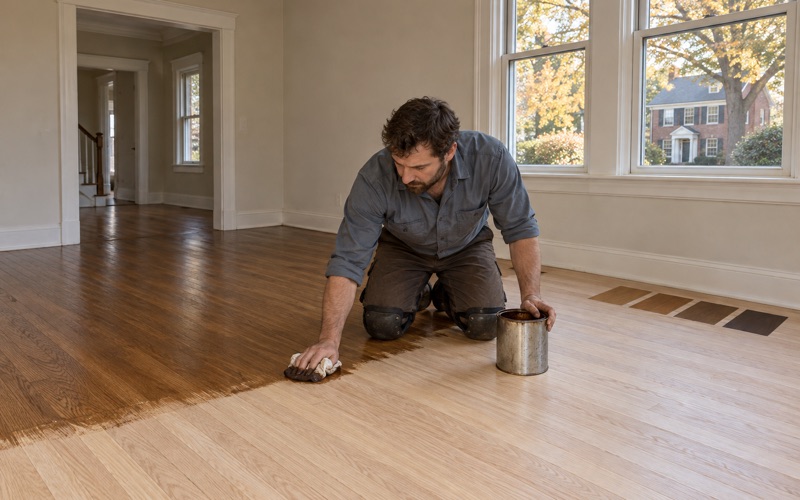
Stain samples go on your actual floor, in the light of that room, before you pick a color. Aged boards take stain differently than new wood, and a shade that looks right on a sample card can turn orange on older red oak strip flooring. Water popping before staining opens the grain for a more even color where the boards need it.
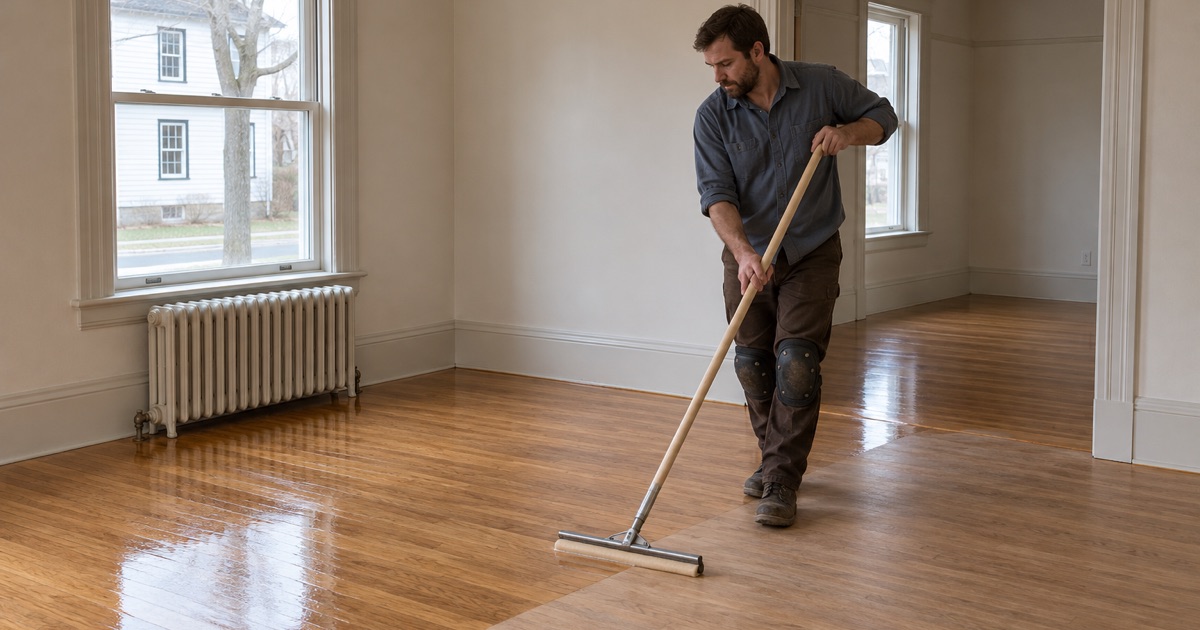
For the topcoat, we choose finishes that meet the Massachusetts VOC limits for wood coatings, which are tighter than the federal rules. Waterborne polyurethane dries clear and quickly, oil-modified polyurethane warms the tone, and a hardwax oil suits owners who prefer a low-sheen surface that can be spot-repaired. We help you weigh sheen level, durability and appearance against how each room is actually used.
Planning a Floor Project near Central Square
The Older Quarter of the Housing Stock
Older houses are a minority in Stoneham, but not a small one. Of the town’s 10,196 housing units, 2,504, or 24.6 percent, were built in 1939 or earlier. Those pre-1940 homes are where we expect face-nailed boards, earlier patches and several generations of finish on the same floor.
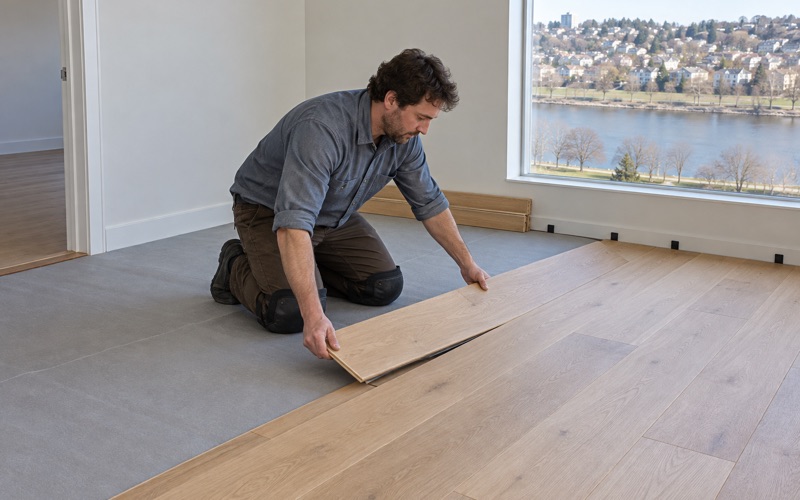
The rest of the stock brings different floors, from postwar strip oak to engineered wood in newer condominiums, and we work on all of it. But the older quarter is where careful repair pays off most, because the boards that are there cannot easily be replaced with anything equivalent. Streets like Wright, Emerson and William, along with the blocks around Central Square, are a good reminder of how much of that older fabric remains.
Stairs, Thresholds and Rooms That Connect
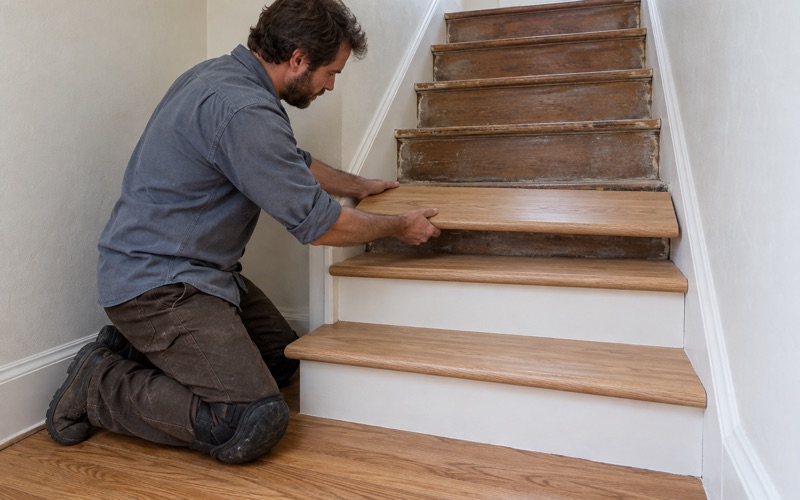
Stairs in older houses are rarely uniform, so we quote them by the tread and riser rather than folding them into a square-foot price. Worn stair treads, stair nosing and stair risers each get their own assessment, and we match the finish to the floors they connect. At doorways, a reducer or threshold may need rebuilding to meet a refinished floor at the right height.
Quarter round and base trim often come off during sanding in small rooms so we can reach the edges properly. We reinstall or replace them with care, especially where old trim carries layers of paint that must be handled under the lead-safe practices described above.
How We Schedule the Work
In an owner-occupied two-family, we work one floor at a time so the household on the other level can keep living normally. In a single-family cottage, we sequence rooms so you keep a path through the house, and we allow drying time for each coat before furniture returns. Before we start, you get a clear plan for which rooms are closed, for how long, and what happens if we find damage under the surface.
If you own an older Stoneham house and wonder whether its floors can be saved, the answer usually starts with a close look and a thickness check. We are glad to come out, read the floor with you and lay out what repair and refinishing would involve.
- 20+ Years in Wood Flooring
- Stairs Priced by the Tread
- Moisture Readings Before Repairs