Medford Wood Flooring has handled wood flooring in Somerville for more than 20 years, and a growing share of the calls we take there start with a building changing hands one unit at a time. An owner turning a rental into condominiums wants the floors to look right when units are listed, while the tenants still living there need their homes left alone. We plan sanding, board repair and finishing around that tension so each piece of work lands in the right unit at the right time.
In practice that means splitting a job into what can happen now and what has to wait. A vacant apartment, a shared stair or a front hall can often be scheduled early. A floor under a tenant’s furniture generally cannot, and a buyer’s refinish may belong after the closing rather than before it.
We are flooring contractors, not lawyers, and nothing on this page decides whether a particular building falls under the city’s rules. What we can do is read the sequence the owner, their attorney and the Board have already set, and build a floor schedule that fits inside it.
Floor Work Inside a Converting Somerville Building
What the 2025 Ordinance Update Changed
Somerville has regulated the conversion of rental units into condominiums since 1985, and an update approved by the City Council on August 28 took effect October 1, 2025. The Condominium Review Board’s own FAQ states plainly that there is no moratorium on condo conversion, so projects keep moving. What changed is the timeline and the cost, and both affect when floor work makes sense.
Relocation payments rose to $14,000 per unit, or $18,000 for elderly, disabled and low- or moderate-income tenants. For a vacant unit that was formerly rented, the owner now gives the Board two years’ notice, up from one. A unit owner-occupied for the preceding twelve months has no waiting period at all, so two units in the same house can sit on very different clocks.
Code Repairs Versus Renovation in a Tenanted Unit
During the notice period, the FAQ says owners may make only the specific repairs that State Sanitary and Building Codes require inside a tenanted unit. Renovations outside that scope need the tenant’s express consent. A full sand and refinish of a rented apartment is a renovation, not a code repair, so we do not schedule one in an occupied unit on the owner’s word alone.
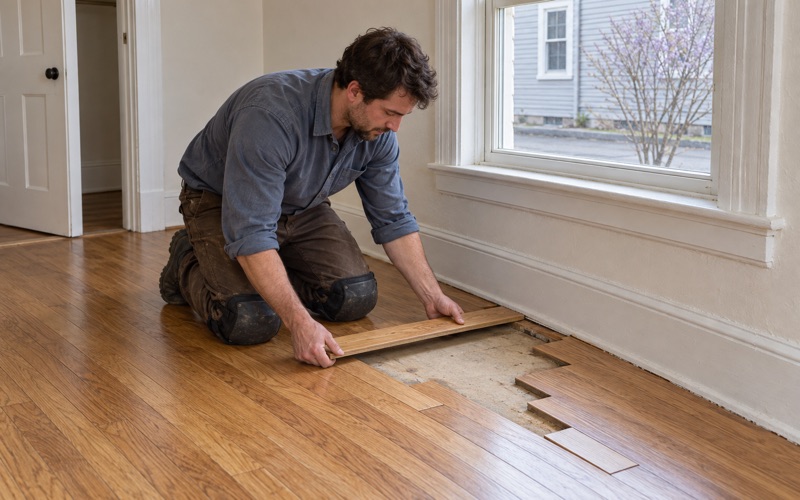
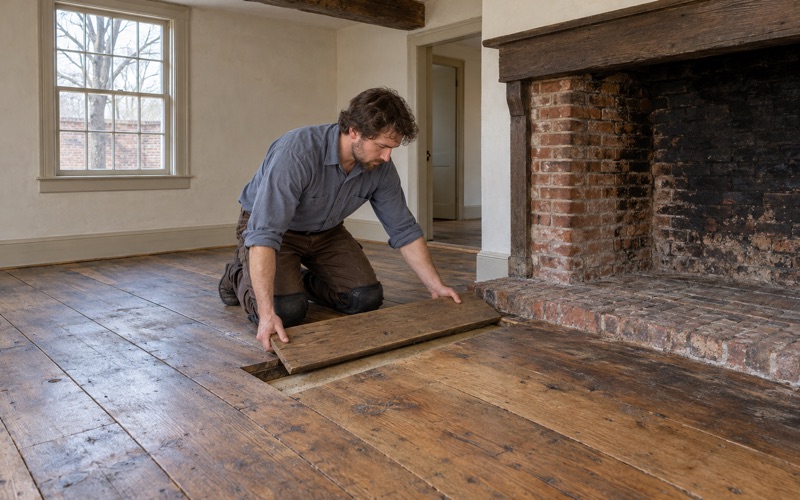
What can fall on the repair side is narrower: a board lifted by a leak, a soft spot beside a radiator, or a splintered stair tread that has become a hazard. When we are asked to fix something like that, we keep the work to the damaged area, lay a weave-in repair with matching boards, and leave the rest of the floor as we found it. Whether a given repair qualifies is for the owner and their attorney to settle, and we work from what they give us in writing.
Keeping Disruption Down While Tenants Stay
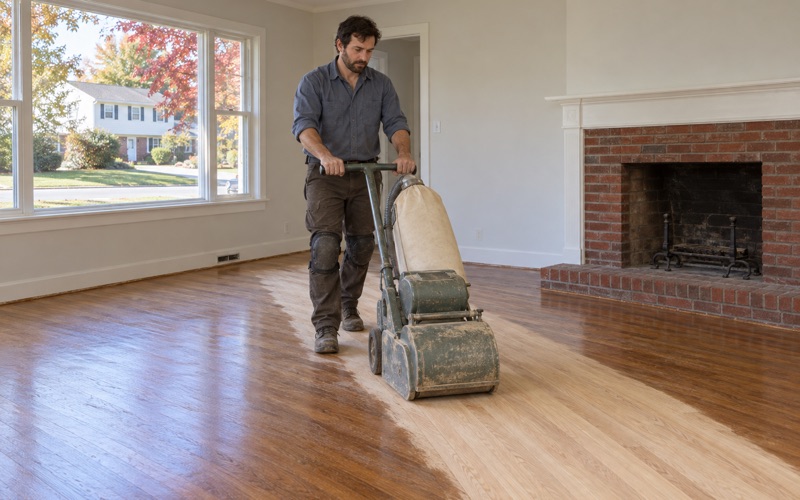
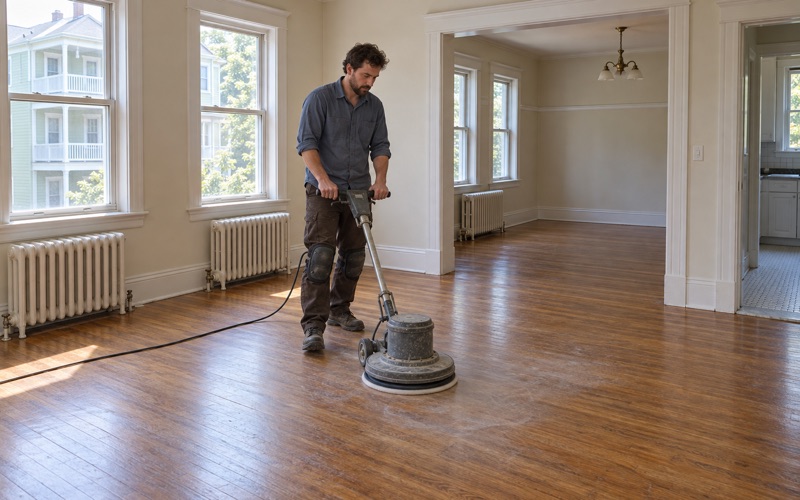
Tenants are entitled to freedom from unreasonable disruption for the entire notice period, which shapes how we work beside them. Dustless sanding, with a HEPA vacuum connected to the drum sander and edger, keeps dust out of the shared stairwell. Waterborne polyurethane chosen within the Massachusetts VOC limits for wood coatings, which are stricter than the federal ones, cuts the odor that drifts through old floor framing.
We run the loud passes on weekdays and confirm arrival times with the owner ahead of each visit. When a tenant still lives directly above or below the unit, a lighter job done with an orbital sander is sometimes the better choice even if it takes an extra day.
Looking for wood-flooring closer to Malden? See Wood-Flooring Services in Malden.
Vacant Units and Common Stairs in a Converting Building
Starting in the Empty Unit
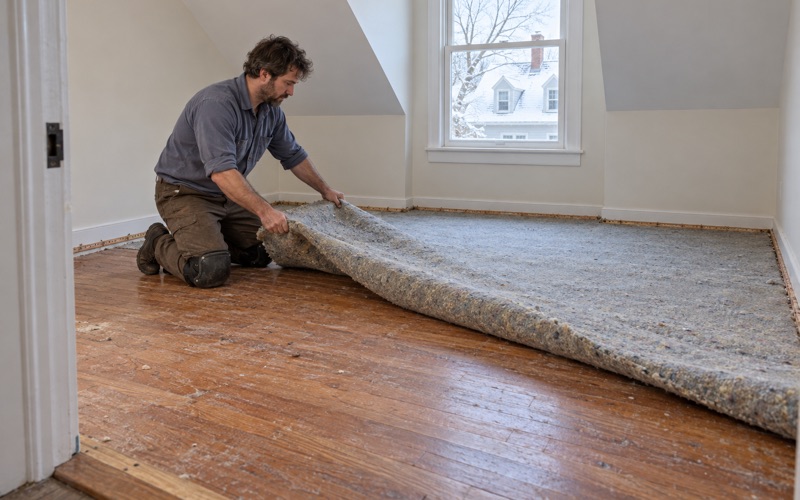
A vacant unit is where most conversion floor work can begin, although renovation of vacant units and common areas in a building that still has tenants must follow the Board’s Rules. Within that framework, an empty apartment gives us room to do the job properly. We pull old carpet, carpet pad and tack strip, see what lies underneath, and read the boards before anyone commits to a finish.
In Somerville, what lies underneath is usually old. Of the city’s 37,756 housing units, 59.0 percent were built before 1940, and floors from that era from Winter Hill to Union Square tend to be red oak strip flooring or eastern white pine, sometimes hidden under linoleum and black mastic. We check board thickness before sanding, because a floor refinished several times may not have another full sand left in it.
Common Halls, Stairs and Landings
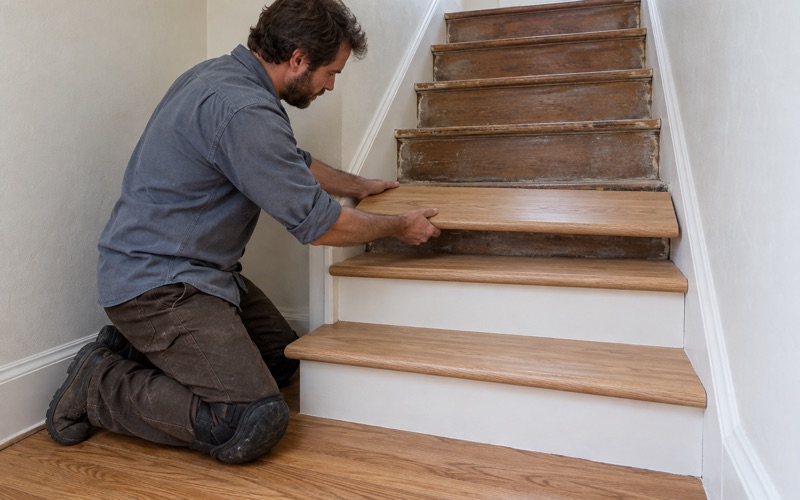
Shared stairs take the hardest wear in a multi-unit house and show it first: traffic lanes down the middle of each tread, rounded stair nosing and risers scuffed by years of boots. We quote stairs by the tread and riser rather than folding them into a square-foot price, since each step is sanded and finished largely by hand.
Where tenants still use the stair every day, we stage the work in halves or across short windows that keep a usable path open. A waterborne finish lets the stair return to light use sooner than an oil-modified polyurethane would. Hall and landing floors usually follow once the stair is back in service.
Lead and Painted Surfaces in Older Buildings
Before any sanding, we check the build year and look for painted surfaces, because Massachusetts runs its own lead-safe renovation rules for homes built before 1978. In a converting building that check matters twice over: once for our crew and once for the tenants who share air and stairs with the unit being worked on. Painted risers, baseboards and old shellac finish on hall floors are where we look first.
Hall floors that were maintained for decades rather than refinished often carry wax residue and cleaning-product buildup. We test for it and strip it before a new coat goes down, so the finish bonds to the wood instead of peeling within a season.
Refinishing After You Buy a Somerville Condo As-Is
What an As-Is Price Means for the Floors
When a tenant buys their own unit in a conversion, the purchase price has to be the fair market as-is value and cannot be set in anticipation of extensive renovations. That leaves the floors in whatever state the rental years left them: worn lanes, pet urine stains, winter gaps and all. For many new owners, the refinish becomes one of the first projects after closing.
A buyer from the open market can land in the same position when a seller chooses not to renovate before listing. Either way, the new owner now controls the scope, which makes it the right moment for decisions a landlord would never have paid for.
Screen and Recoat or a Full Sand
Not every tired floor needs the drum sander. If the existing finish is intact and the wear sits only in the top coat, a screen and recoat can freshen it for far less. Where the finish has worn through to gray wood, or water stains have turned black, a full sand with a proper grit sequence is the realistic answer.
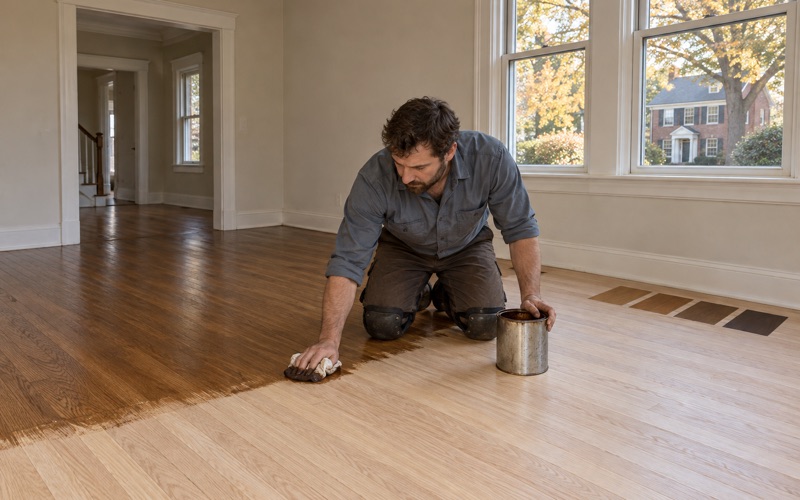
We also look for cupping and crowning that point to an old moisture problem, and for holes where radiators or pipes came out. Those holes get patched with matching boards woven into the floor, not filled with putty. Stain samples go down on the actual floor in the unit’s own light before a color is chosen, which matters with red oak because its pink undertone reads differently in a dim back room.
Association Documents and Lower-Level Units
Once the master deed is filed, the association’s documents under M.G.L. c.183A set out what belongs to a unit and what is common area. We ask new owners to confirm with the association whether the stair or entry floor outside their door is theirs to refinish before we price it.
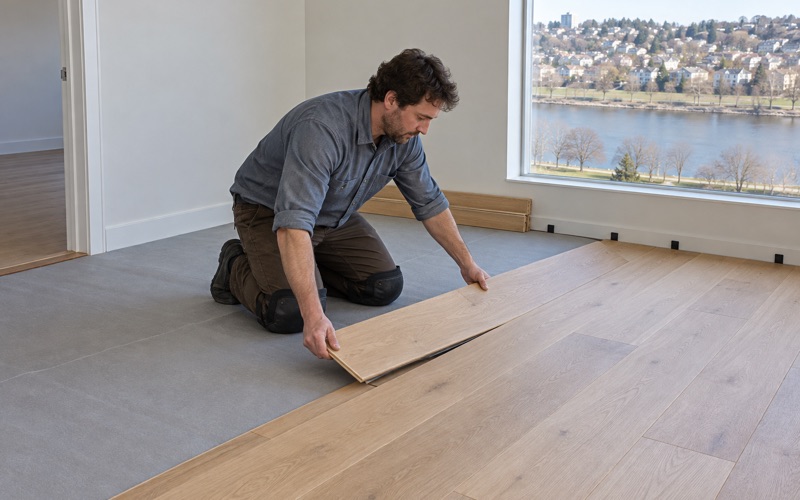
Moisture is the other thing we check before quoting, especially in a lower-level unit. We read the subfloor with a moisture meter, and where a below-grade space is damper than solid hardwood tolerates, engineered wood over a vapor retarder is usually the sounder choice.
Planning Floors Around the Condominium Review Board
Why Somerville’s Housing Mix Shapes the Schedule
Somerville’s housing leans heavily toward small multi-unit buildings: 10,654 homes sit in two-unit buildings and another 10,189 in three- or four-unit buildings, according to the 2024 five-year American Community Survey. About 65.8 percent of households rent. In buildings that size, a conversion usually means two or three units moving on separate timelines rather than one project.
Permits are granted unit by unit, and each lapses if the master deed is not filed within a year or the unit is not sold within two. The Board’s six resident members hold monthly public hearings, so an application’s timing follows the hearing calendar as well as the notice period. A two-family converted unit by unit can easily have one side ready now and the other waiting out its notice.
Sequencing the Work Unit by Unit
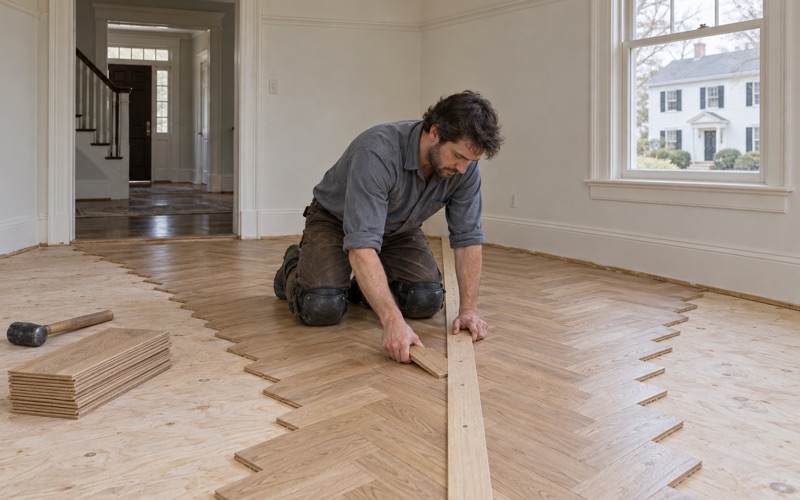
We build the floor schedule from the owner’s timeline, not the other way around. A typical order starts in whichever unit is vacant and clear to work, moves to the common stairs when the Board’s Rules and the tenants’ routines allow, and leaves any tenanted unit for last or for its eventual buyer.
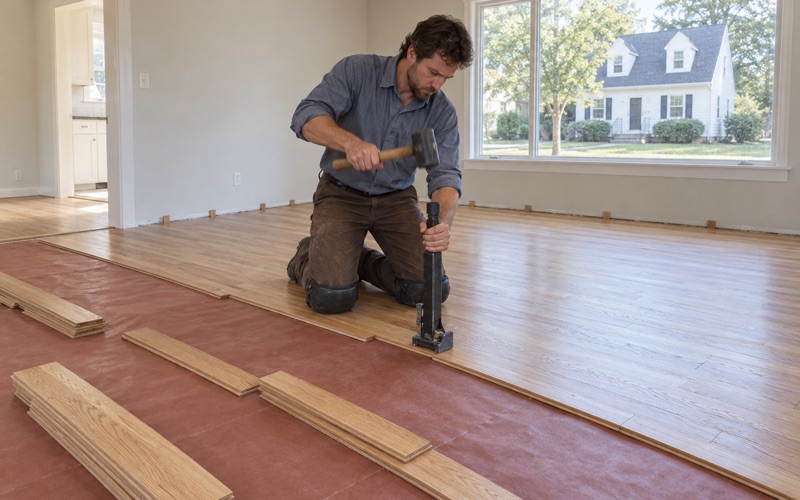
Acclimation of replacement boards, board replacement itself and finish cure times all need gaps built into that plan. Matching new wood to old red oak strip or pine means ordering the right width and grade early, because crisp select grade beside older, more figured boards shows plainly under a clear finish.
Weather, Water and Old Floors
Somerville sits in the National Weather Service’s Southeast Middlesex forecast zone, MAZ014, and winter heating dries an old building’s floors enough to open gaps that close again in summer. We avoid locking a floor down at its driest, and we keep a proper expansion gap at the walls whenever boards are replaced.
Water damage is the other common reason a conversion schedule shifts. When a burst pipe or an overflowing appliance soaks a floor, we trace the source, dry the boards and confirm the readings with a moisture meter before any board is replaced. We also document the damage room by room for the adjuster, so the claim and the repair move together.
- 20+ Years in Wood Flooring
- Stairs Priced by the Tread
- Moisture Readings Before Repairs