Medford Wood Flooring brings more than 20 years of work to wood-flooring in Saugus, and a large share of it goes into floors that have stayed underfoot in the same family for decades. The request is rarely for a new floor. It is a finish gone dull down the hallway, a board that gives a little near the kitchen, or a stair tread whose front edge has rounded over from years of the same footsteps.
We start each of those jobs the same way: by reading the floor before we price it. Board thickness, the finish already on the wood, any wax or cleaner buildup, and how much sanding the boards can still take decide whether a room gets refinished, repaired or partly replaced. A long-lived floor usually has more left in it than its owner expects.
This page covers the work we do most for people who have owned their houses a long time, from full refinishing and board repair to stairs and getting a house ready for whoever lives there next. It also covers how we plan a project around a household that stays in the house while we work.
Floor Work for Long-Time Saugus Homeowners
Who We Are Usually Working For
Saugus is a town of owners. Of 10,958 occupied homes, 7,836 are owner-occupied, or 71.5 percent, and the town’s 2016 Housing Production Plan found that at least three-quarters of every householder age group above 34 own their homes. Most of those owners, 6,673 of the 7,836 households, live in detached houses.
Those owners are also getting older in place. American Community Survey figures for Saugus show 3,054 owner households, 39.0 percent of the total, headed by someone 65 or older, and 1,518, or 19.4 percent, headed by someone 75 or older. These are households that bought years ago and stayed, and their floors show it in exactly the places daily routines run.
What Decades of Use Look Like on a Floor
Traffic lanes are the most common sign. A path from the kitchen doorway to the back door, or down the middle of an upstairs hall, loses its finish first and then starts to gray as bare wood picks up dirt. Beside it, the finish under a rug or along the walls can look almost new, which makes the contrast sharper every year.
Other marks build up more quietly. Water stains by a sink or a plant stand, pet urine stains from animals long gone, and dents where a heavy piece of furniture sat for years all tell us how the floor has lived. Winter gaps that close again by summer are normal seasonal movement, but gaps that stay open, or boards that cup or crown, point to moisture we need to find before anything is sanded.
The Town Saw This Coming
Saugus planners wrote this trend into their own housing work. The Housing Production Plan, prepared in coordination with MAPC in December 2016, found that residents 60 and older grew by 1,164 between 1990 and 2010. It projected that the aging of the Baby Boomers would raise the senior population by 2,200 people, or 48 percent, through 2030.
For floor work, that means more owners deciding whether to refresh a house they plan to keep or prepare it for a sale or a family handoff. Both paths start with the same question from us: how much wood is left in these boards, and what does the floor actually need rather than what it could take?
Looking for wood-flooring closer to Wakefield? See Wood-Flooring Services in Wakefield.
Refinishing Floors You Have Lived On for Decades
Checking What the Floor Can Still Take
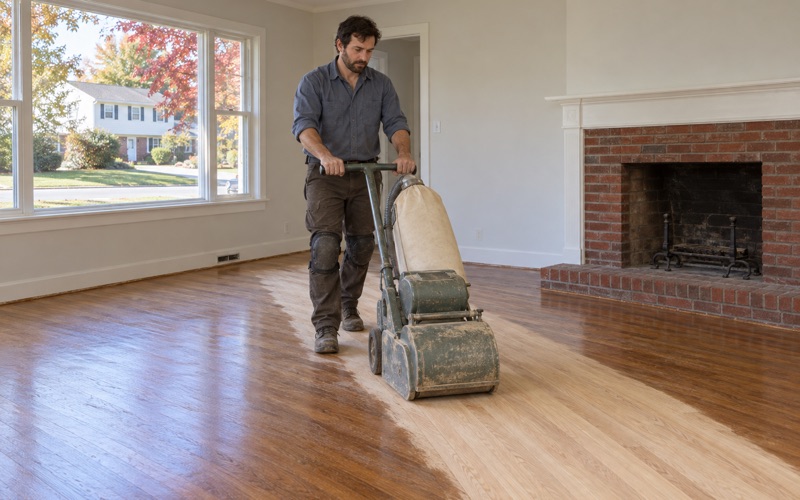
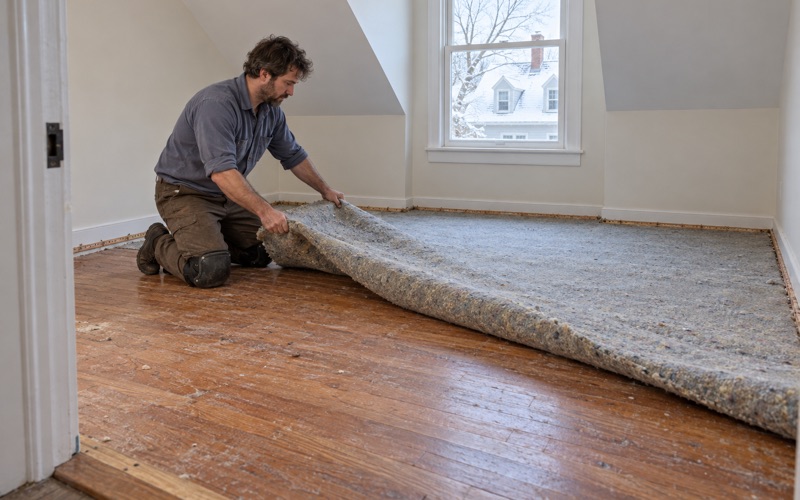
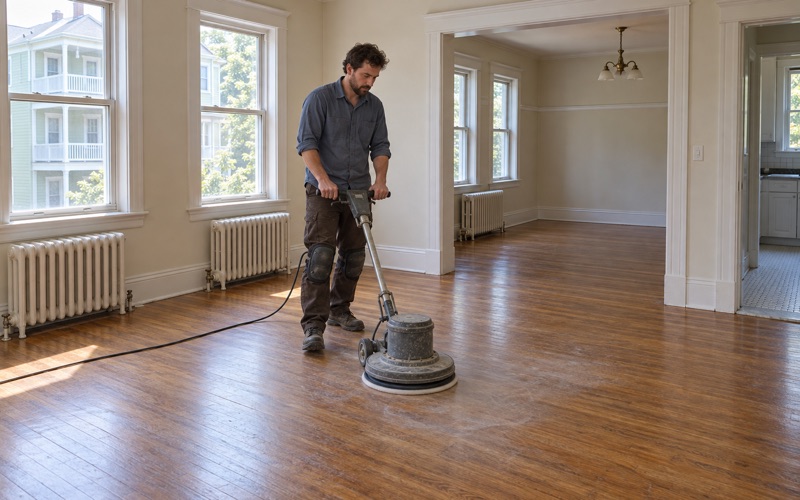
Solid hardwood can be sanded only so many times before the wood above the tongue and groove gets too thin, and a floor refinished two or three times already may have little to spare. We lift a floor register or check at a threshold to see the board edge before we quote a full sand. If there is not much wood above the tongue, a screen and recoat or a lighter grit sequence may be the right call instead of a full drum sander pass.
The age of the house matters as much as the age of the finish. In Saugus, 29.4 percent of homes were built before 1940, and any house built before 1978 falls under the lead-safe renovation rules Massachusetts runs on its own. We confirm the build year and look for painted surfaces, such as painted borders, old baseboards or stair risers, before a sander touches the floor.
Wax, Old Finishes and Why They Matter
A floor lived on for decades carries a history of products. Paste wax, oil soaps, shine restorers and spray cleaners all leave residue, and new polyurethane laid over wax residue does not bond; it peels or beads up instead. We test for residue and remove it before a new coat goes down, and we identify whether the existing coating is polyurethane, a shellac finish or something older.
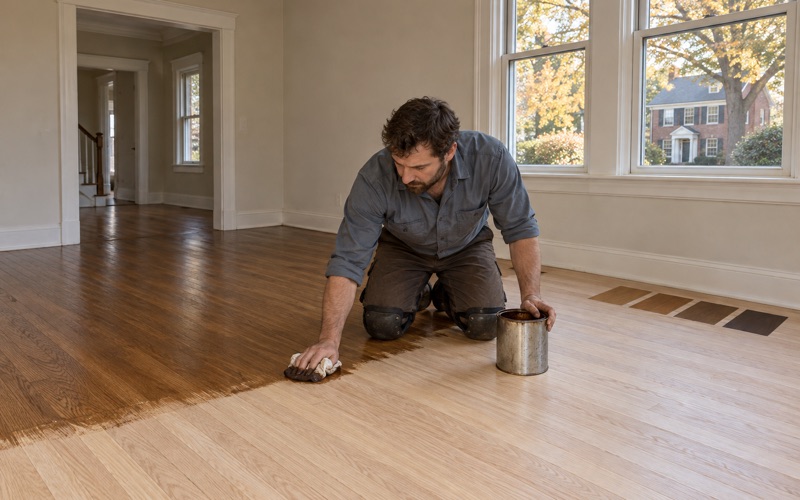
Color is the other decision long-time owners care about. Red oak strip flooring that has sat under an oil-based finish for years often turns the deep orange oak tone many people want gone. We lay stain samples on the actual floor, in the room’s own light, so the choice is made against the real boards rather than a printed chart.
Choosing a Finish You Will Live With
Most owners who have kept a house this long want a floor that is easy to look after. We talk through waterborne polyurethane, oil-modified polyurethane and hardwax oil in terms of how each wears, how it ages in color, and how long a room stays out of use while it cures. Sheen level matters as much as the product, since a satin finish hides everyday scuffs far better than gloss.
Every finish we use fits the Massachusetts VOC limits for wood coatings, which are stricter than the federal limits. For a household staying in the house during the job, cure time also decides the order of rooms, so the bedroom and kitchen are never out of use at the same time.
Repairing Worn Boards and Stairs in a Saugus House
Loose, Squeaking and Damaged Boards
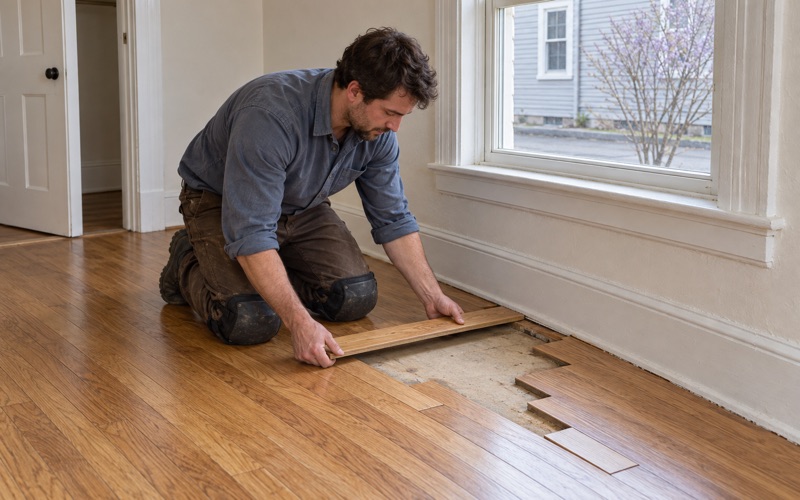
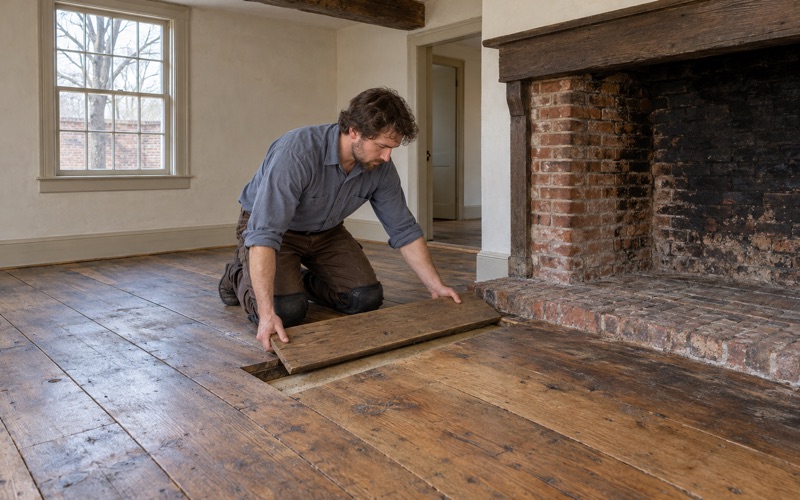
A board that moves underfoot usually means a fastener has let go, the subfloor has shifted, or a tongue has broken off. We find which one before we fix it, because a nail driven into a board with a split tongue only moves the squeak along the floor. Where a board is split, stained through, or riddled by old house borer or powderpost beetle activity, we cut it out and replace it.
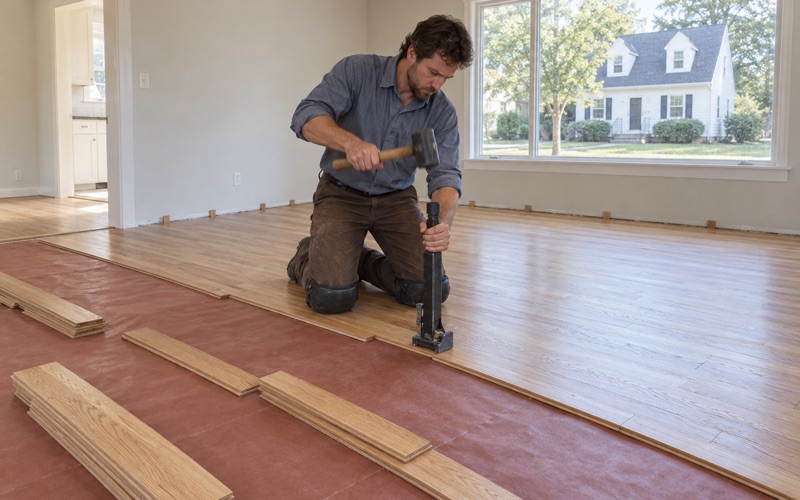
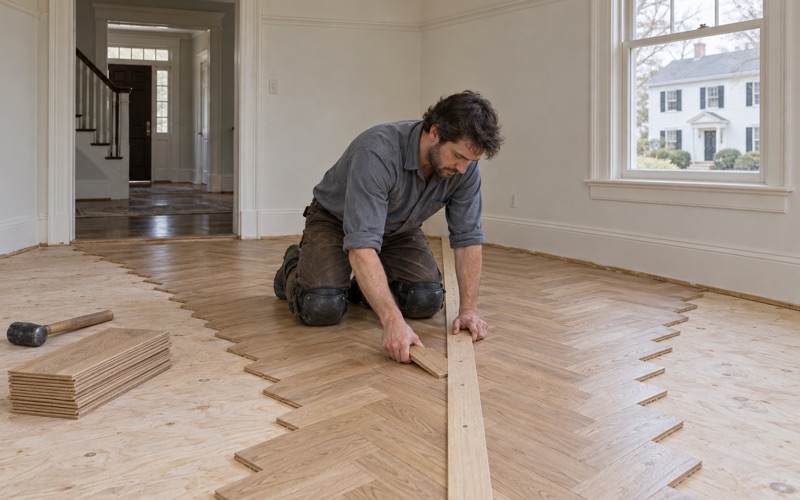
Replacement boards go in as a weave-in repair, staggered into the existing pattern so the patch disappears once the floor is finished. The same method closes the holes left where radiators or pipes once came through the floor. We patch those with matching boards woven into the field instead of filling them, so a room that lost a radiator looks like it never had one.
Stair Treads, Risers and Nosing
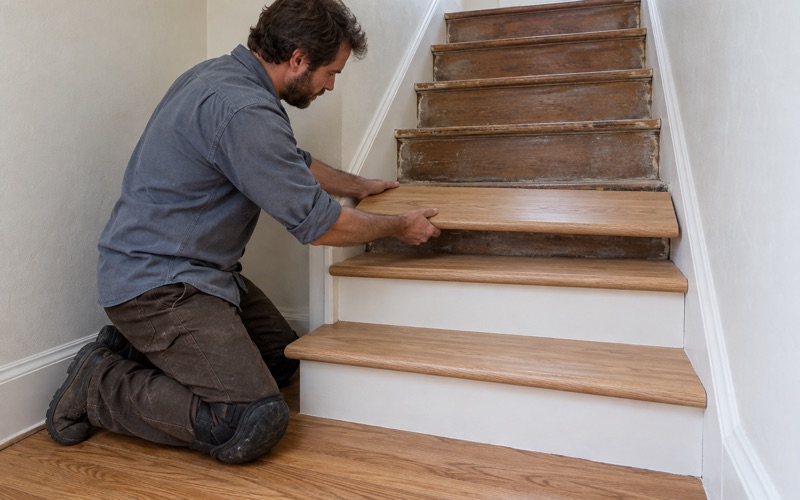
Stairs take the most concentrated wear in a house that has been lived in for decades. The stair nosing on each tread rounds over and loses its finish first, and treads can loosen and creak where old glue and nails have given up. We quote stairs by the tread and riser rather than folding them into a square-foot price, so an owner can see exactly what each flight will cost.
A tread worn thin or cracked gets replaced, while one that is sound but dull gets sanded and refinished by hand, since a drum sander cannot run on a stair. Painted risers get the same build-year and paint check as any other painted surface in the house. New treads are stained to match the old ones, with samples laid on the stairs themselves.
Water Damage and Hidden Moisture
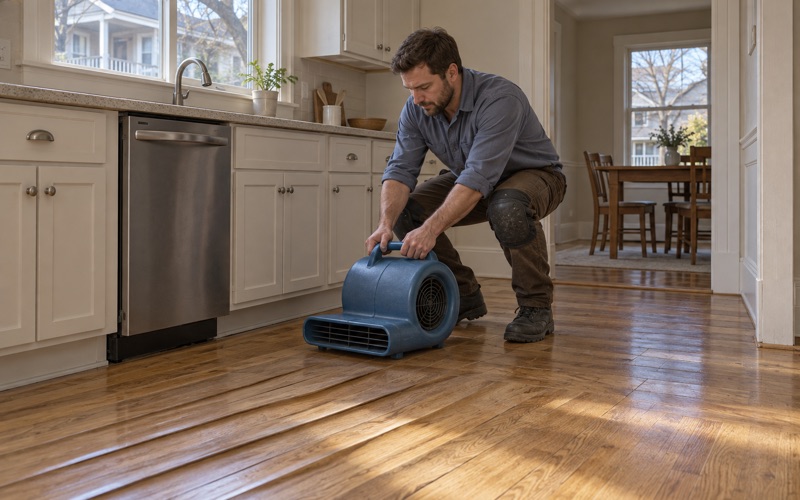
A burst pipe, a washer hose that let go, or a wet basement can surface in a floor weeks later as cupping or buckling. We trace the source, dry the area and read the boards with a moisture meter before replacing anything, because new boards laid over a wet subfloor will move the same way. When an insurance claim is open, we document the damaged floor room by room for the adjuster.
Getting a Saugus House Ready for Its Next Owner
Refinishing Before a Sale
Owners who have decided to sell often ask whether the floors are worth doing first. We cannot promise what a floor adds to a sale price, but an empty house is the easiest time to refinish, with no furniture to move and no one to work around. A floor sanded and finished between moving out and listing changes how the rooms look in photographs and at a showing.
For a sale we usually steer toward a natural or light stain and a satin sheen, since those read well to the widest range of buyers. Stain samples stay on the floor until the family agrees, and board repairs and stairs are handled in the same visit so the house is finished in one pass.
Handing a House to the Next Generation
Not every long-held house is sold. Some pass to children or other relatives, and the floor work follows their plans: a full refinish before a family moves in, repairs before a room changes use, or a screen and recoat to keep good floors in shape while ownership changes hands.
Some of these homes are owner-occupied two-families, and Saugus counts 380 owner households in two-unit buildings. In those we work one floor at a time, so the household upstairs or downstairs keeps living in the house while the other floor is sanded and finished.
Planning a Project from Cliftondale to Saugus Center
Saugus covers 11.8 square miles and several villages, among them Cliftondale, East Saugus, Lynnhurst, Oaklandvale, North Saugus and Saugus Center. Known as the site of the first integrated iron works in North America, established in 1646, the town grew from about 5,000 people in 1900 to 28,619 at the 2020 census, so one street can hold houses from very different eras.
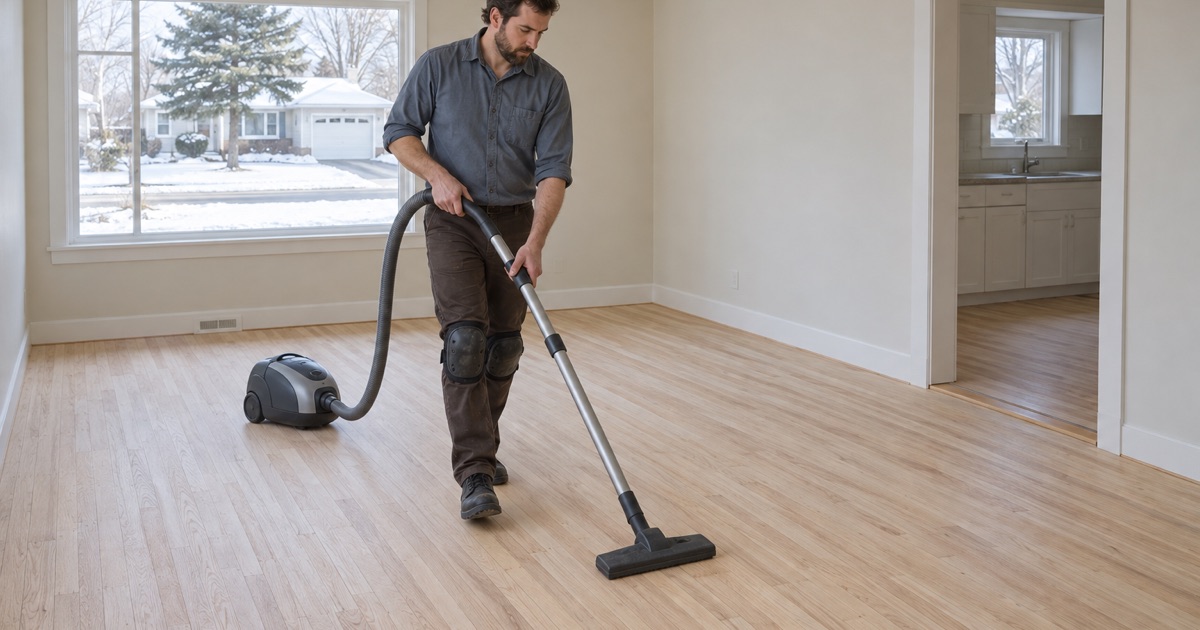
For owners who stay home during a project, we plan the sequence around daily life: which rooms remain usable, where the furniture goes, and how long each room is out of service while the finish cures. Dustless sanding with a HEPA vacuum keeps dust out of the rest of the house, and we walk through the schedule with the household before the first board is sanded.
- 20+ Years in Wood Flooring
- Stairs Priced by the Tread
- Moisture Readings Before Repairs