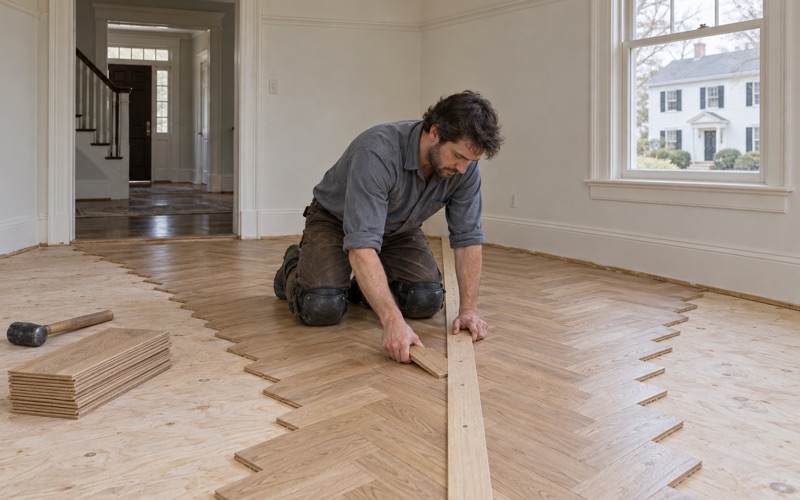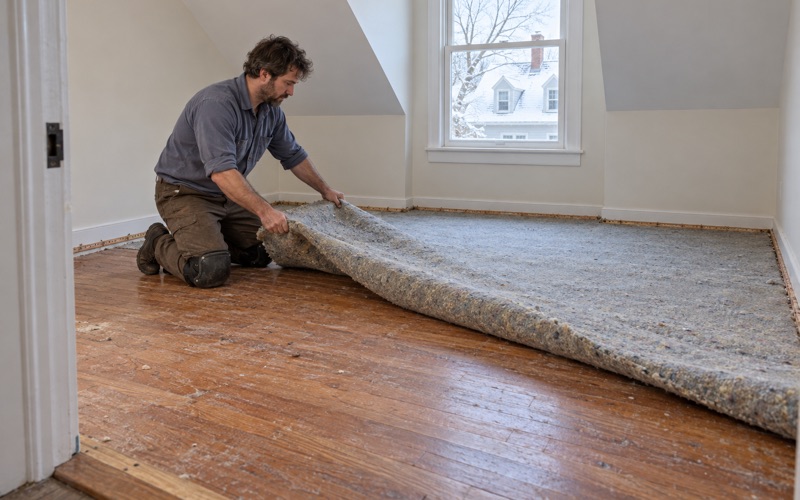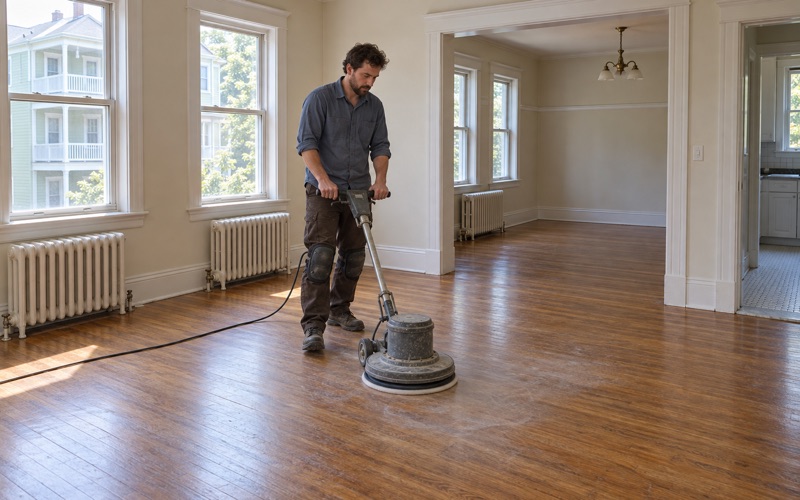
Medford Wood Flooring has spent more than 20 years on wood flooring in Roxbury and the rest of greater Boston, and most of what we do here is keep good floors in service rather than replace them. We sand and refinish worn hardwood, weave new boards into damaged sections, rebuild stairs and trace water damage back to its source before anything gets torn out.
The homeowners who call us tend to be people who intend to stay. They want a floor that holds up for the next decade, a finish that suits the house, and a crew that treats the job as work on a home rather than a quick flip. That shapes how we quote, how we schedule and which finishes we recommend.
Below we explain what changes about floor work in this neighborhood, including in houses where the family owns the building but not the ground beneath it, and how we plan a project so it fits the way you actually live in the house.
Floors in Roxbury’s Land-Trust Homes
A Neighborhood Rebuilt on Vacant Land
A large share of the housing around Blue Hill Avenue, Dudley Street and Howard Avenue exists because residents organized to rebuild. By the 1980s, more than one-fifth of the neighborhood’s land was vacant. The Dudley Street Neighborhood Initiative, founded in 1984, set up Dudley Neighbors Inc. in 1988 as a community land trust to hold that land for present and future generations.
On November 10, 1989, the BRA board voted unanimously to grant DSNI the power of eminent domain, which let the vacant parcels be assembled into buildable land. Dudley Neighbors has since created 225 permanently affordable homes in the Dudley Triangle, a mix of owner-occupied houses, cooperatives and nonprofit rentals, all less than two miles from downtown Boston.
Owning the House, Not the Ground Under It
In a land-trust home, the family owns the house and Dudley Neighbors keeps the land. The trust uses long-lasting ground leases to control the use and resale of whatever is built on its land. For a floor, that arrangement changes very little about the work itself: the oak, the subfloor and the finish belong to the house, and they wear the same way they would anywhere else.
What it does change is the time horizon. An owner in a permanently affordable home is usually planning to live there for a long while, so a floor decision is less about resale appeal and more about durability, maintenance and how the house feels to live in. We plan the job around that.
Reading Your Own Lease First
We do not know the terms of any particular ground lease, and we will not guess at them. If you own a land-trust house or live in one of the cooperatives, read your lease or ask the trust whether it says anything about renovation work before you schedule a full replacement. A sand and refinish, or a weave-in repair, rarely raises that question at all.
If you do need to check with anyone, we can give you a written scope that describes the floor, the rooms, the materials and the finish in plain language. That makes the conversation quick, whether it is with the trust, a cooperative board or a household member who shares the decision.
Looking for wood-flooring closer to Brookline? See Wood-Flooring in Brookline.
Caring for Floors in a Roxbury Home You Plan to Keep
Screen and Recoat Before the Finish Wears Through
The cheapest floor project is the one done before the wood is exposed. When traffic lanes start to look dull but the stain and bare wood are still covered, a screen and recoat lightly abrades the old finish and adds a fresh coat of polyurethane. It takes a day, produces little dust and puts off a full sanding by years.
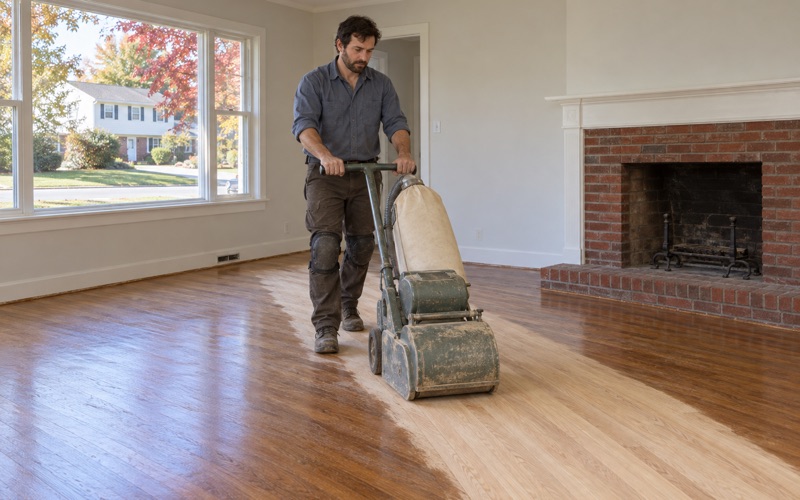
Once gray, bare wood shows in a hallway or in front of the kitchen sink, a recoat will not fix it. At that point we check the board thickness, run a full grit sequence with a drum sander and an orbital sander, and HEPA vacuum between passes. On solid hardwood that has been sanded before, measuring what is left above the tongue and groove comes first.
Winter Gaps, Cupping and Suffolk Humidity
Roxbury sits in National Weather Service forecast zone MAZ015, Suffolk, and wood floors here move with the seasons. Radiator heat dries the air in winter, and board gapping opens between strips. In humid summers the boards swell and the gaps close. Winter gaps that close again by summer are normal, and we tell people not to fill them.
Cupping, where board edges rise above the centers, or crowning, the reverse, points to moisture that has stayed rather than cycled. Before we sand a cupped floor, we read it with a moisture meter and find out why. Sanding a floor flat while it is still wet leaves it crowned once it dries.
Wax, Cleaners and Pet Stains
Many older floors carry decades of paste wax, oil soaps or spray cleaners, and a new finish will not bond over them. We test for wax residue and cleaning-product buildup before a recoat, and when it is present, we remove it rather than hoping the finish sticks. Skipping that step is how a new coat peels within a year.
Pet urine stains and dark water stains often go deeper than the finish. Sometimes sanding lifts them, and sometimes the stained boards have to come out. We tell you which before we start, so you are not paying for a refinish that leaves black rings behind.
Repairs and Refinishing in Roxbury Houses
Old Housing, Lead and Lower-VOC Finishes
Roxbury was annexed to Boston on January 5, 1868, and trolley service from 1887 filled old farms and estates with single-family homes, row houses and multi-family homes. In ZIP code 02119, used here as a proxy, 4,616 of 13,023 homes were built in 1939 or earlier, while 1,640 went up in the 2010s, much of that newer housing on formerly vacant lots.
That range matters for the work. Massachusetts runs its own lead-safe renovation rules for homes built before 1978, so we confirm the build year and check any painted baseboards, stair risers or thresholds before sanding. For finishes, we choose products that fit the Massachusetts limits on VOCs in wood coatings, which are tighter than the federal ones.
Radiator Patches and Board Replacement
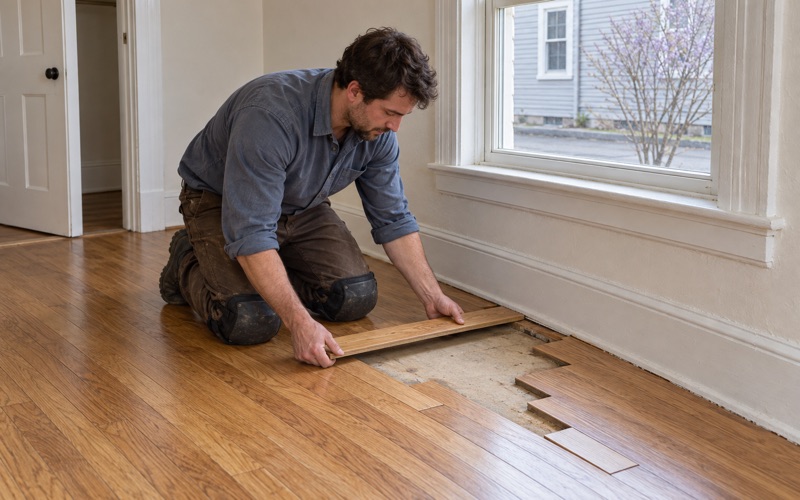
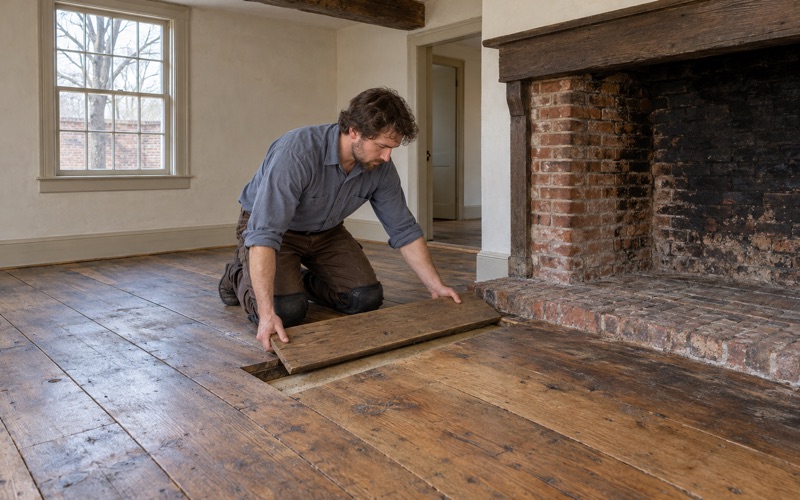
When a radiator or a run of pipe comes out of an older house, it leaves holes and a rectangle of mismatched wood. We patch those areas by weaving matching boards into the existing floor, staggering the joints so the repair disappears after refinishing. Filler and a square plug always show.
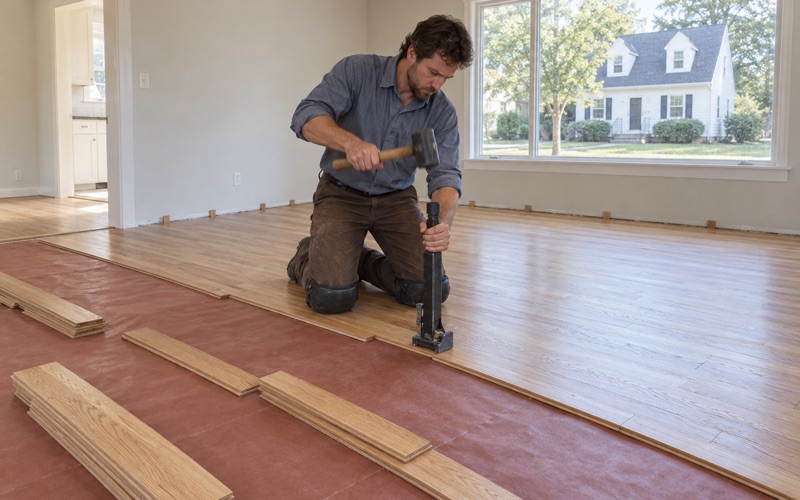
The same approach handles damaged boards anywhere in the room: burned spots, split ends, or areas chewed by carpenter ants or old house borer. We cut out the affected strips, check the subfloor under them, and lace in new tongue and groove stock of the same species and width, most often red oak strip flooring in older Roxbury homes.
Stairs, Water Damage and Lower Levels
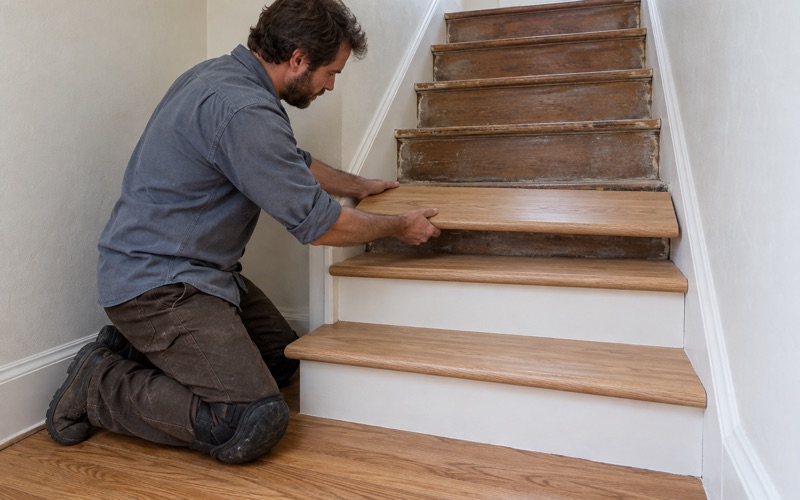
Stairs get their own line on our quotes. We price them by the tread and riser, because a staircase with worn stair nosing and painted risers is a different job from an open floor, and folding it into a square-foot price hides the real cost.
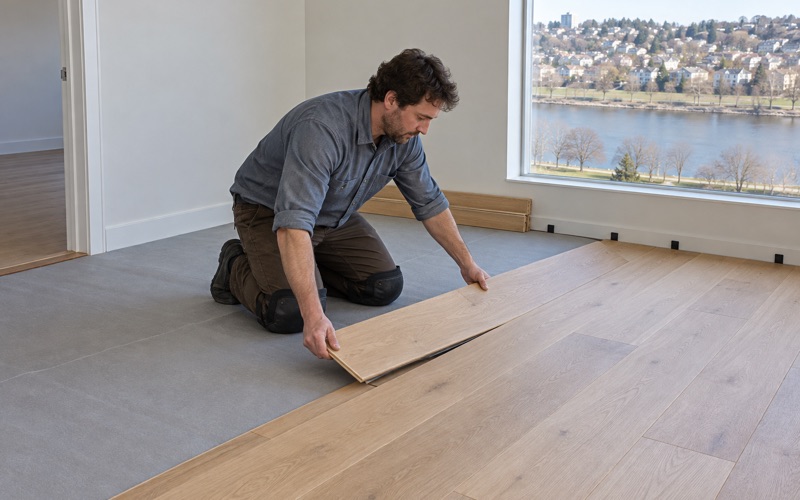
Water from a burst pipe, an overflowing washer or a wet basement gets traced and dried first, then read with a moisture meter before any board is replaced. We document water-damaged floors room by room for your insurance adjuster. For lower-level rooms, we match the floor to the moisture that is actually there, which usually means engineered wood rather than solid hardwood.
Planning a Floor Project in Roxbury
Two-Families, Row Houses and Co-ops in Stages
Owner households in Roxbury live in detached houses, attached row houses, two-unit buildings and three- and four-unit buildings, and many share a building with other people. In an owner-occupied two-family, we work one floor at a time so the household upstairs or downstairs can stay put while we finish the other unit.
In cooperatives and attached homes, we plan dust control and working hours around the neighbors on the other side of the wall. Dustless sanding with HEPA containment keeps most of the mess inside the room, and we sequence rooms so a family always has a way through the house.
Stain Samples and Finish Choice
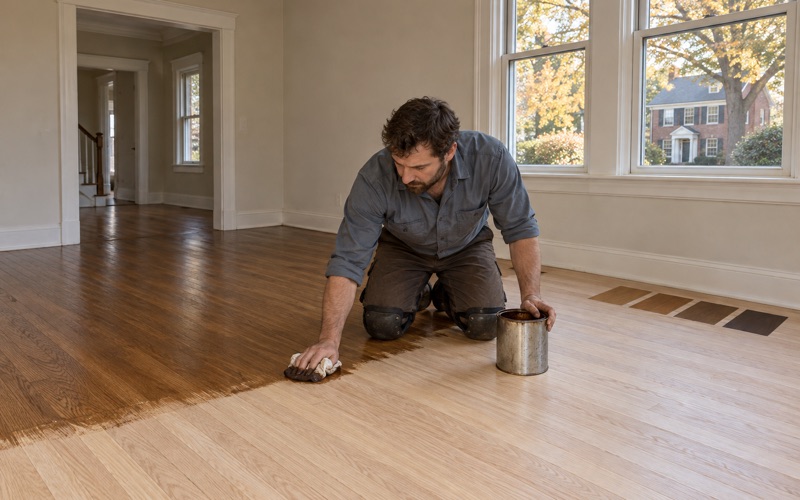
Color is hard to judge from a showroom board. We lay stain samples directly on your floor, in your own light, and leave them long enough for you to look in the morning and at night. Older red oak can turn orange under an amber oil-modified polyurethane, and a sample shows that before the whole room commits to it.
For finish, waterborne polyurethane stays clearer and dries faster, oil-modified finishes warm the wood, and hardwax oil suits people who prefer to spot-repair rather than recoat. We also talk through sheen level, because a satin finish hides everyday scratches better than gloss in a house that sees daily wear.
What to Expect From Start to Finish
A typical refinish starts with a walkthrough, a moisture reading and a look at board thickness, then a written scope and schedule. Furniture comes out, thresholds and quarter round are handled, and sanding, staining and finishing follow over several days depending on the number of coats and drying time.
We leave you with care instructions for the finish you chose, including which cleaners to avoid so wax and residue do not build up again. For a household planning to stay in a Roxbury home for years, that maintenance plan matters as much as the refinish itself, because it decides when you will next need us.
- 20+ Years in Wood Flooring
- Stairs Priced by the Tread
- Moisture Readings Before Repairs