Medford Wood Flooring has spent more than 20 years on wood flooring in Revere and across our service area, and a growing share of our Revere calls come from one kind of home: an owned unit high up in a condominium tower. Those floors have reached the age where a refinish, a repair or a full replacement is no longer something to put off, and the work inside an elevator building runs differently from the same job in a house.
We sand and refinish when the wood can take it, replace it when it cannot, and tell you which one you are looking at before a quote is written. Every job starts with the floor itself: what it is, how much wear surface is left, what finish is on it and what has soaked into it over the years.
This page covers what we find in Revere’s high-rise condominiums, why so many of them date from the same decade, and how we plan a floor project around neighbors, elevators and a building that stays occupied the whole time.
Revere’s 1980s Towers and the Floors Inside Them
A Skyline Built in One Decade
Revere’s housing is old at one end and tall at the other. More than a quarter of its 24,139 homes predate 1940, but the busiest building decade since then was the 1980s, when 3,079 homes went up, more than in any other ten-year span after 1939. A good part of that decade stands along the water.
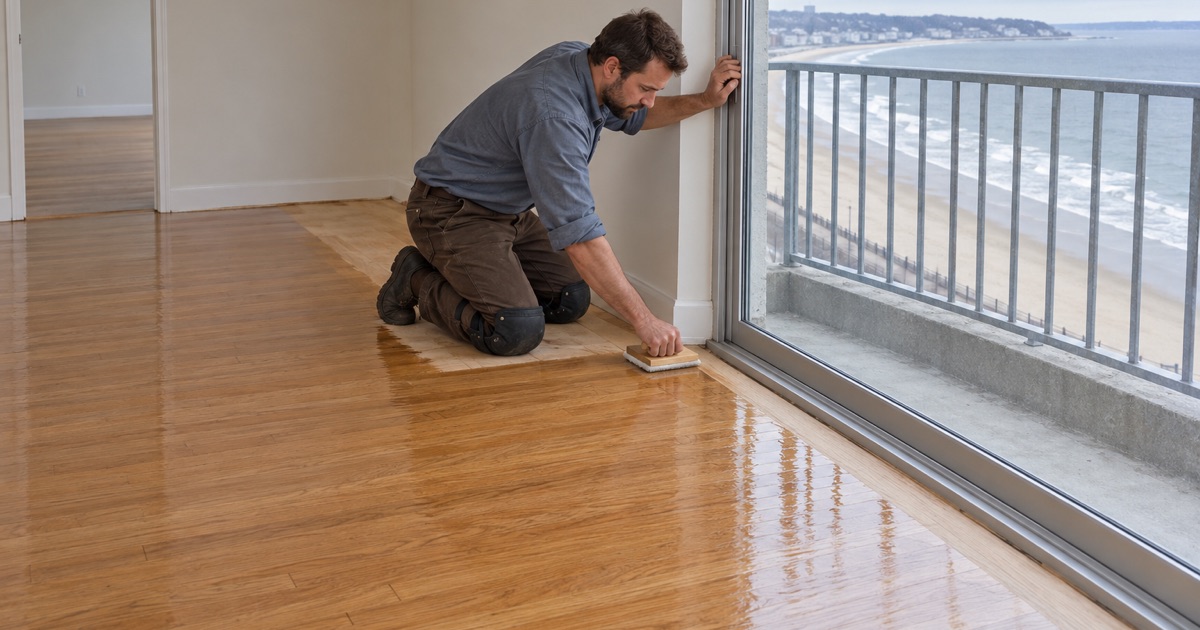
Seaview Towers, at 510 Revere Beach Boulevard, was built in 1983 as a 12-story, 90-unit condominium. Seawatch Towers followed on Ocean Avenue, an 18-story building with 97 units completed in 1986, and the St. George at 350 Revere Beach Boulevard arrived in 1988 with 240 units on 13 stories. All three look out over Revere Beach, the oldest public beach in the United States.
Owners Living Above the Boulevard
Census tables do not count condominiums, but they do count owner households by the size of the building they live in. In Revere, 753 owner households live in buildings of fifty or more units, which is the closest published measure of how many people own a home in a large building like these. It is a proxy, not a condo count, and we treat it that way.
Most of the city rents, 54.4 percent of households, so an owner in a tower is making a longer decision than a tenant would. That changes the floor conversation. An owner is choosing something to live on for another decade or two, not a surface to get through the next lease.
Forty Years of Wear
A unit finished in the mid-1980s and never reworked has floors that are about forty years old. Whatever went in at the start has carried four decades of chairs, pets, daylight through wide windows and the grit that comes in on shoes. Many units have also been redone by a previous owner, so we never assume the floor in front of us is the one the building opened with.
That is why the first visit is an inspection rather than a pitch. We look for traffic lanes in front of the kitchen and the slider, water stains near sinks and dishwashers, pet urine stains in corners, and board gapping that tells us how the floor has been moving through the seasons.
Looking for wood-flooring closer to South End? See Wood-Flooring in South End.
Updating the Floors in a Forty-Year-Old Revere Condo
Refinish, Repair or Replace
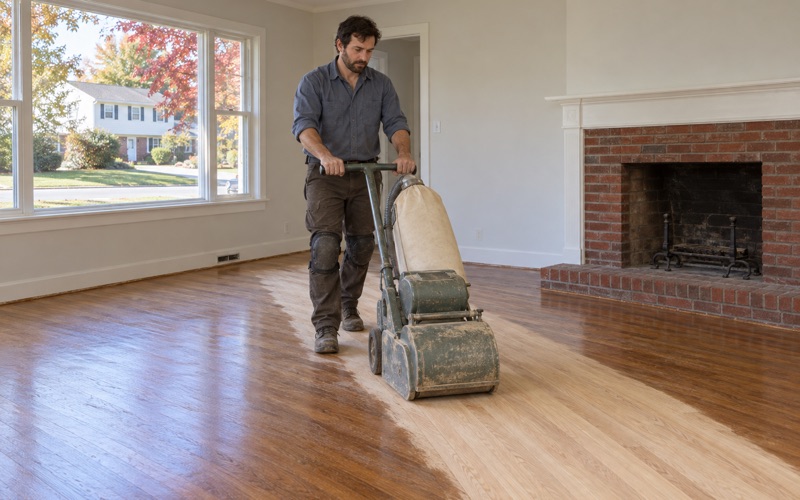
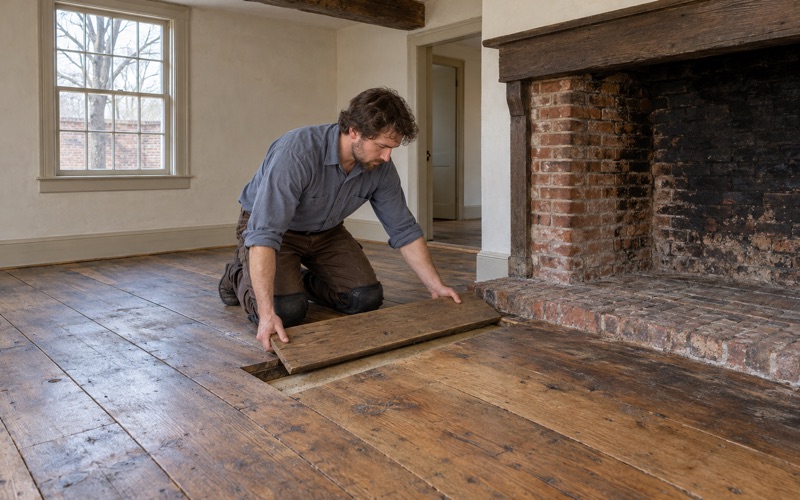
If the unit has solid hardwood with enough wood above the tongue and groove, a sand and refinish usually brings it back. We pull a threshold or a vent cover to check board thickness before recommending a full sanding, because a floor that has already been sanded several times may not have another one in it. Where the finish is only dull and scratched, a screen and recoat can buy years of wear with far less disruption.
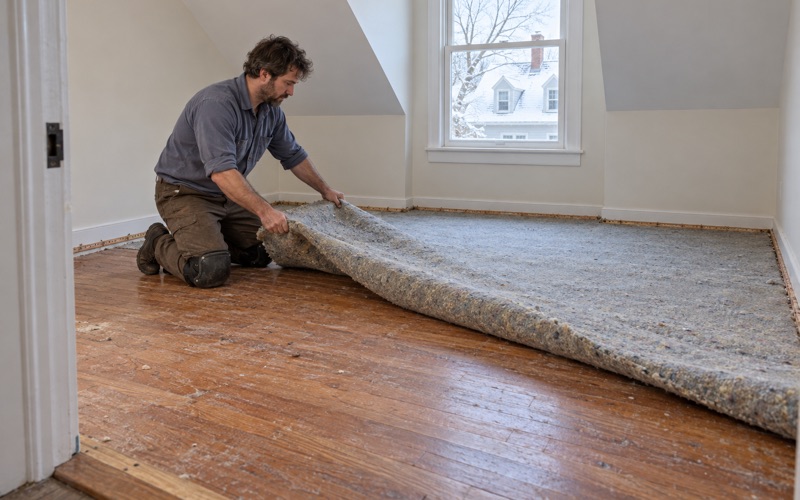
Engineered floors are a different calculation. The engineered wear layer sets the limit, and some thin ones cannot be sanded at all. When a floor is past saving, or has sat under carpet pad and tack strip for decades, replacement is the honest answer, and we will say so.
Old Finishes and Old Residue
Floors cleaned with the wrong products for forty years collect a film that fresh polyurethane will not bond to. We test for wax residue and cleaner buildup before any finish goes down and strip it out, so the new coat grips instead of peeling a year later.
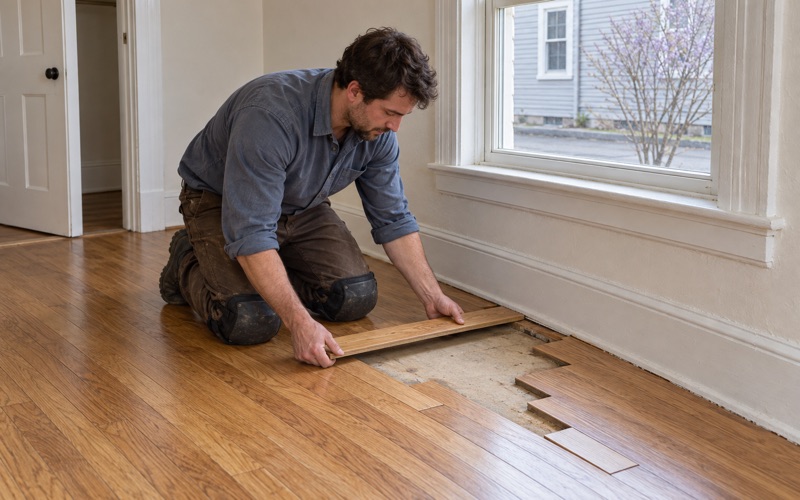
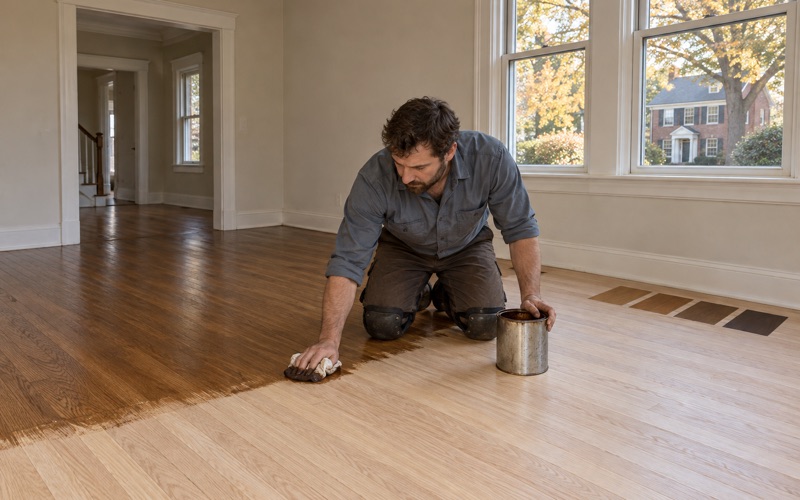
Where a dishwasher leak or a plant pot has ruined a few boards, we do board replacement as a weave-in repair, staggering new pieces into the existing pattern instead of cutting in a square patch. Stain samples go down on your floor, in your own light, before anyone picks a color, because a shade chosen in a showroom can read very differently in a bright corner unit.
Choosing What Goes Down
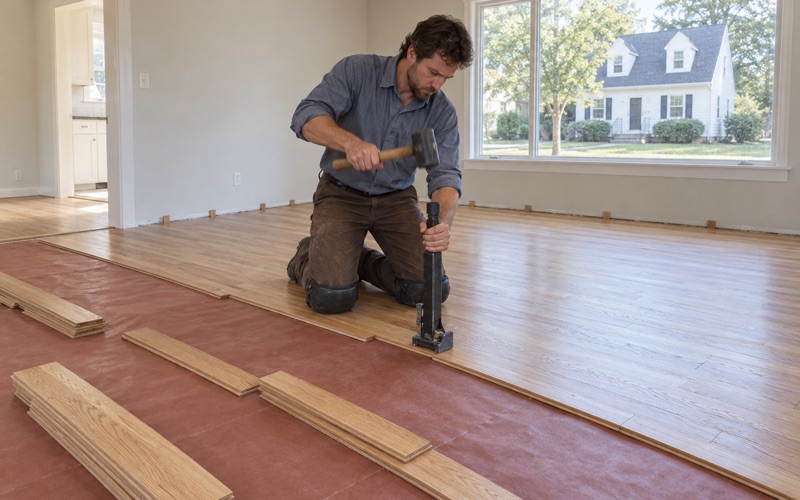
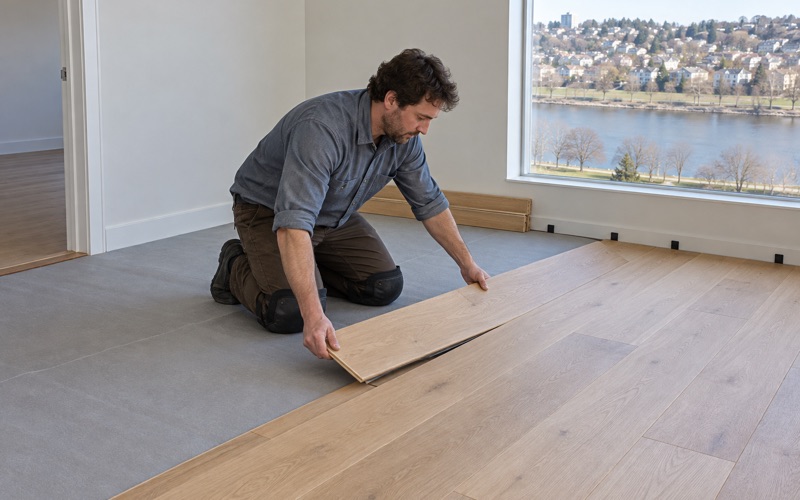
For a replacement, we first find out what is under the existing floor and how it is built, since that decides whether solid hardwood or engineered wood makes sense. We take moisture meter readings, let the new material acclimate in the unit, and leave the expansion gap the NWFA Installation Guidelines call for around the edges.
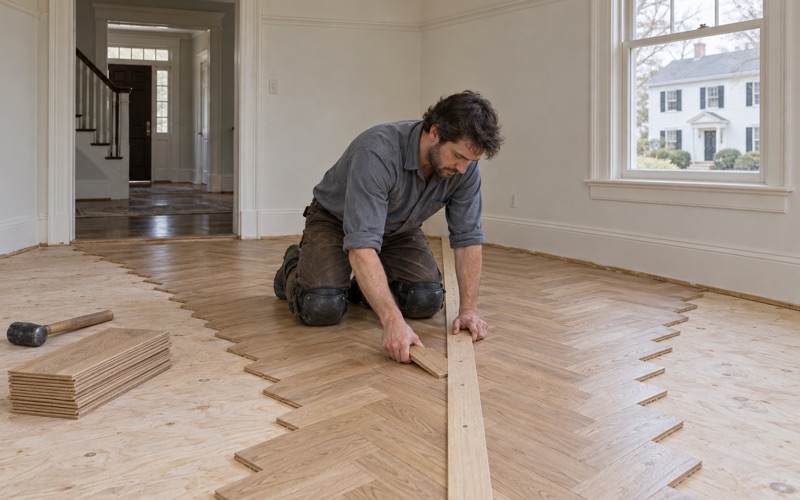
Species and pattern are open choices. Red oak and white oak remain the common picks, maple and hickory bring more Janka hardness for a busy household, and wide plank or herringbone can change how a long open room reads. Prefinished boards shorten the time the unit is out of use, while a site-finished floor gives a seamless surface and a wider choice of sheen level.
Working Inside a Tower on Revere Beach Boulevard
Elevators, Hallways and Neighbors
A floor job on the ninth floor is a logistics job before it is a carpentry job. Boards, sanders and finish all come up through a shared elevator, so we coordinate a time with building management and protect the elevator and hallway on the way through. Old flooring leaves the same way, bagged and moved out rather than left in a common corridor.
Neighbors share walls and ceilings with you, so we keep the loud work to reasonable hours and tell you in advance which days will be noisiest. The drum sander and edger are the loud part; once sanding is done, finishing is quiet.
Dust and Fumes in a Shared Building
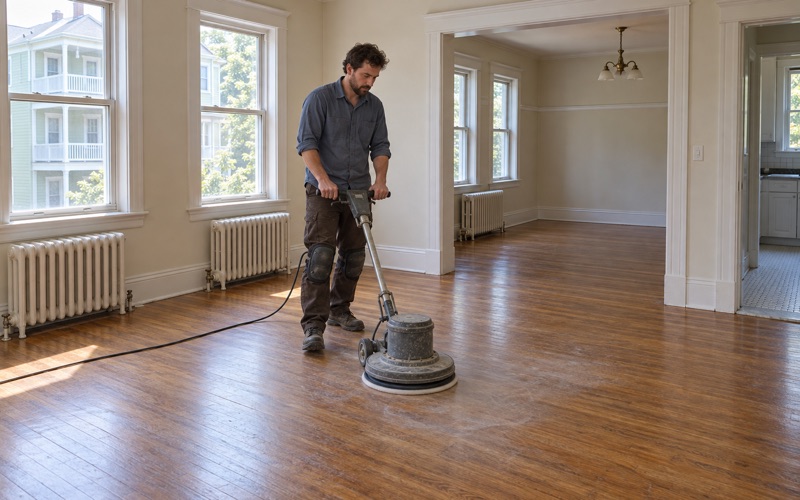
Dust in a high-rise has nowhere easy to go. We run dustless sanding with the machines connected to HEPA vacuum extraction and work through a grit sequence that leaves a clean surface for the finish. Closets and rooms we are not working in get sealed off.
Finish choice matters for the same reason. Our coatings fit the Massachusetts VOC limits for wood finishes, which are tighter than the federal ones, and most tower owners choose a waterborne polyurethane because it dries faster and carries less odor into the hallway than an oil-modified polyurethane.
The Build Year and Lead Checks
We check the build year before sanding anything. Massachusetts runs its own lead-safe renovation rules for homes built before 1978, and the towers along the boulevard went up after that line, in 1983, 1986 and 1988. We still note painted baseboards and trim before sanding against them.
The rest of Revere is a different story. With 65.4 percent of the city’s homes built before 1980, the lead check in an older house in Beachmont, Shirley Avenue or West Revere is a real step, not a formality.
Planning a Floor Project in Revere
What the First Visit Covers
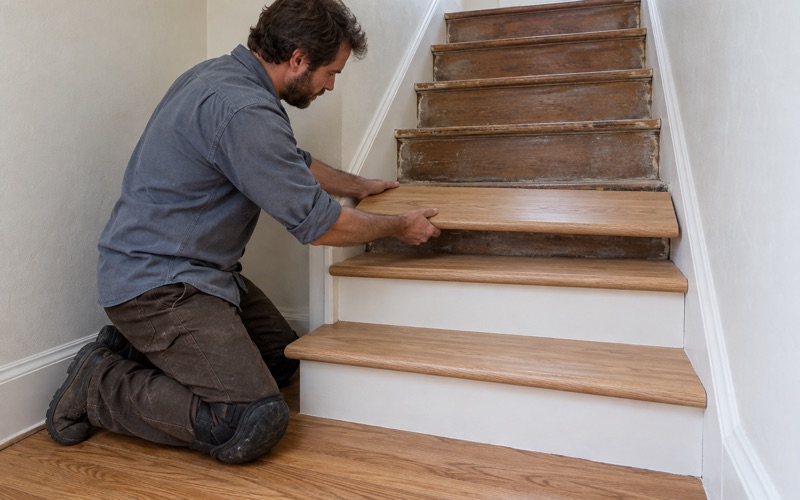
We walk the unit and measure it. We check board thickness, finish type, moisture and any damage, and we look at every transition: where wood meets tile, the reducer at the kitchen, the quarter round along the baseboards. Stairs, in a townhouse-style unit or a house, are priced by the tread and riser rather than folded into the square footage.
You get a plain explanation of the options and what each one costs in time and money. If a screen and recoat will do the job, we will not sell you a full sanding.
Scheduling Around an Occupied Unit
Most owners stay elsewhere for the few days a full refinish takes, since the floor cannot be walked on while the finish cures. A screen and recoat is shorter, and a small repair can often be finished in a day. We sequence the rooms so the ones you need back first come back first.
Revere sits about five miles northeast of downtown Boston, and the Blue Line ends here at Wonderland, so plenty of owners commute and would rather the noisy days happen while they are out. We plan around that wherever the building’s hours allow.
Water Damage and Insurance Claims
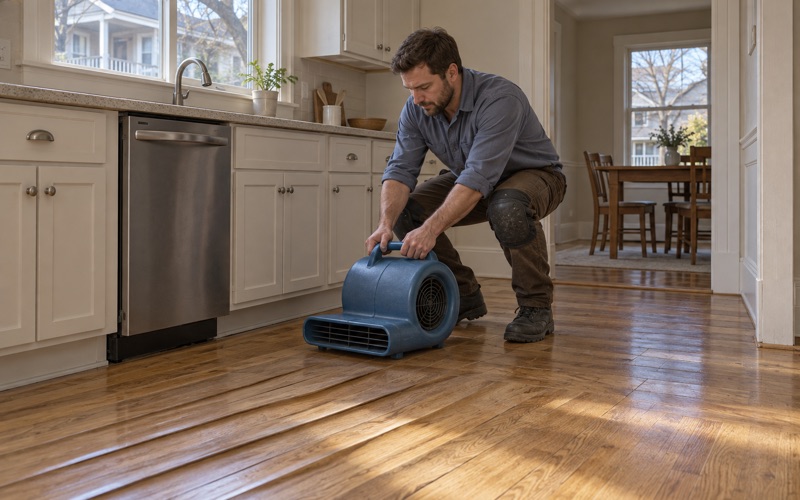
A leak in a high-rise rarely stays in one unit. When water comes from a burst pipe or an overflowing appliance, above you or in your own kitchen, we trace where it went, dry it and take moisture meter readings before any board is replaced. Laying new wood over a wet subfloor just hides the problem under a fresh surface.
If there is a claim, we document the damage room by room for the adjuster, with readings and photos, so the report matches what is actually on the floor. Then we repair or replace only what the evidence says needs it.
- 20+ Years in Wood Flooring
- Stairs Priced by the Tread
- Moisture Readings Before Repairs