
Medford Wood Flooring handles the job when homeowners want to replace carpet with hardwood in Medford, MA, and we are serving surrounding cities including Somerville, Malden, Winchester, Arlington and Everett. Some of these projects turn out to be refinishing jobs, because the carpet has been hiding a good oak floor for decades. Others need a new floor installed from the subfloor up.
We find out which before quoting. Lifting the carpet in a few places shows whether there is hardwood underneath, what shape it is in, and what the subfloor looks like where there is none. That one check can change the scope and cost of a project more than any other decision.
With more than 20 years of wood floor work, we handle both outcomes: refinishing the floor that was already there, or installing new solid or engineered hardwood where the carpet was, with transitions, trim and stairs finished to match.
What Is Under the Carpet
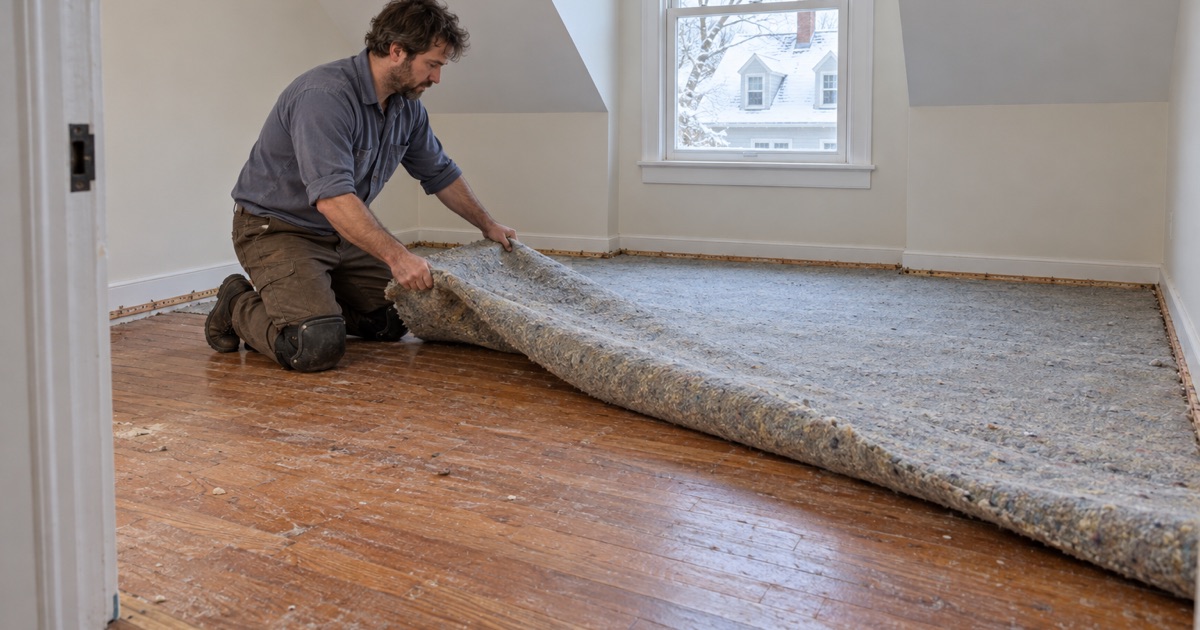
Hardwood That Only Needs Refinishing
In many older houses, wall-to-wall carpet was laid straight over oak or pine flooring. The wood underneath is usually protected from wear, but it carries tack strip holes around the edges, staples from the pad and sometimes paint drips or stains.
We pull the carpet, pad and tack strip, remove every staple, fill or repair the tack strip holes and replace any damaged boards. The floor is then sanded and refinished, often looking better than floors that were never covered.
Plywood or Particleboard Subfloor
In additions, newer houses and some renovated rooms, carpet sits directly on plywood or particleboard. There is no hardwood to save, and the subfloor is where the new floor starts.
Plywood in good condition can usually take a nailed hardwood floor after it is refastened and flattened. Particleboard does not hold flooring fasteners well, so it is usually covered with plywood or replaced before solid hardwood goes down.
Linoleum, Tile or Old Adhesive
Sometimes carpet was laid over an older layer of linoleum or vinyl tile, which may be glued down with black mastic. Those layers can sit on top of hardwood or on the subfloor itself.
Old flooring adhesives should be tested before anyone sands or scrapes them. Once the layers have been identified and dealt with, we can decide whether to restore the wood beneath or install over a new, clean subfloor.
Pet Stains and Odors Under Old Carpet
Carpet that has lived through pets often hides pet urine stains on the wood or subfloor underneath, and those stains carry odor long after the carpet is gone. Dark, black stains on hardwood usually go too deep to sand out.
We cut out the stained boards, seal or replace the affected subfloor, and weave in matching wood before refinishing. Where the new floor is going over a subfloor instead, the stained sections are sealed or replaced first so the odor does not come back through the new wood.
Installing New Hardwood Where Carpet Was
Preparing the Subfloor
Carpet hides a lot. Squeaks, loose subfloor panels, dips and humps that carpet and pad absorbed will all show through a hardwood floor, so we check the subfloor with a straightedge and refasten, flatten or add plywood where needed.
We also read the moisture in the subfloor, because a new wood floor installed over damp plywood will gap and cup as it dries. Preparation is where a carpet replacement succeeds or fails.
Solid or Engineered Wood
Above grade over a sound wood subfloor, solid hardwood nailed down is the traditional choice, and it can be sanded and refinished many times. Red oak and white oak are the most common, with the width chosen to suit the room.
In a finished basement, over concrete or over radiant heat, engineered wood is usually the better match for the moisture and the subfloor. We base the recommendation on what we measure, not on a default.
Heights, Doors and Transitions
Removing carpet and pad and adding hardwood changes the floor height, sometimes up and sometimes down. At every doorway, tile edge and stair, that change needs a reducer, threshold or stair nosing that fits.
We measure these points during the estimate and plan the transitions, door trimming and any baseboard or quarter round work, so the finished floor meets its surroundings cleanly. Nothing about the height change should come as a surprise on installation day.
Rooms and Situations We See Most
Bedrooms and Living Rooms
Bedrooms and living rooms are the most common rooms to convert, often to connect them to hardwood already in the hall. Weaving the new floor into the existing one at the doorway, instead of ending it at a threshold, makes the rooms read as one continuous floor.
Where the existing hallway floor is being refinished at the same time, the new room and the hall are sanded and finished together. That is the surest way to make the color and sheen match.
Condo Units
In a condominium, carpet often exists because the building requires sound control between units. Massachusetts condominium law, M.G.L. c.183A, lets associations set rules for how units are maintained, and many require sound underlayment beneath hard floors.
We ask for the association’s rules before quoting and choose the underlayment, installation method and work schedule to match them, so the new floor meets the rules from the start. Hallway protection and deliveries are planned with the building manager too.
Finished Basements
Basement carpet is often replaced after it gets wet, which is exactly why the new floor needs more thought than one upstairs. We read the moisture in the slab or subfloor and look at how water has reached the space before recommending anything.
When the readings allow a wood floor, engineered wood over a vapor retarder is usually the right choice below grade. When they do not, we will tell you, rather than installing a wood floor that is likely to fail.
Carpeted Stairs Converted Too
New hardwood floors next to carpeted stairs look unfinished, so many carpet replacements include the stairs. We convert them with new hardwood treads and risers, matched to the floor and priced by the tread and riser, so you can see that part of the job on its own.
- 20+ Years in Wood Flooring
- Stairs Priced by the Tread
- Moisture Readings Before Repairs