Medford Wood Flooring brings more than 20 years of wood-flooring work to Malden, and a good share of the calls we take from the city begin with water. A supply line lets go, a washer overflows, or a lower floor takes on water after a hard rain, and a floor that looked fine last week is cupping by the weekend. Our job is to dry it, find out how far the moisture traveled, and decide board by board what can stay.
Most of that work ends in repair and refinishing rather than a tear-out. Red oak strip flooring laid generations ago usually has enough wood above the tongue to sand again, and a weave-in repair with matching boards keeps a room reading as one floor instead of a patch. When a floor is too far gone, we tell you so and show you why.
New installs get the same caution. Before any wood goes down on a lower floor, we measure what the subfloor and the room are actually holding and pick the product to suit, which often means engineered wood rather than solid. The sections below cover how water reaches floors in eastern Malden, how we bring a wet floor back, and what we check before new boards arrive.
Why Floors in Eastern Malden Meet Water

A Neighborhood Built Over a Brook
The City of Malden describes the Linden Brook culvert as running from near the intersection of Beach and Salem Streets across the Revere line, and says its creation allowed much of the Linden neighborhood to be built on top of it. The culvert is owned and maintained by the Massachusetts Department of Conservation and Recreation. In plain terms, the brook still runs under the neighborhood; it is simply out of sight.
That matters for a wood floor because water that cannot get away reaches the lowest part of a property first: the yard, the window wells, the lower-level rooms. Wood soaks up moisture from below, so in a house that has taken on water the trouble often starts at the underside of the boards and in the subfloor, well before the finish shows anything.
When the Drainage Channels Overflow
The city says Malden residents, particularly in the eastern part of the city, have seen increasingly frequent flooding for years, when water builds up beyond the lips of the drainage channels and floods streets and yards. The Town Line Brook adds to the picture: it crosses the Malden, Revere and Everett borders as a concrete-lined channel, open on top.
State Representative Steve Ultrino’s office reports dozens of calls since late 2021 about severe flooding along Delta Terrace. His office also reports that about 4,725 linear feet of Linden Brook culverts and drain pipes have been cleaned and inspected, with more than 5,300 tons of debris, sediment and trash removed, and the city has set aside part of its ARPA funding for the clean-out. That is real progress on the drains, but it is not a promise about the next storm, so we plan floor work in eastern Malden with water in mind.
Older Houses, Thinner Margins
Census figures put 45.1 percent of Malden’s homes in buildings from 1939 or earlier. Floors in houses that age are often red oak strip or maple over board subfloors, sometimes with rosin paper between, and many have already been sanded more than once. How much wood is left above the tongue decides whether a water-damaged floor can be flattened and refinished or has to be partly replaced, so we check board thickness before promising either.
Age brings a second question. Massachusetts runs its own lead-safe renovation rules for homes built before 1978, so we confirm the build year and look at painted trim, stair risers and thresholds before a sander touches the room.
Looking for wood-flooring closer to Winchester? See Winchester Wood-Flooring.
Repairing a Malden Floor After Water Gets In
Drying Before Deciding
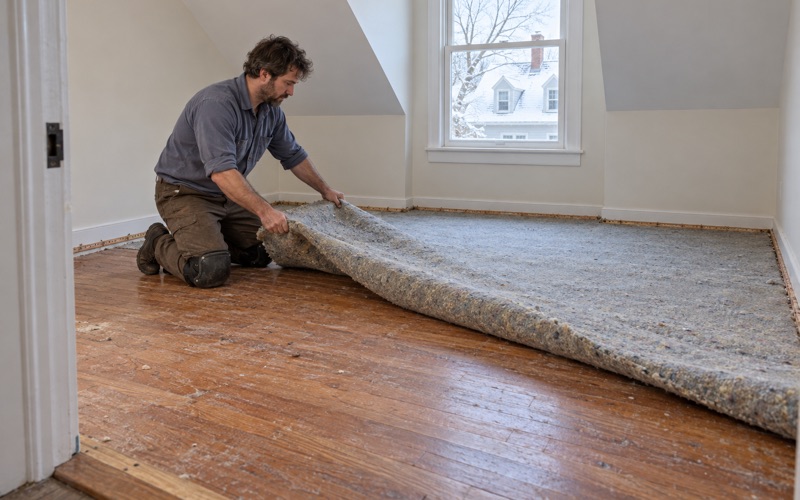
The first steps are stopping the source, pulling wet rugs, carpet pad and tack strip, and getting air moving with dehumidification. We then read the boards and the subfloor with a moisture meter across the whole room and record each reading, because water wicks along the length of the boards and under walls well past the spot where it came in.
A cupped floor, with board edges standing higher than the centers, often relaxes as it dries. Sanding it flat too early leaves it crowned once the moisture leaves, with the centers high and the edges thin, and that cannot be undone. We wait until the readings settle before we decide what gets sanded and what gets cut out.
Board Replacement and Weave-In Repairs
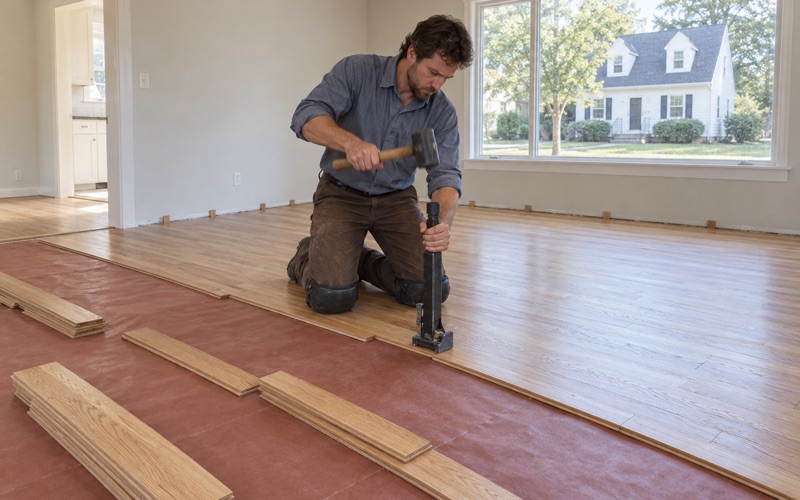
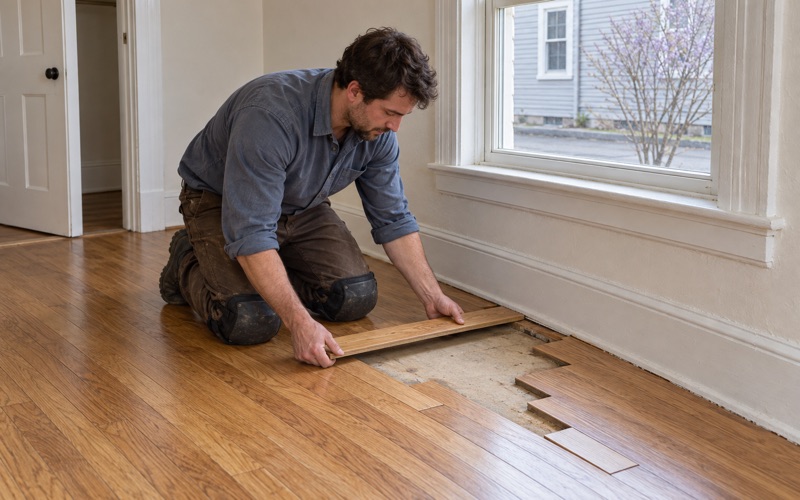
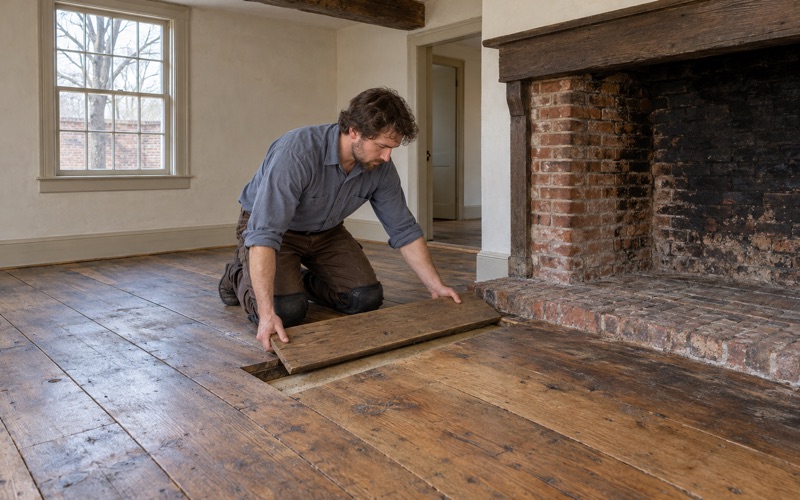
Boards that have buckled off the subfloor, or that carry dark water stains through the grain, come out. We weave in replacements with staggered joints so the repair follows the original layout, matching species and width to what is there, which in most older Malden rooms means red oak strip. The same method closes the holes left where radiators and pipes were removed.
If the subfloor under the damaged area is soft or delaminated, that section is replaced before new boards go over it. Replacement strips are fastened with flooring cleats or staples, and where the old floor was laid with cut nails we work around them rather than tearing up sound boards to reach them.
Refinishing So Old and New Match
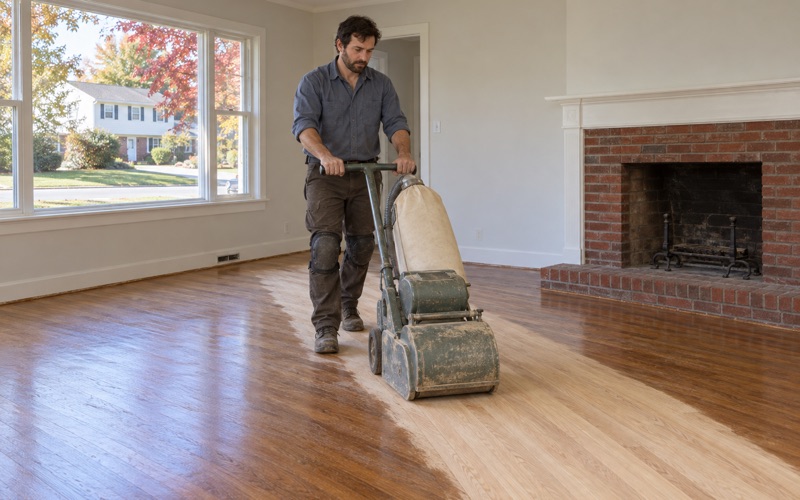
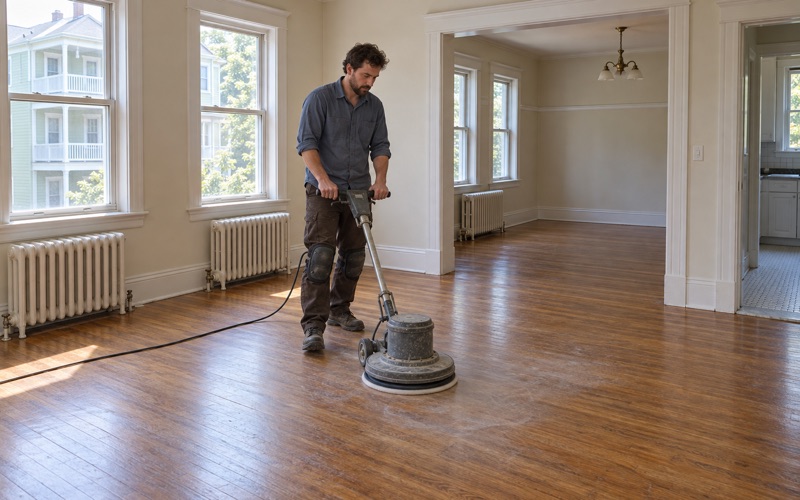
Once the repairs are in, the whole room is sanded so new and old boards finish as one surface. We work through a grit sequence with a drum sander and an orbital sander, using dustless sanding with a HEPA vacuum, and test for old wax and cleaning-product residue first so the new finish bonds instead of peeling.
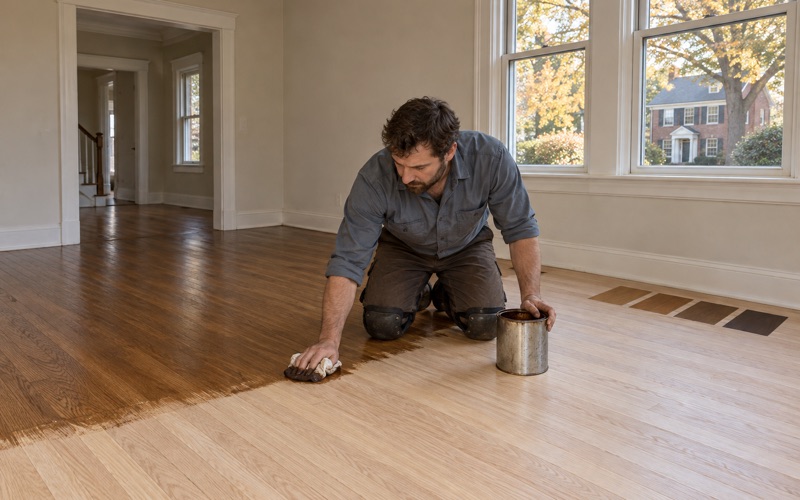
New wood and old wood take stain differently, so stain samples go down on the actual floor, in the room’s own light, before you choose a color. Finishes, whether waterborne polyurethane, oil-modified polyurethane or a hardwax oil, are chosen to meet the Massachusetts VOC limits for wood coatings, which are stricter than the federal ones, and the sheen level is your call.
Records for the Adjuster
We document water-damaged floors room by room: photographs, moisture readings, and what was removed and replaced. That record is yours to hand to an adjuster or to attach to any claim you decide to file.
The state representative’s flooding page links instructions for filing a property damage claim with the Attorney General’s office and describes DCR’s own claim procedure. We cannot tell you how a claim will turn out, but a clear room-by-room record makes the conversation easier.
Checking for Moisture Before New Wood Goes Down
Reading a Lower Floor First
A floor that has been wet can look dry on top while the subfloor or concrete below still holds water. Before we install on a lower floor or anywhere below grade, we take moisture readings over several visits, check room humidity, and confirm that any sump pump is actually running.
The new flooring is acclimated in the room it is going into, and we compare its readings to the subfloor before a single board is fastened. Our installs follow the NWFA Installation Guidelines, and if the readings are not where they need to be, we wait rather than lay wood that will cup or buckle within a season.
Engineered Wood Where the Moisture Calls for It
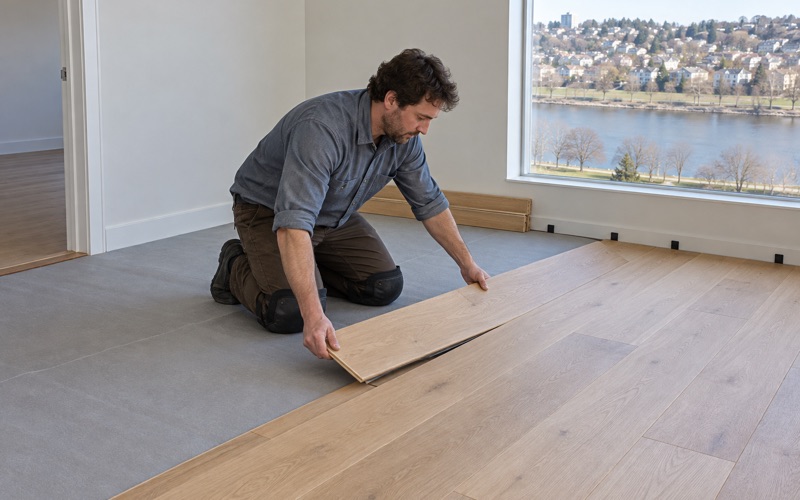
On a lower level, engineered wood usually handles moisture swings better than solid hardwood, because its layered core moves less. We look at the thickness of the engineered wear layer too, since that decides how many times the floor can be sanded later, and install over the right vapor retarder and underlayment with a proper expansion gap at the walls.
Upstairs in the same house, solid tongue and groove often remains the better choice. We match the product to the level and the readings, not to one price across the whole job.
What Turns Up Under Old Coverings
Pulling up carpet or linoleum on a lower floor sometimes exposes black mastic from an earlier install. Older mastics can contain asbestos, so we identify what is there before anything is ground or sanded, and we plan the new floor around it.
Old coverings also hide the history of past leaks. Stained subfloor, rusted fasteners and soft spots tell us where water has sat before, and we check those areas harder before new wood goes over them.
Floor Work Across Malden, from Linden to Maplewood
Two-Families, One Floor at a Time
About 21.5 percent of Malden’s homes sit in two-unit buildings, and many of those are owner-occupied. We work one floor at a time, so the household on the other level keeps living in the house while we sand, finish and let each coat cure.
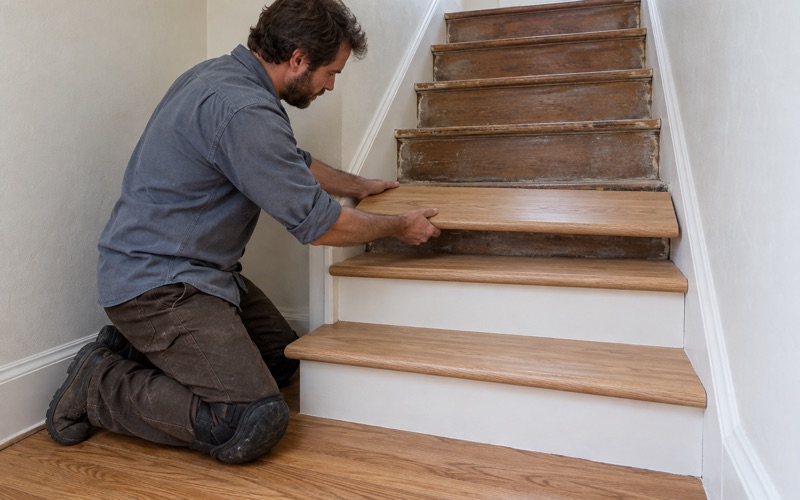
Stairs in these houses are quoted by the tread and riser rather than folded into a square-foot price. Stair treads, stair nosing and risers each take their own time, and a separate line on the quote shows exactly what that work costs.
Neighborhoods With Their Own Floors
Malden was settled in 1640 and has been a city since 1882, and its neighborhoods show the layers. Linden sits over the brook the city describes, while Maplewood, Bellrock and Faulkner hold older houses where strip oak, maple and the occasional eastern white pine floor turn up under carpet.
We work throughout the city, from houses near the Malden Center and Oak Grove Orange Line stations to the quieter streets east of them. Each house gets its own read of board thickness, finish history and moisture before we quote.
Scheduling Around the Weather
Malden falls in National Weather Service forecast zone MAZ014, Southeast Middlesex. We watch that forecast before scheduling finish coats in a house that has flooded before, because a heavy rain during a cure can push humidity up in exactly the rooms we are working in.
In winter, heated air dries the house and opens small winter gaps between boards. That is normal seasonal movement, not damage, and we tell you so before recommending any repair.
- 20+ Years in Wood Flooring
- Stairs Priced by the Tread
- Moisture Readings Before Repairs