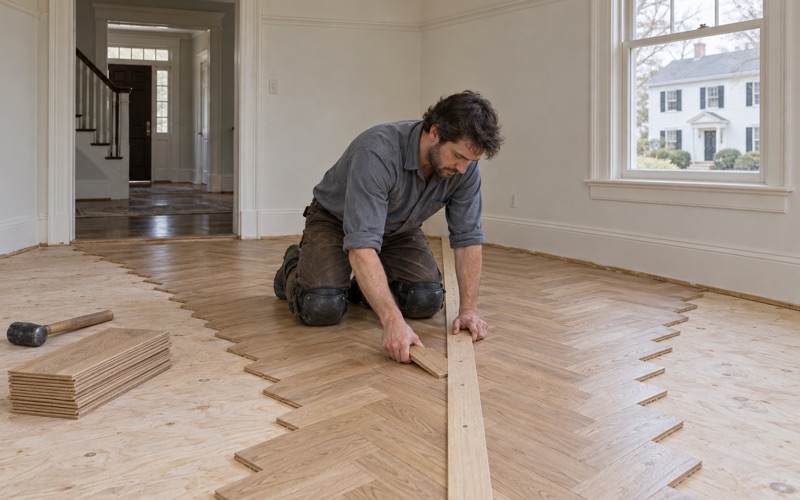
Medford Wood Flooring has spent more than 20 years on wood-flooring in Lexington and the towns around our Medford shop, and most of the Lexington work we take on begins with a floor somebody decided was worth saving. The boards are usually already there, under wall-to-wall carpet, under a tired amber finish or under a rug that has hidden a gray traffic lane for a decade. Our first job is to tell you honestly whether they can come back.
That question comes first because the answer shapes everything after it. A floor with enough wood left above the tongue can be sanded, repaired and refinished, usually for less than new boards would cost, and it keeps the house the way it was built. A floor that has already been sanded too many times needs a different plan, and we would rather say so before a drum sander touches it.
Below we cover what we tend to find in Lexington’s older houses, what the town’s demolition delay does and does not reach, how we refinish an early-1900s floor instead of replacing it, and how the work fits around a family that is still living in the house.
Original Floors in Lexington’s Older Houses
Houses That Predate the War
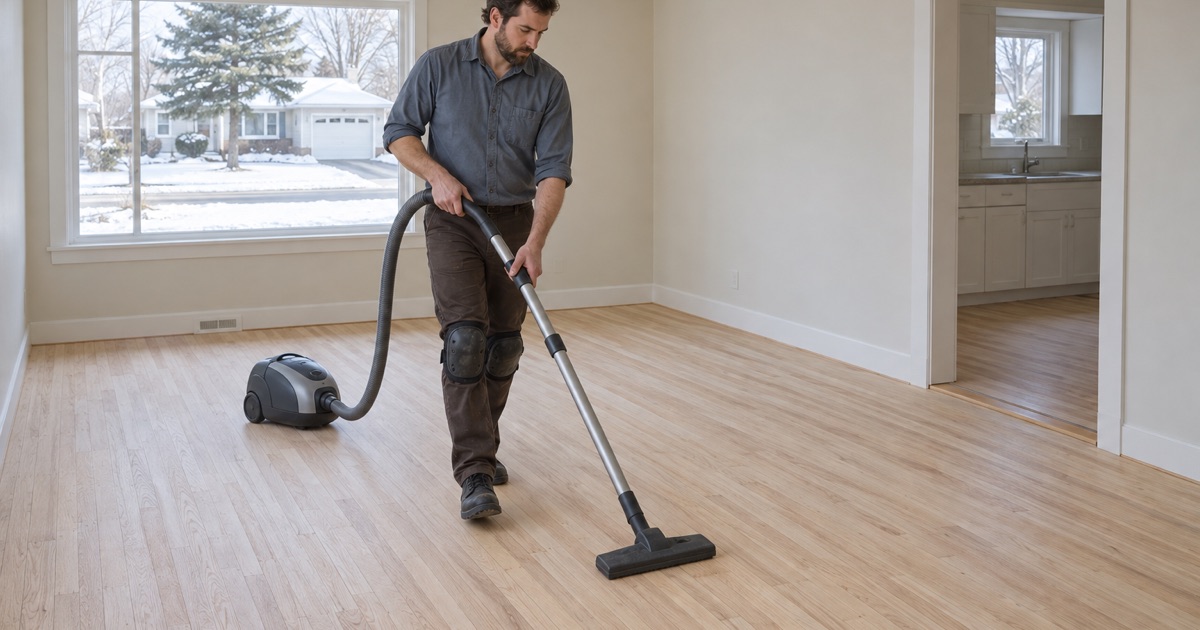
Lexington’s housing is older than its newer construction suggests. Of 12,754 housing units in town, 2,698 were built in 1939 or earlier, and another 644 went up during the 1940s. From East Lexington to the streets around Lexington Center, those are the houses where we most often find original tongue and groove strip flooring, nailed into a board subfloor with cut nails or early flooring cleats.
In houses of that age we usually find red oak strip flooring in the main rooms, sometimes maple in a kitchen or back hall, and eastern white pine in upstairs rooms and attic spaces. Each species sands differently, and pine is soft enough that its low Janka hardness is a warning to go gently rather than a footnote.
What Hides Under the Carpet
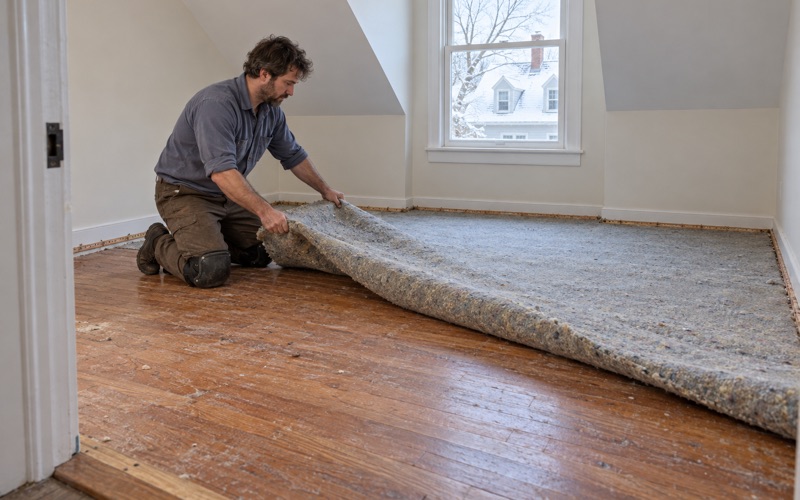
Wall-to-wall carpet saved a lot of these floors and quietly damaged some of them. Tack strip leaves a row of nail holes around every wall, old carpet pad can bond to the finish, and pet urine stains soak through the pad into the wood, where they turn dark and deep. Old linoleum in a kitchen may sit on rosin paper or black mastic, and each needs its own removal method before we can see the boards.
We lift a corner of carpet in a closet before we quote anything. That one corner tells us the species, the board width, whether the finish is shellac, varnish or polyurethane, and whether decades of paste wax are sitting on top of it.
Checking Board Thickness First
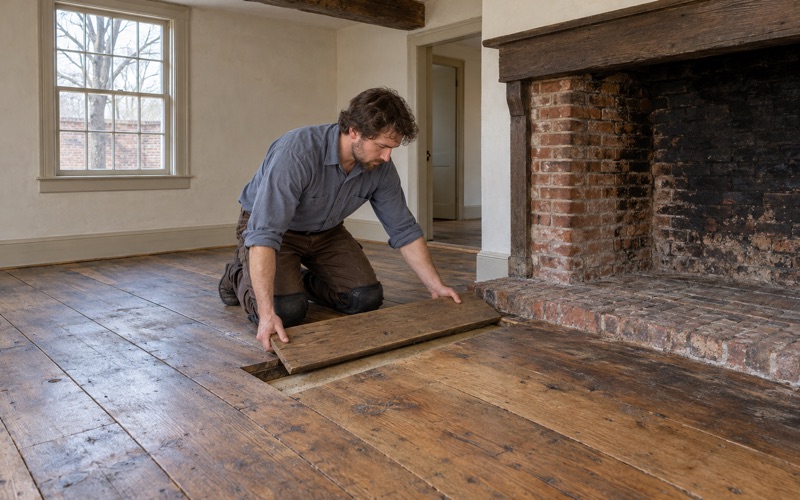
The most important measurement in an old house is how much wood remains above the tongue. We pull a floor register or a threshold to look at the board edge, because a floor that has been drum-sanded several times may have only one careful sanding left. That reading decides between a full sand and a screen and recoat.
Worn boards also show cupping, crowning or old board gapping after years of dry heated winters. Winter gaps that close again in summer are normal in an older house and are not a reason to replace anything; we point them out so nobody mistakes seasonal movement for failure later.
Looking for wood-flooring closer to Roxbury? See Roxbury Wood-Flooring.
What Lexington’s Demolition Delay Covers
An Inventory of Over 1,400 Resources
The Lexington Historical Commission has documented over 1,400 historic resources throughout town since the 1970s, and it maintains an inventory of buildings, areas and sites of architectural or historical importance. If you own an older house here, it is worth finding out whether yours is on that list before planning any larger renovation.
The Commission administers the town’s Demolition Delay Bylaw to help keep those structures standing. For a homeowner weighing whether to restore an old house or start over, that bylaw is the part of the inventory with practical weight.
Twenty-One Months, or Twelve
The bylaw applies to buildings listed on the National Register of Historic Places, buildings in the town’s Comprehensive Cultural Resources Survey, which the town calls the Inventory, and buildings the Commission otherwise finds significant for their period, style, construction method or builder. For those buildings, demolition can be delayed 21 months, or 12 months with approved site plan review.
That delay is aimed at the building as a whole. Its practical effect is to give the owner of a listed house a long pause to reconsider, and a house that stays standing usually keeps its original floors too.
Where Floor Work Sits
The town’s demolition delay page does not address interior work, and we do not describe refinishing as something the bylaw reaches. Separately, the four local historic districts, Battle Green, East Village, Hancock-Clarke and Munroe Tavern, fall under the Historic Districts Commission, which reviews construction, demolition, exterior renovations, exterior color changes and signs.
If you live in one of those districts, or in the Pierce-Lockwood or Turning Mill neighborhood conservation districts, check any outside work with the town first. Questions about building permits go to the Town of Lexington Building Department; we would rather send you there than guess at its answer.
Refinishing Instead of Replacing in an Early-1900s Home
What the Comprehensive Plan Noticed
The town’s LexingtonNEXT comprehensive plan states plainly that historic homes, many dating to the early 1900s, have been demolished to make way for much larger ones. When a house goes, its floors go with it, and a century of oak or pine that could have been sanded ends up in a dumpster.
Refinishing is the smaller, keep-the-house version of that choice. With 80.5 percent of Lexington homes owner-occupied, most of the people who call us plan to keep living on the floor they are fixing, which tends to make restoring what is already there the more natural decision.
Sanding an Old Floor Safely
Before any sanding, we check the build year and every painted surface near the floor. Houses built before 1978 fall under the Massachusetts Lead Law and the state’s own lead-safe renovation rules, and a painted baseboard, stair stringer or threshold is often where that question comes up on a floor job.
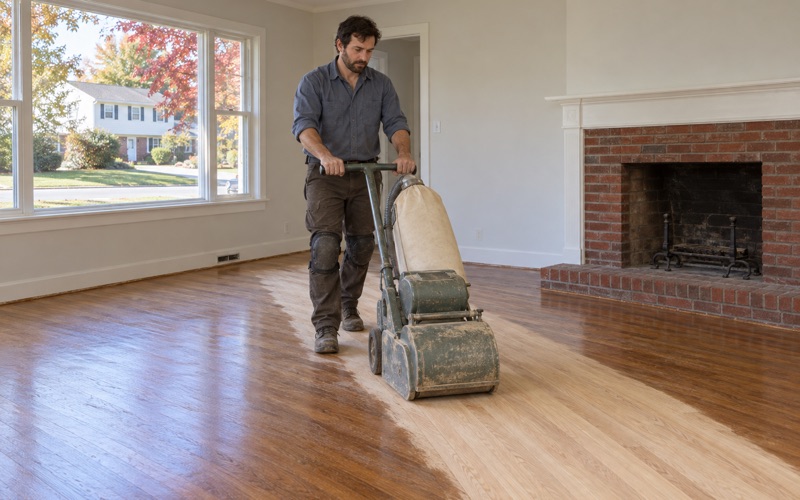
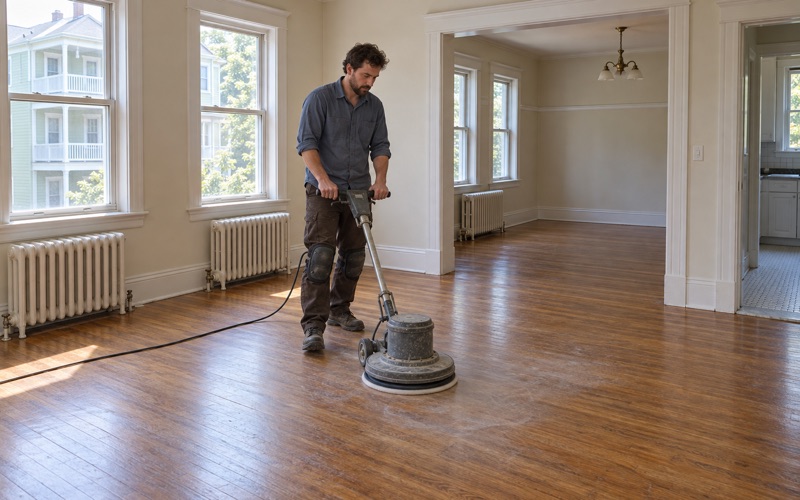
We use dustless sanding with a HEPA vacuum, choose a grit sequence to match how much wood is left, and switch to an orbital sander along the edges and over thin spots. Wax residue and cleaning-product film are tested and removed first, because a new finish laid over them will peel instead of bonding.
Finish and Color, Chosen in the Room
For the finish we work from waterborne polyurethane, oil-modified polyurethane and hardwax oil, and every product we use fits the Massachusetts VOC limits for wood coatings, which are stricter than the federal ones. Sheen level matters as much as the product, since a lower sheen hides the wear an old floor will keep collecting.
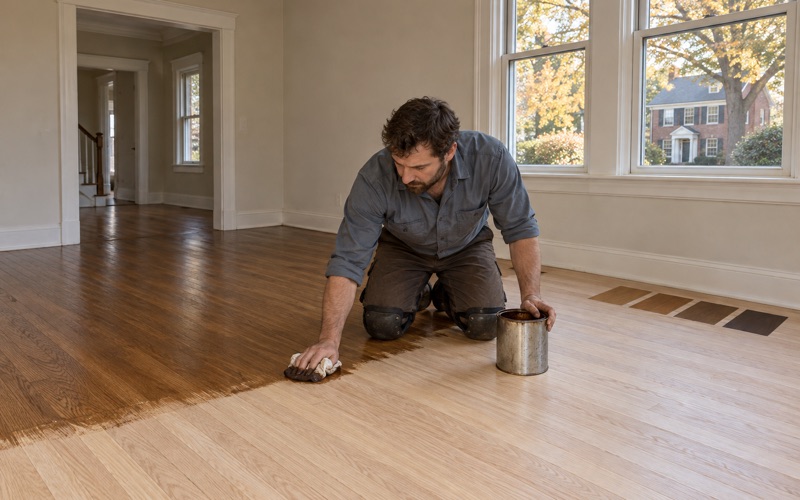
Orange oak from an aging oil finish is one of the most common reasons people call us. We lay stain samples on the actual floor, in the light that room actually gets, and water pop the grain where a darker color needs to take evenly across old boards.
Repairing Old Boards and Planning the Work
Weave-In Repairs and Radiator Patches
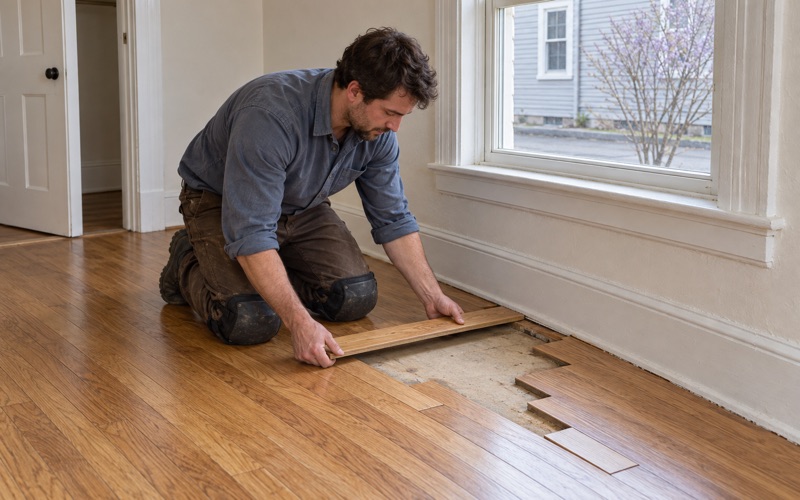
Older Lexington houses carry marks from every renovation they survived: a radiator pulled when the heat was converted, a pipe chase closed up, a wall moved a few feet. We patch those spots with matching boards woven into the surrounding floor, cut in one board at a time so the repair follows the existing pattern instead of reading as a square fill.
Board replacement also handles water stains, pet damage and the occasional powderpost beetle or old house borer damage in pine. When water is the cause, we trace the source, dry the area and read it with a moisture meter before replacing any board, and we document the damage room by room for the adjuster when a claim is involved.
Stairs Priced on Their Own
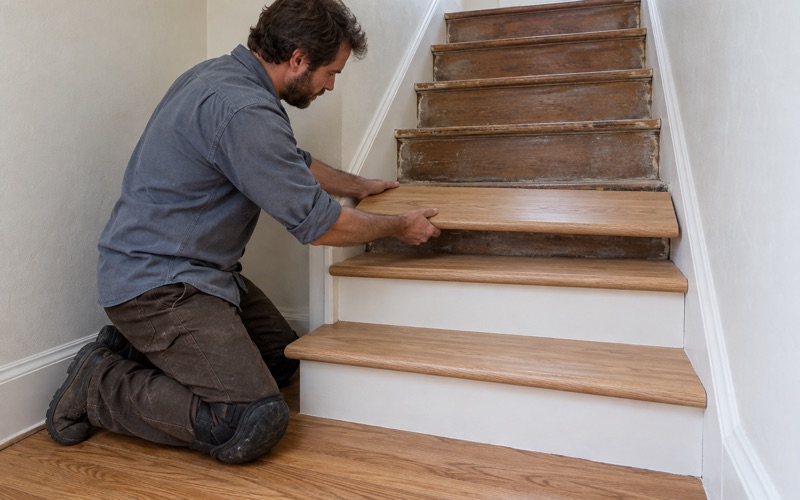
Original stair treads and risers usually take the heaviest wear in the house. We quote stairs by the tread and riser rather than folding them into a square-foot price, because nosing repair, paint removal on risers and hand sanding take time that a flat rate would hide.
Working Around a Household in Residence
Most Lexington homeowners stay in the house while we work, and 8,705 owner households here live in detached houses. We sequence the rooms so a kitchen or a bedroom stays usable, and in an owner-occupied two-family we work one floor at a time so the household on the other level keeps its routine.
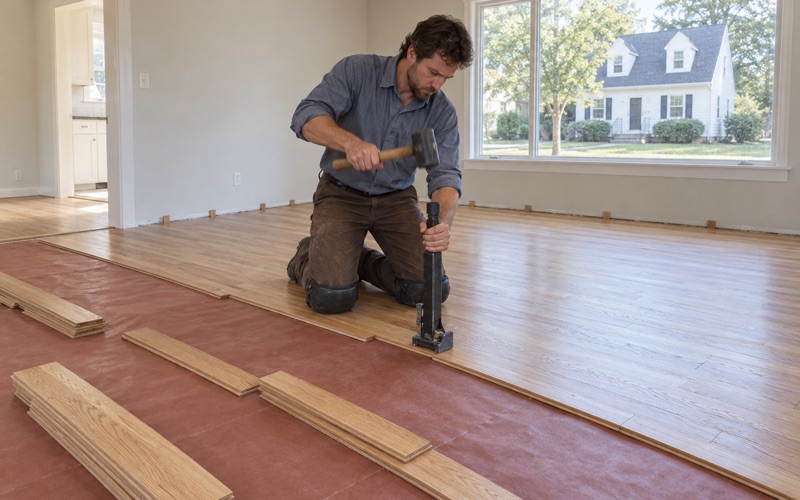
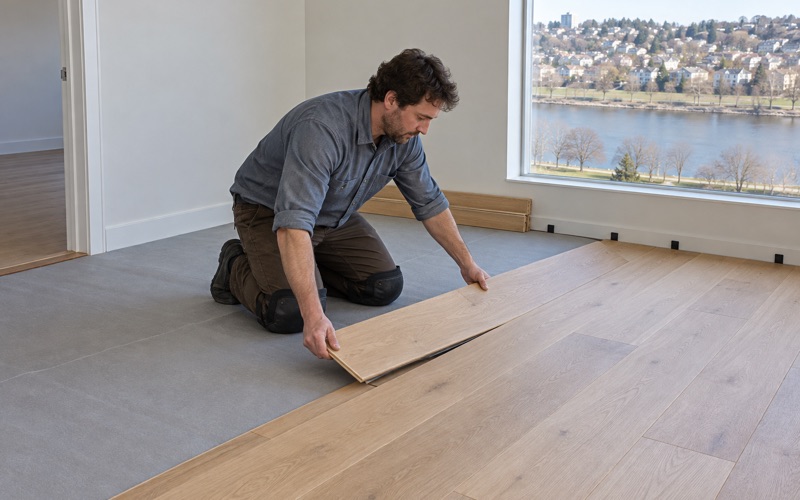
Indoor humidity swings between dry heated winters and damp summers, so we let any new boards acclimate before they go down and schedule finishing for conditions the wood can settle into. If a project reaches a lower-level room, we match the flooring to the moisture that is actually there, which usually points to engineered wood rather than solid hardwood.
- 20+ Years in Wood Flooring
- Stairs Priced by the Tread
- Moisture Readings Before Repairs