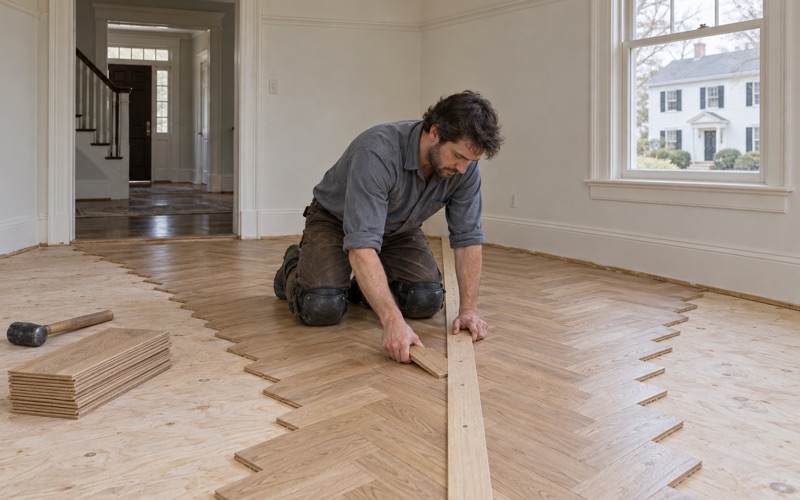
Medford Wood Flooring handles wood flooring in Jamaica Plain the way we have for more than 20 years around Greater Boston: we look at the boards you already have before anyone talks about replacing them. Most of our work here is sanding, refinishing and repairing old floors, with new installation where a room has nothing worth saving. When a floor can be kept, keeping it is almost always cheaper, faster and closer to what the house was built with.
Old floors reward patience. A strip floor that looks finished can often take one more full sanding, while a floor that has been sanded too many times needs a gentler plan. We measure what is left above the tongue before we commit to either, and we tell you which one your house has.
This page covers the older houses on the streets beside the park that runs through the neighborhood, what tends to be under their carpet and finish, and how we plan the work so the house stays livable while it happens.
Prewar Floors Beside the Southwest Corridor
A Highway That Was Never Built
The long green strip through the eastern side of Jamaica Plain was supposed to be an expressway. Starting in the 1960s, thousands of homes were cleared along a line from Back Bay to Forest Hills for a 4.6-mile extension of Interstate 95. Highway revolts followed, Governor Francis Sargent halted the project, and in 1972 he cancelled it outright.
The cleared land did not go back to houses. It became Southwest Corridor Park, a 4.1-mile linear park on 52 acres that reaches the Forest Hills section of Jamaica Plain, now managed by the state Department of Conservation and Recreation. The houses that survived the clearance on the neighboring streets ended up facing a path and a garden instead of six lanes of traffic.
The Orange Line Moves In
The same corridor became the new route of the Orange Line, relocated there in 1987. Stony Brook station opened on May 4, 1987, below grade at 100 Boylston Street, as part of the Southwest Corridor project, and Green Street serves the blocks farther south. The completed park was celebrated with a ribbon-cutting on May 5, 1990.
For anyone planning floor work, that history matters mostly as a date. Many houses on the streets near these stations were already old when the highway was proposed, and floors that age have usually been through decades of carpet, wax and refinishing since. By 1987, groups such as the Jamaica Plain Neighborhood Development Corporation were also building new housing along the corridor, so a short walk can take you past floors a century apart.
What the Census Says About the Age of the Stock
In ZIP code 02130, which covers most of Jamaica Plain, 57.7 percent of housing units were built in 1939 or earlier, according to the Census Bureau’s 2024 five-year American Community Survey (table B25034). The ZIP code is a proxy, not an exact neighborhood boundary, but it points the same way we see inside the houses.
A prewar floor can be red oak strip flooring, maple, eastern white pine or a mix of species from different eras of repair, fastened with cut nails or cleats. We do not assume which one you have. We pull a floor register or lift a corner of carpet and look, because the species, the board width and the way it was fastened all change how hard we can sand and which finish will hold up. Softer pine, for example, dents under a drum sander that red oak shrugs off, so it gets a lighter grit sequence and more hand work at the edges.
Looking for wood-flooring closer to Newburyport? See Wood-Flooring Services in Newburyport.
Refinishing Near Stony Brook and Green Street
Reading the Floor Before Any Sanding
The first visit is an inspection. We check board thickness, look for cupping, crowning and board gapping, and note traffic lanes worn through the finish at doorways and in front of the kitchen sink. Pet urine stains and dark water stains get flagged early, because some bleach out with sanding and some only go away with board replacement.
We also test what the old finish is. Many prewar floors carry a shellac finish, a wax coat or years of cleaning-product residue, and a new polyurethane laid over wax residue will peel. We remove it and test again before the first coat goes down, so the new finish actually bonds to the wood.
Lead and Dust in Older Houses
Massachusetts has its own lead-safe renovation rules for homes built before 1978, separate from the federal ones, and with more than half the local stock predating 1940 that rule comes up constantly here. We check the build year and look for painted surfaces on baseboards, thresholds and stairs before any sanding begins.
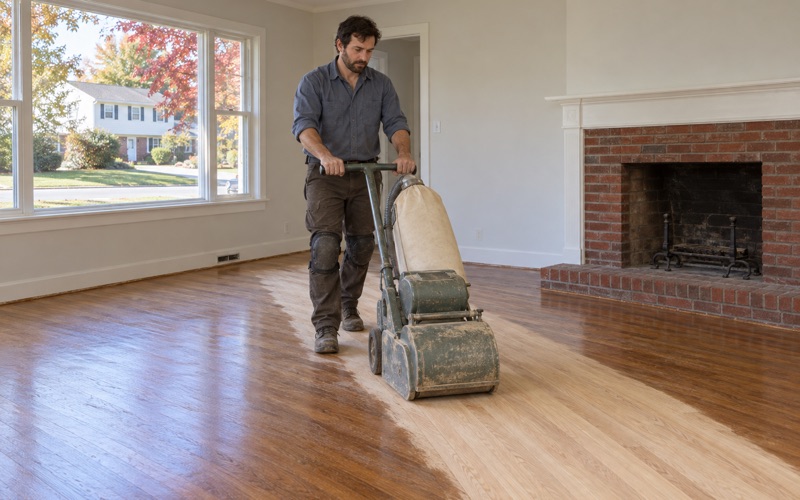
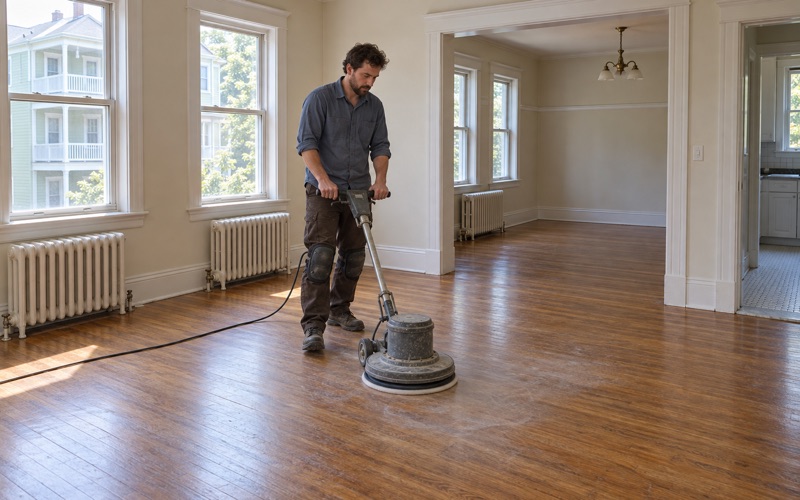
Our sanding runs on dustless equipment tied to a HEPA vacuum, with a drum sander on open floor and an orbital sander at the edges and on softer species. It keeps dust out of the rooms you are still living in, and it matters more where old paint is present.
Stain, Sheen and Finish
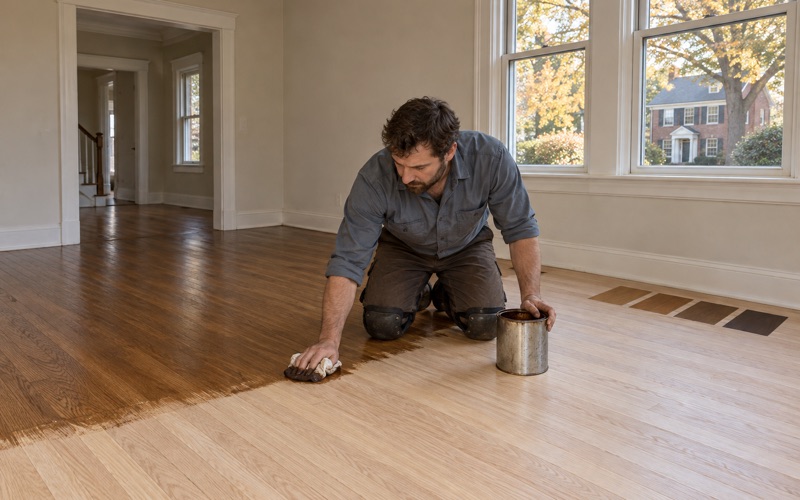
Old red oak often reads as orange oak under an amber finish, and many owners want something cooler. We lay stain samples directly on your floor, in the room’s own daylight, and let you choose after seeing them dry. Where the color needs to go even, we water pop the grain before staining. Old floors with patched sections take stain unevenly, so the samples go on both original and repaired boards before anyone commits to a color.
For the topcoat we choose between waterborne polyurethane, oil-modified polyurethane and hardwax oil based on how the room is used, and we pick products that meet the Massachusetts VOC limits for wood coatings, which are stricter than the federal standard. Sheen level is your call; satin hides wear in busy rooms better than gloss.
Repairs in Houses That Face the Park
Radiator Holes and Weave-In Repairs
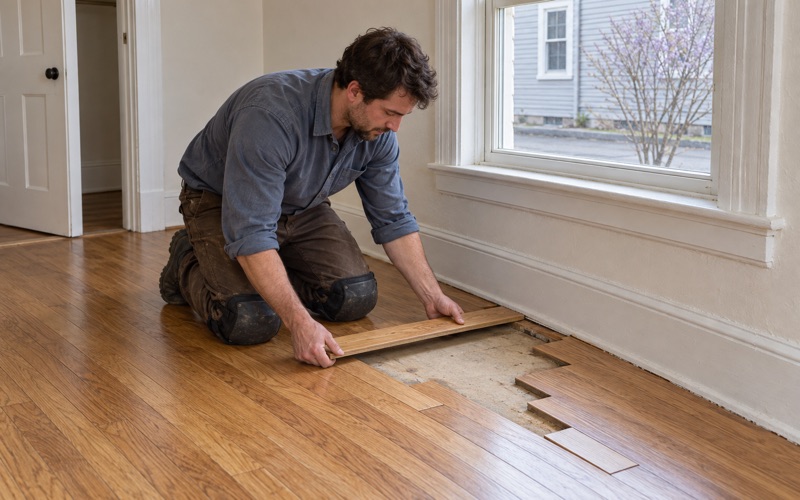
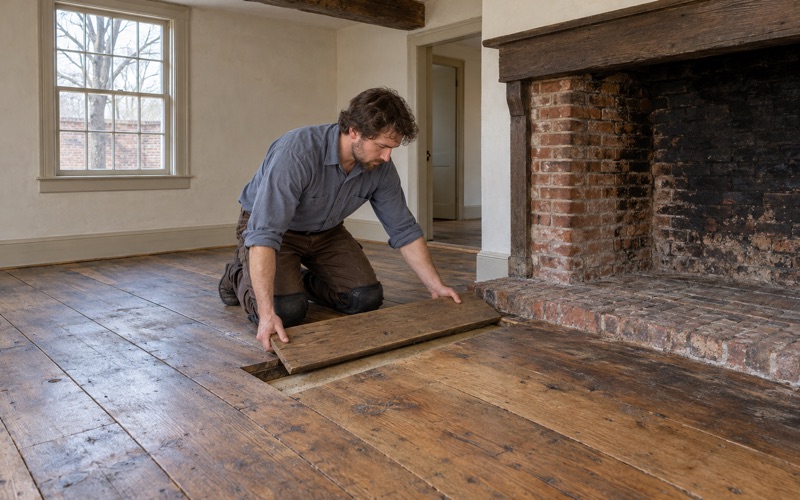
Prewar houses in this neighborhood have usually been through at least one heating change, and each one leaves marks. Where a radiator or pipe came out, there is often a gap in the floor filled with putty or a mismatched square. We cut that out and weave matching boards into the surrounding floor so the patch disappears after sanding.
The same approach handles boards split by old nails, burned near a stove or chewed by pets. If you see fine holes and powdery dust, we check for powderpost beetle or old house borer activity before repairing anything, since replacing boards over an active problem only moves it.
Stairs, Thresholds and Transitions
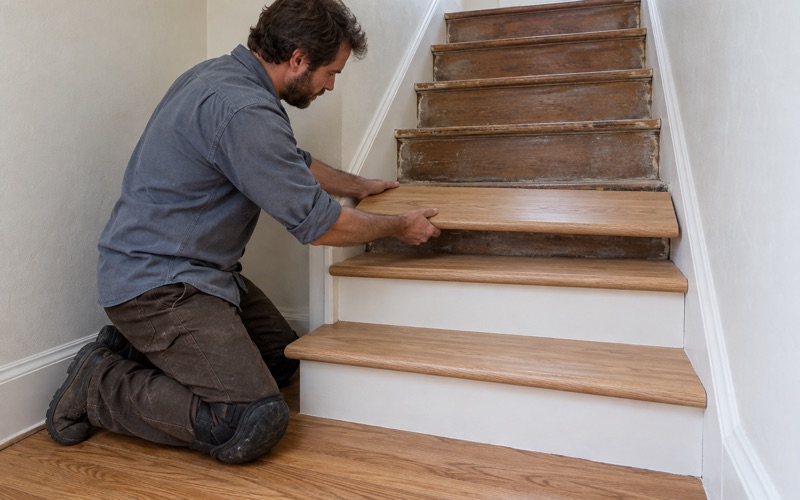
Stairs are quoted by the tread and riser rather than by the square foot, because each step is its own sanding, edging and finishing job. Worn stair nosing gets rebuilt or replaced, and we match the treads to the hallway floor they lead onto.
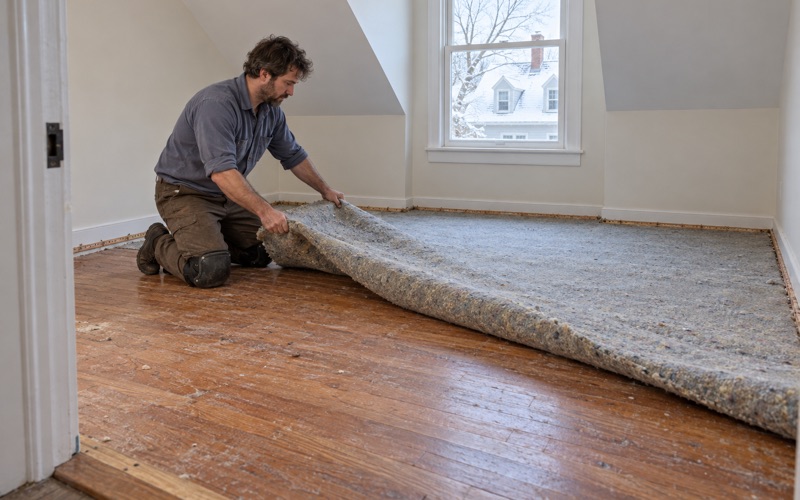
Where carpet comes up, we pull the carpet pad and tack strip and fill the holes they leave. Transitions to tile or linoleum get a reducer or threshold cut to the actual height difference, and quarter round goes back where the expansion gap needs covering.
Water Damage From a Pipe or Appliance
A burst pipe, an overflowing dishwasher or a leak from the unit above can soak an old floor fast. We trace where the water came from, dry the area and read it with a moisture meter before deciding which boards to replace, since wet wood often recovers once it dries.
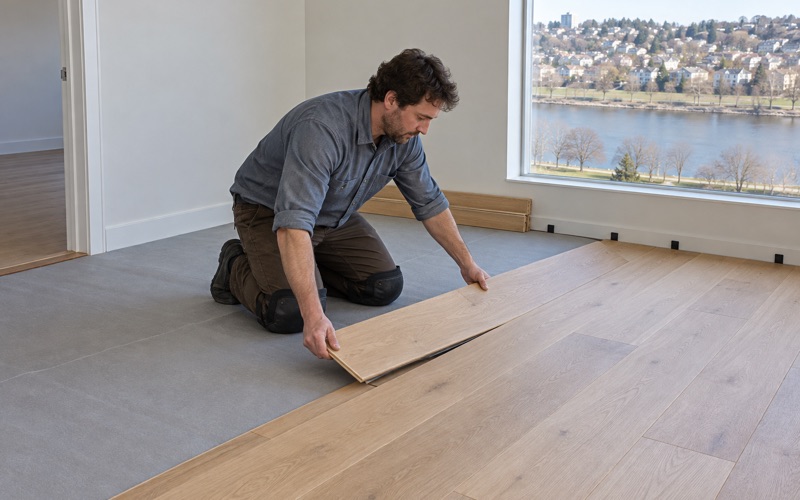
If an insurance claim is involved, we document the damage room by room with readings and photos for the adjuster. Rooms at or below grade get a different plan, usually engineered flooring with a proper engineered wear layer and vapor retarder rather than solid hardwood.
Planning a Floor Project in Jamaica Plain
Who Oversees What
Jamaica Plain is a neighborhood of the City of Boston, in Suffolk County, so city matters run through Boston offices rather than a separate town hall. The City of Boston Inspectional Services Department is the building authority for the neighborhood.
The Jamaica Plain Neighborhood Design Overlay District reviews exterior changes such as roof shape, cornice lines and large additions. Its stated triggers are all exterior, and floor work happens entirely inside the walls. The Boston Landmarks Commission’s current list of local historic districts names none in Jamaica Plain, which is worth knowing if a neighbor tells you otherwise; National Register listing, where it applies, is a separate thing from local design review.
Seasons and Wood Movement
Jamaica Plain sits in the National Weather Service’s Suffolk forecast zone, MAZ015, and old floors here move with the seasons. Winter gaps open when the heat runs and the air dries out, then close again in humid summer weather. Seasonal gaps are normal and not a reason to replace boards. What we do watch for is a gap that stays open through August, or boards that cup in one room only, since both usually point to a moisture source rather than the weather.
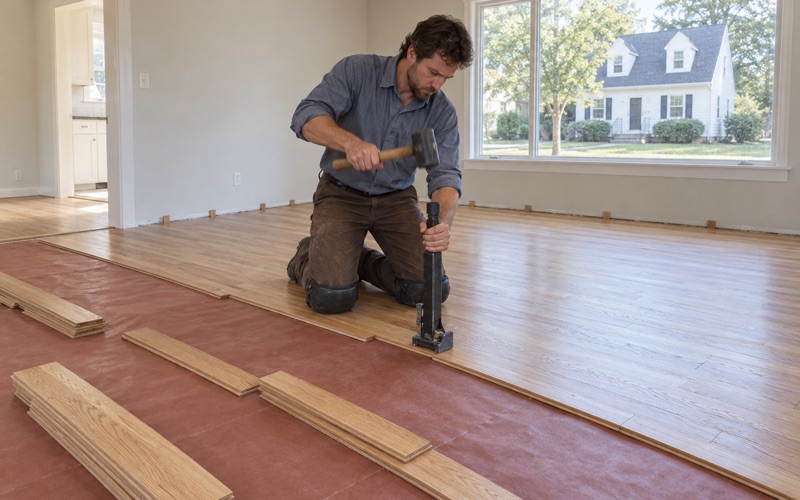
For new wood, we plan acclimation time in the house before installation and read the subfloor as well as the boards. A floor laid when the wood and the room disagree about moisture is the one that cups or buckles the following season.
Keeping the House Livable
We work room by room where the layout allows, so kitchens and bathrooms stay reachable and a bedroom is back in use before the next room starts. Finish cure times set the pace, and we give you the dates for each area before we begin. Furniture moves, pet plans and the day you can walk on the floor in socks are all on that schedule, so nothing about the week comes as a surprise.
If you already know your floor has issues, tell us what you have seen: soft spots, gaps, stains, squeaks or an old repair that never matched. A few photos and the rough age of the house let us arrive with the right tools and a realistic plan for your floors.
Whether your house sits a block from Stony Brook, near Green Street or closer to Jamaica Pond and the Arborway, the work starts the same way: an honest look at the wood you already have, and a plan built around keeping as much of it as possible.
- 20+ Years in Wood Flooring
- Stairs Priced by the Tread
- Moisture Readings Before Repairs