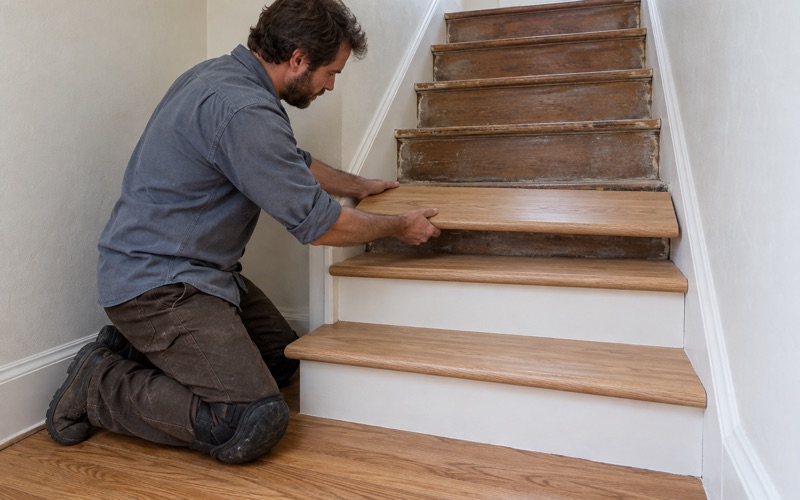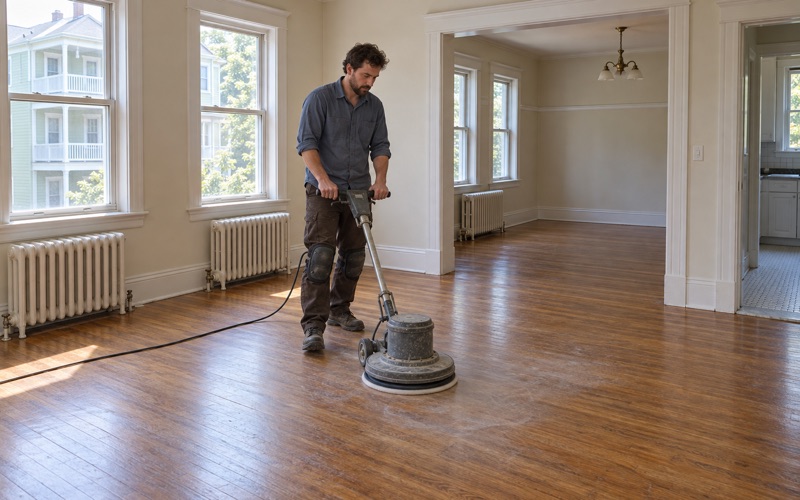
Medford Wood Flooring has taken on wood flooring in Everett for more than 20 years, and nearly every job there comes down to two questions: how old is the floor, and what is actually under the finish. We sand and refinish worn floors, repair and weave in damaged boards, replace floors that cannot be saved, and handle stairs and lower levels. Every quote starts with a look at the real boards, not a guess made from the address.
That order matters because the city holds two very different kinds of floor. One is the red oak strip, maple or softwood in an older house that has probably been sanded before, sometimes more than once, and may still be carrying layers of wax or shellac. The other is the floor in a newer unit, where the decision is usually whether to refinish, repair or replace what the builder left.
We price those two jobs differently. An older floor gets its board thickness and finish history checked before we promise a sanding. A newer floor gets its construction identified, solid hardwood or an engineered wear layer, so we know how much wood there is to work with. Stairs are priced by the tread and riser, and stain samples go down on the real floor before anyone settles on a color.
A City of Two Housing Eras
Everett separated from Malden in 1870 and became a city in 1892, and a large share of its housing still dates from that early stretch. The American Community Survey counts 10,035 of the city’s 18,827 housing units as built in 1939 or earlier, which is 53.3 percent. Beside that prewar city, a new one has been going up on old industrial land.
The 2018 Commercial Triangle Rezoning
In August 2018 the City Council unanimously passed the Commercial Triangle Zoning District ordinance, covering a 97-acre patch roughly bounded by Everett Avenue, the train tracks and the Parkway. The district encourages mixed-use developments of 50 units or more, allowed by right with a retail component, at heights by right up to 65 feet. Buildings from 66 to 100 feet need a Special Permit, and nothing over 100 feet is allowed.
Multifamily buildings without retail also need a Special Permit, with a minimum of 50 units per acre. The result is a district written for large buildings, a sharp change from the two- and three-family streets around it. For our trade, it means Everett now has a real stock of homes whose floors are young, alongside houses whose floors are approaching their second century.
Three Greystar Projects, 1,905 Apartments
Three Greystar projects in the Triangle show the scale. Boston.com reported in May 2022 on 450 units at 35 Garvey Street, including 23 affordable units, 714 units at 85 Boston Street and 741 units at 1690 Revere Beach Parkway. Together that is 1,905 apartments across three developments.
We do not claim to know what flooring any of those buildings used, and we would not quote a unit in one without seeing it first. What we can say is that buildings of that size, and the others the rezoning allows, add a very different kind of floor to the Everett mix than the one the older houses carry.
Owners in Larger Buildings
Most Everett households rent, 62.8 percent of them, but ownership in large buildings exists too. The Census counts 306 owner households in buildings of twenty to forty-nine units and 241 in buildings of fifty or more. We treat those 547 households as a rough proxy for owners living in larger buildings across the city, not as a count for any one development.
Looking for wood-flooring closer to Cambridge? See Cambridge Wood-Flooring.
Upgrading or Repairing a Floor in a Newer Everett Unit
A newer floor is not a smaller job so much as a different one. The work turns on what the floor is made of, how it is fastened or floated, and what the building around it expects from a crew arriving with sanders and finish.
Identifying What Is Already Down
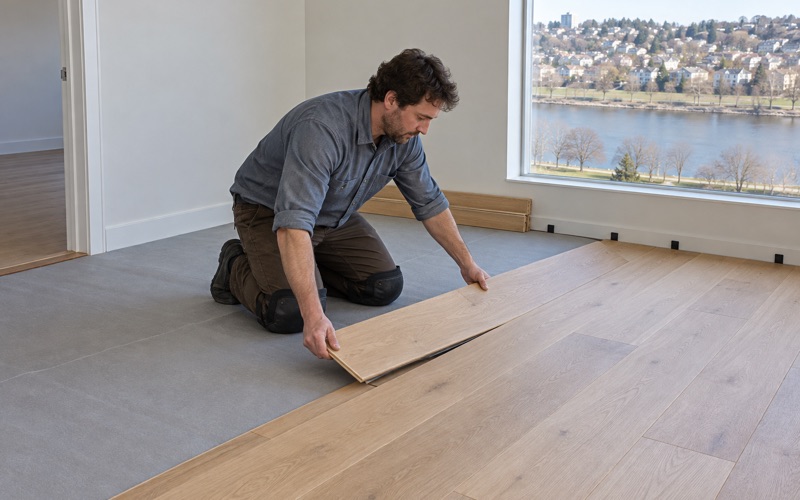
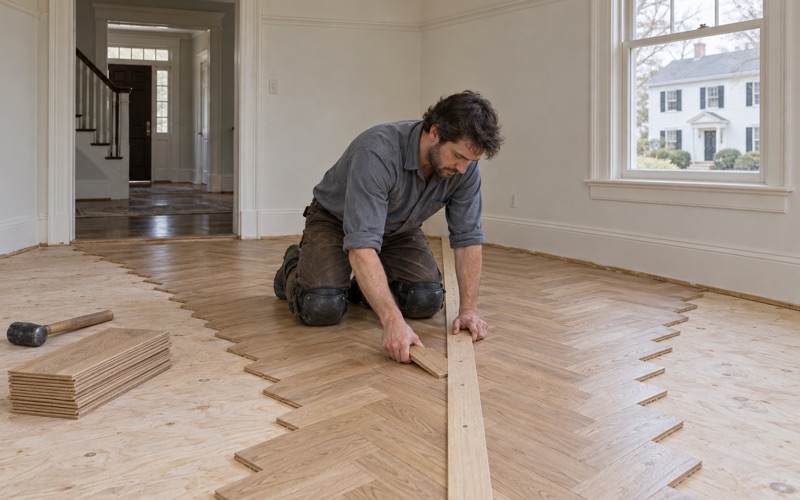
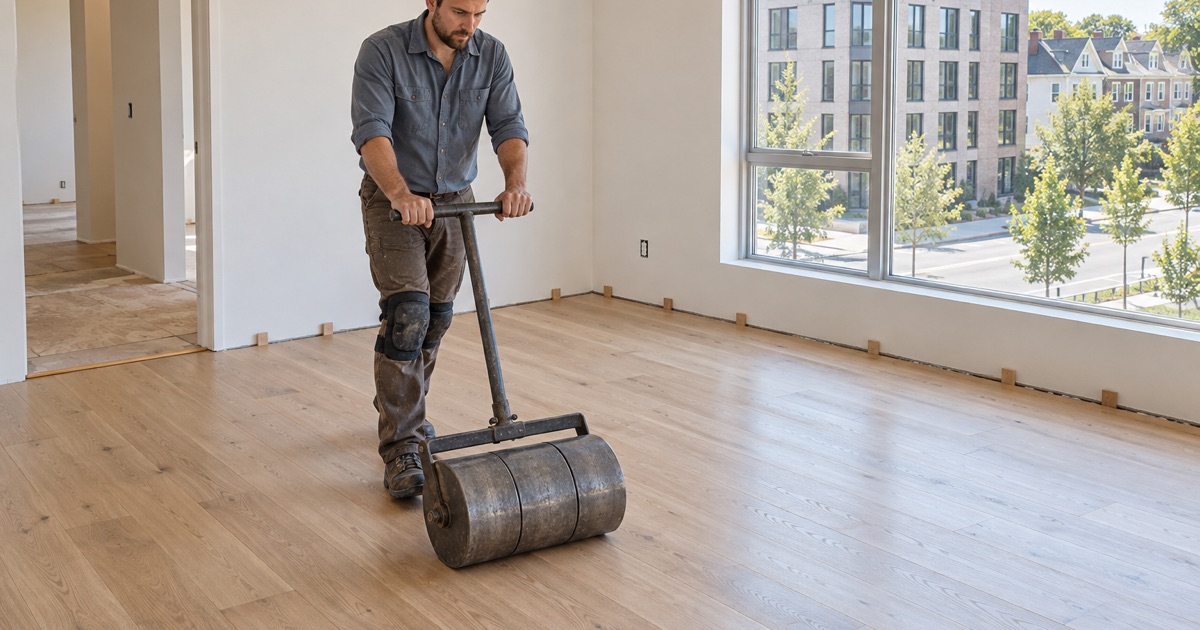
Before we quote, we lift a threshold or a reducer where we can and look at the edge of a board. Solid hardwood and engineered flooring can look identical from above, but an engineered wear layer can only be sanded a limited number of times, and some cannot be sanded at all. A prefinished floor with beveled edges may be better served by a screen and recoat than a full sanding.
If the floor turns out not to be wood, we say so plainly and talk through what replacing it would involve, including the subfloor and underlayment beneath. That conversation happens before anything is pulled up, so the owner decides with the actual condition in front of them rather than a sales sheet.
Sanding and Finishing in a Shared Building
In a large building the work has to fit around neighbors, elevators and common hallways. We run dustless sanding with HEPA vacuum extraction on the machines, and we pick finishes that fit the Massachusetts VOC limits for wood coatings under 310 CMR 7.25, which are stricter than the federal ones. A waterborne polyurethane or a hardwax oil also lets a unit come back into use sooner than many oil-modified products.
Any association rules on work hours, notice or elevator use are the owner’s to confirm, and we build the schedule around them once they are known. Hallways and doorways get protected on the way in and out, and the finish work stays contained to the unit.
Repairs Before Replacement
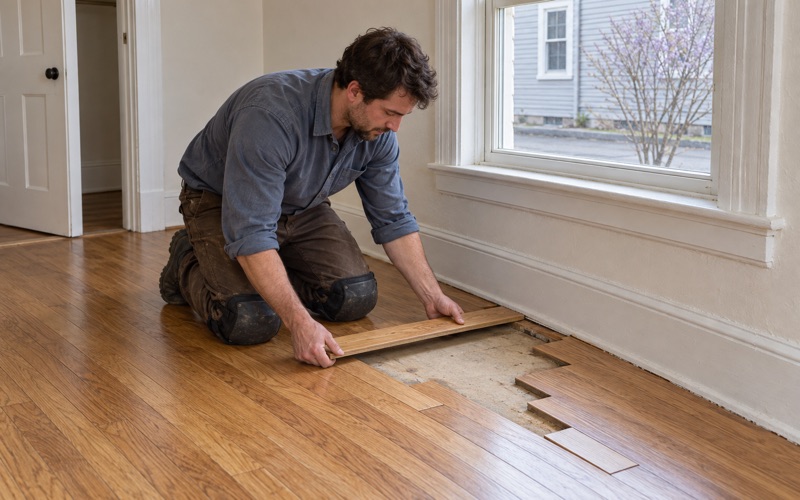
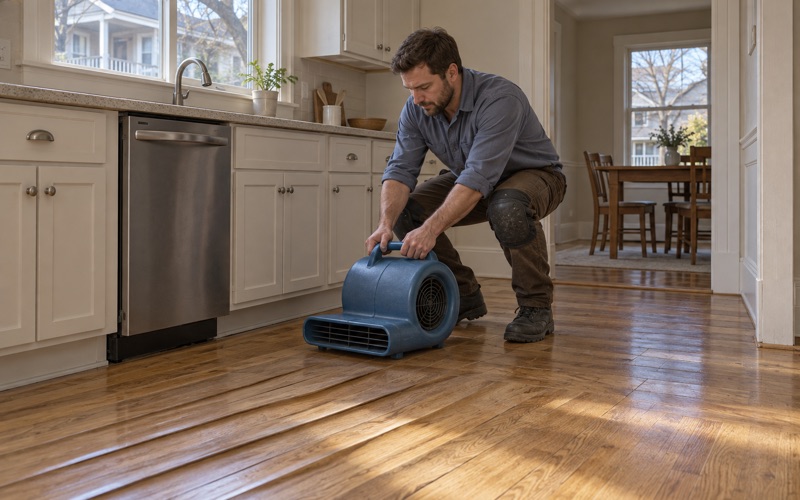
Water stains, pet urine stains and furniture dents are the usual reasons someone calls about a younger floor. Surface marks often sand out, while deep stains usually mean board replacement with a weave-in repair so the new pieces follow the existing pattern. When water is the cause, we trace the source, dry the floor and read it with a moisture meter before replacing a single board, and we document the damage room by room for the adjuster.
Refinishing Floors in Everett’s Prewar Houses
The older city is where most of our Everett hours go. Of the city’s housing units, 4,839 sit in two-unit buildings, and neighborhoods like Glendale, Woodlawn and the Village are made up largely of the kind of houses that tend to carry red oak strip flooring, maple in a kitchen or eastern white pine on an upper floor.
Checking the Boards Before Sanding
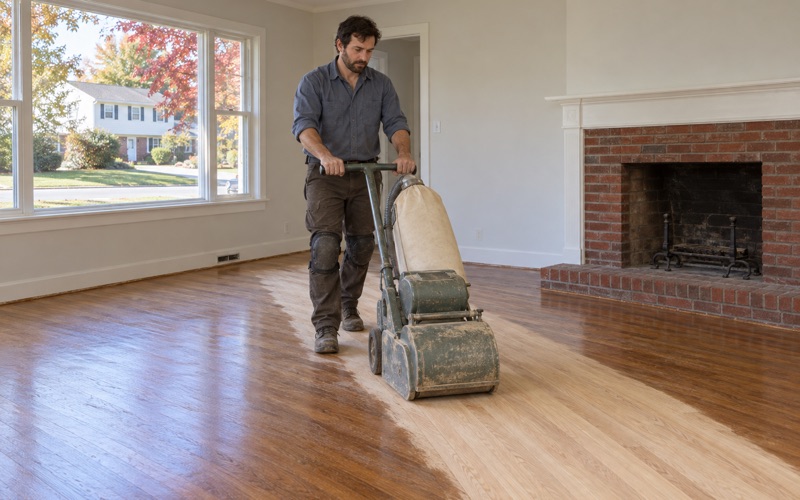
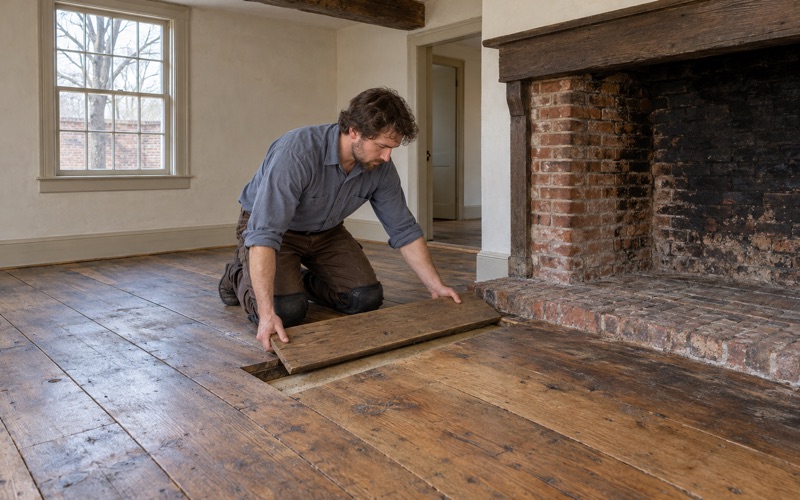
A floor approaching a hundred years old may have been sanded several times already. We check board thickness at a floor register or threshold before quoting a full sanding, because a tongue and groove floor worn down toward the tongue cannot take another aggressive pass. We also test for wax residue and a shellac finish, since new polyurethane laid over either one will not bond and will eventually peel.
The grit sequence on the drum sander and orbital sander is set to the floor in front of us, not a standard recipe. Cupping, crowning, deep traffic lanes and the orange oak look of an aged finish each change how much wood has to come off, and we would rather take off less and keep the floor’s life intact.
Lead-Safe Work in Older Houses
Any Everett house built before 1978 falls under Massachusetts’s own lead-safe renovation rules, 454 CMR 22.00, when work disturbs painted surfaces. We confirm the build year and look at painted baseboards, quarter round, stair risers and trim before sanding begins, then set up containment to match what we find.
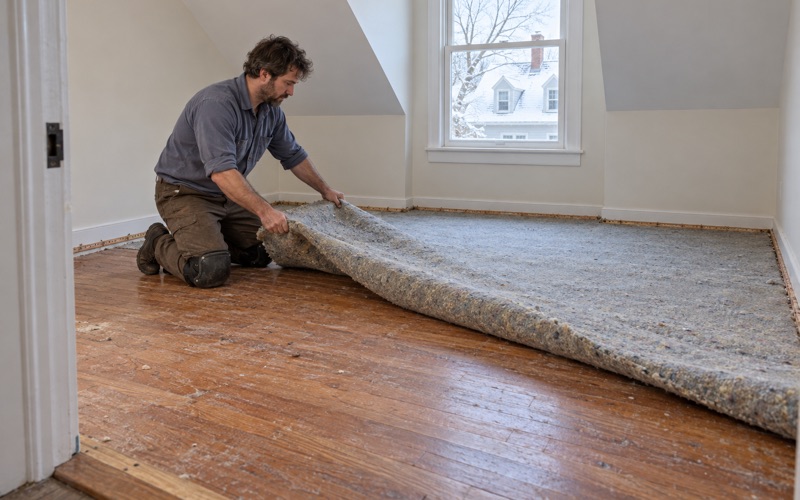
Linoleum or carpet laid over an original floor brings its own checks. Black mastic under an old linoleum layer has to be identified before anyone scrapes it, and pulling tack strip and carpet pad usually leaves nail holes and damaged edges that need filling or board replacement before the room can be refinished as one surface.
Patches, Radiators and Two-Family Houses
Where a radiator or pipe came out, we patch the opening with matching boards woven into the surrounding floor rather than a filled square that shows forever. In a two-family house where the owner lives on one floor, we work one level at a time so the household upstairs or downstairs keeps living in the house.
Older houses sometimes reveal insect damage from powderpost beetle, old house borer or carpenter ants once the finish comes off. We point it out when we find it and replace the affected boards rather than sanding over soft wood and hoping it holds.
Planning a Floor Project Anywhere in Everett
Whichever era the floor belongs to, the planning steps are the same, and they start with moisture, the season and a clear picture of the finished room. Getting those three settled before the first board comes up is what keeps a project from stalling halfway through.
Weather and Moisture
Everett sits in National Weather Service forecast zone MAZ014, Southeast Middlesex, and like the rest of the region it swings between humid summers and dry, heated winters. Winter gaps between boards are normal in a heated house and usually close again in summer, while board gapping that stays open, or buckling after a leak, points to a moisture problem worth finding first.
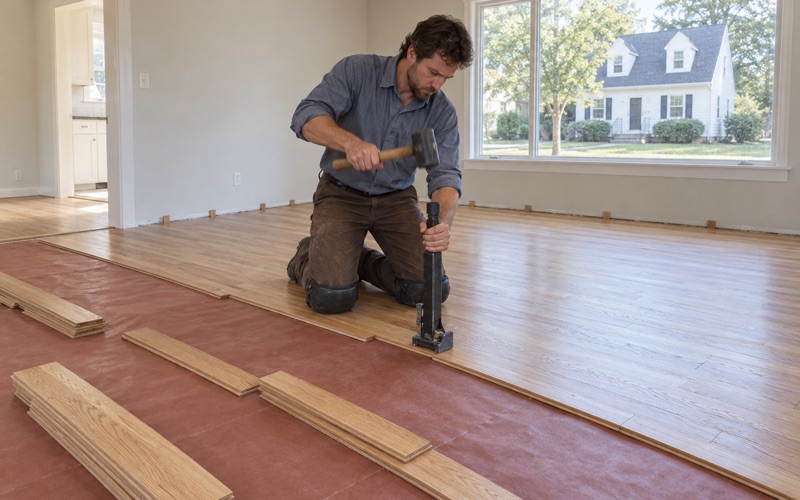
New boards get acclimation time in the house before installation, and below grade floors are matched to the moisture that is actually there, which usually means engineered wood rather than solid. Where a lower level has a sump pump or a history of water, we read the subfloor with a moisture meter first and add a vapor retarder where the floor calls for one.
Samples, Stairs and Scheduling
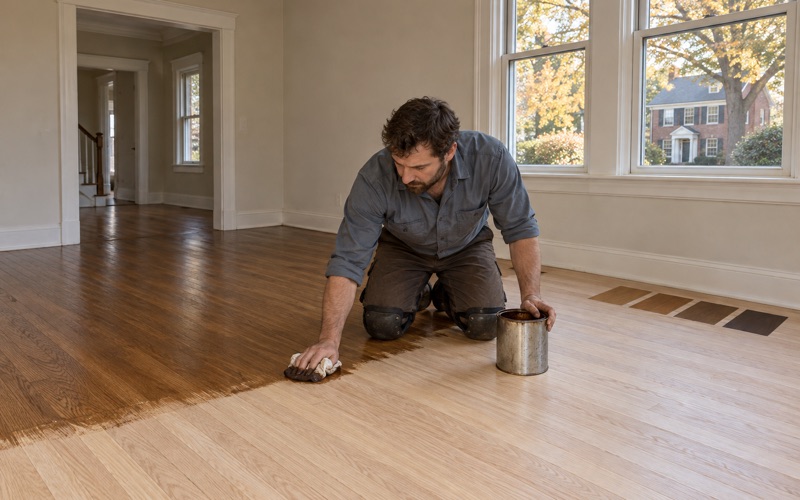
Stain samples go down on the actual floor, in the room’s own light, before a color is chosen, because the same stain reads differently on white oak, red oak and maple. Stairs are quoted by the tread and riser, with stair nosing and any replacement treads listed on their own lines. Then we set a schedule that includes how long the finish needs before furniture and rugs go back.
- 20+ Years in Wood Flooring
- Stairs Priced by the Tread
- Moisture Readings Before Repairs