Medford Wood Flooring has handled wood flooring in East Boston for owners who plan to keep living on the floors we work on, and our crews bring more than 20 years of sanding, refinishing and repair to every job. Most of what we do here is restoration rather than replacement: worn boards brought back, damaged sections rewoven, and a new finish laid over a surface that has been properly prepared.
That focus shapes how we quote. When the person paying for the work also walks across the floor every morning, the decisions change. Owners want to know how long a room will be out of use, whether the family can stay in the house, and whether a floor with decades of wear can take one more sanding without running out of wood.
This page explains how we approach those questions in East Boston houses and two-families, beginning with the hill neighborhood that was laid out for homeowners in the first place. It also covers what we check before a sander starts, how we schedule work around the people living upstairs or downstairs, and how we plan repairs, water damage and lower-level floors.
Floors on East Boston’s Single-Family Side
A Hill Planned for Homeowners
Orient Heights began as an island. The hill was once called Hog Island and later renamed Breed’s Island, and it was one of the five islands that made up East Boston before Boston annexed the neighborhood in 1836. Italian immigrants settled on the hill in the 1860s and 1870s, and the Madonna shrine statue built there in 1956 stands 35 feet high above the streets below.
The houses came with a sales pitch. As Boston’s population rose and demand for housing grew, the Boston Land Company began developing former marshland in East Boston in the 1880s, including the island that became Orient Heights.
Its 1894 Plan of Orient Heights, drawn by H. T. Whitman, promoted the chance to own a single-family home away from the crowded North End and West End. The hill rises 152 feet at its highest point, and that promise of owning a house on it still describes a real share of the neighborhood’s floors.
What the Census Shows About Owners
The American Community Survey does not break out Orient Heights, so we use ZIP code 02128 as a labeled proxy for East Boston as a whole. In that ZIP, 1,159 owner households live in one-unit detached houses and another 1,054 live in two-unit buildings. Together that is 2,213 of 5,143 owner households, or 43.0 percent.
Those figures cover the entire ZIP code, not the hill alone, and we treat them that way. What they tell us is practical: a large portion of the owners we meet in East Boston live either in a house of their own or in one half of a two-family, and those are the floors this page is about.
Why Long-Held Houses Need a Careful Read
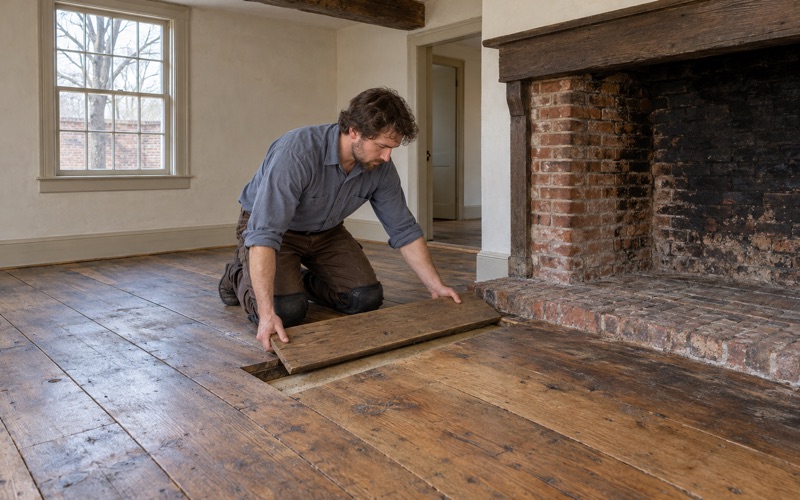
The same ZIP shows 10,217 of its 19,193 homes built in 1939 or earlier. A floor in a house that old has often been through several owners, several finishes and at least one round of carpet, and we never assume what species or grade sits under it until we have looked.
We pull a floor register or a threshold where we can, read the board edges, and look for the telltale signs of past work: traffic lanes worn through the finish, patches where a radiator stood, black mastic from old linoleum, or tack strip holes along the walls. Each of those changes the plan, and each is cheaper to find at the estimate than halfway through a sanding.
Looking for wood-flooring closer to North End? See Wood-Flooring in North End.
Refinishing an Owner-Occupied East Boston Home
Board Thickness Comes First
A solid hardwood floor can only be sanded so many times before the tongue and groove begins to show. Before we quote a full refinish, we check how much wood remains above the tongue, because a floor that has been sanded hard in the past may only tolerate a light pass or a screen and recoat.
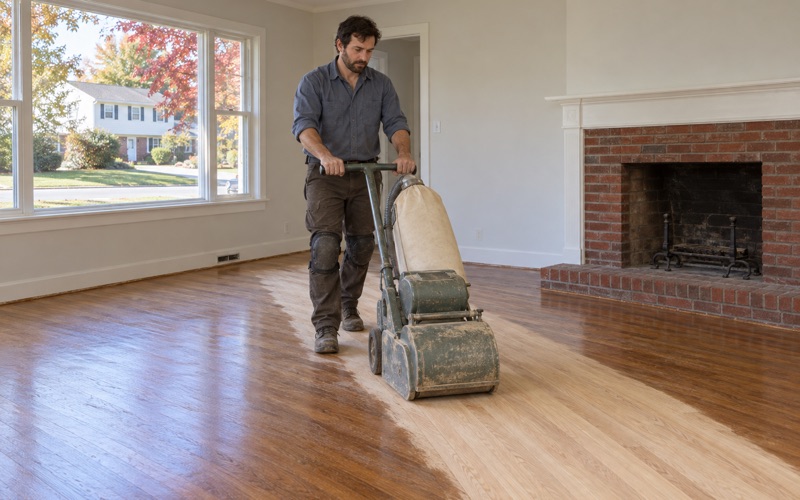
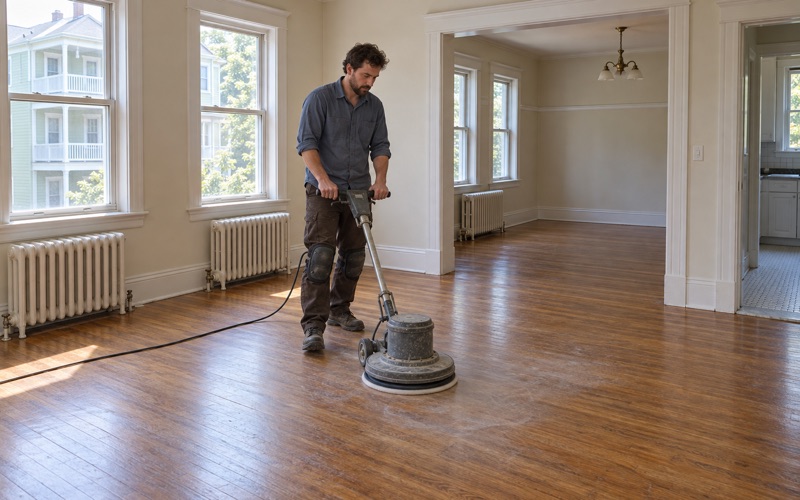
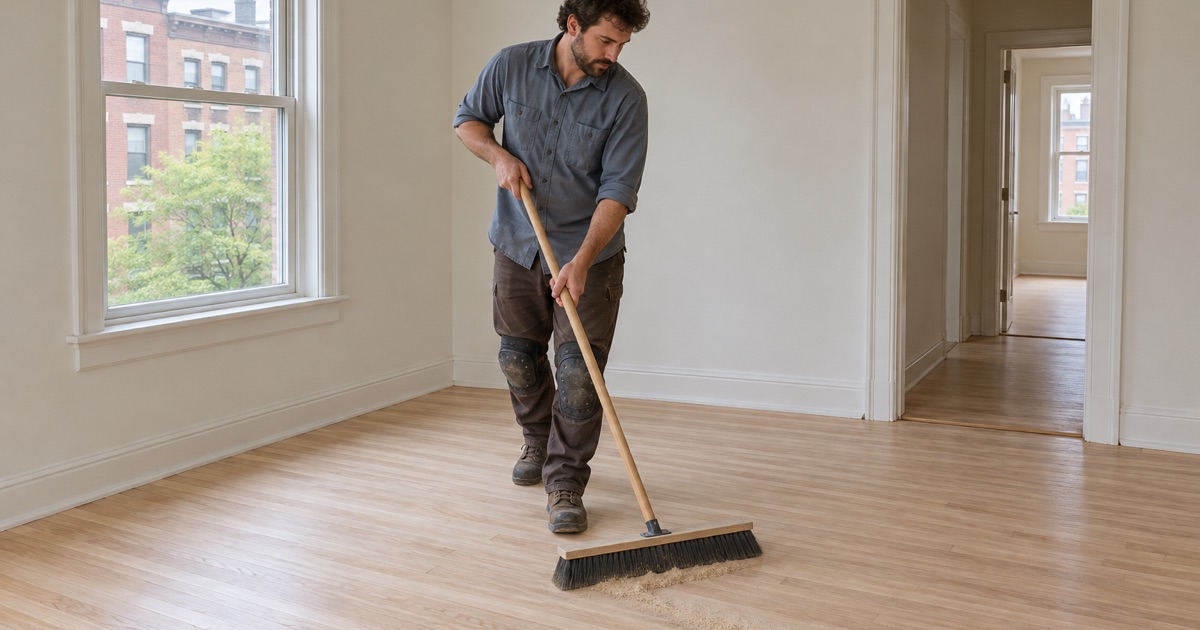
When there is enough wood, a worn red oak strip floor almost always deserves to be refinished rather than torn out. We run a drum sander through a measured grit sequence, follow the edges with an orbital sander, and collect the dust with a HEPA vacuum and dustless sanding equipment. The goal is to remove only as much of the surface as the damage requires.
Lead Rules, Wax and What Is Under the Finish
Massachusetts runs its own lead-safe renovation rules for homes built before 1978, and in a neighborhood where most houses are far older than that, we check the build year and every painted surface near the work before sanding begins. Baseboards, shoe molding and painted stair parts get the closest look, since those are where old paint meets the floor.
Old finishes carry their own problems. Decades of paste wax, oil soap and spray cleaners leave wax residue that a new coating will not grip, so we test for it and remove it first; skipping that step is how a fresh finish ends up peeling within a season. An older shellac finish needs the same attention before any polyurethane goes over it.
Choosing Color and Finish in the Room Itself
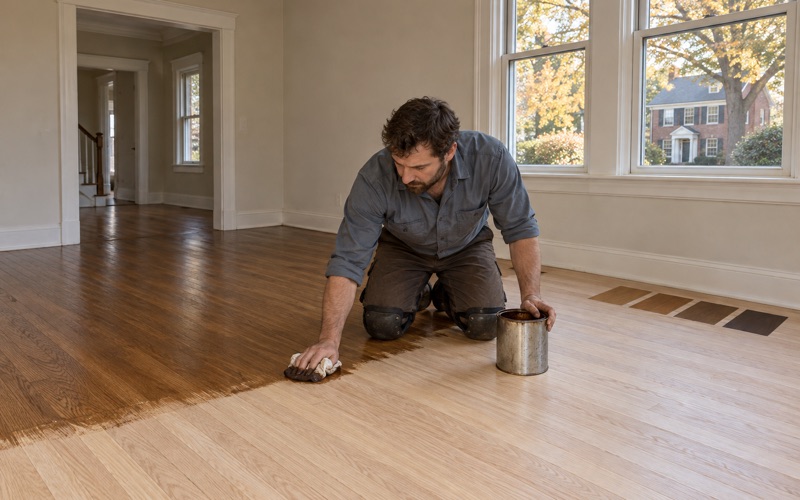
Owners who have lived with orange oak for years often want something quieter. We lay stain samples directly on the sanded floor and let you judge them in your own daylight, because a color chosen from a small printed chip rarely looks the same across a whole room. Water popping before the stain goes down can deepen the tone evenly on oak.
For the topcoat, we choose finishes that meet the Massachusetts VOC limits for wood coatings, which are stricter than the federal ones. Waterborne polyurethane dries clear and lets a family back into the room sooner, oil-modified polyurethane warms the color, and a hardwax oil suits owners who prefer a matte look they can spot-repair. We talk through sheen level before the first coat rather than after the last.
Two-Family Houses Where the Owner Lives
One Floor at a Time
In an owner-occupied two-family, somebody is always home. We schedule the work one floor at a time, so the household upstairs or downstairs keeps its kitchen, bathroom and bedrooms while the other unit is sanded and coated. Doorways are sealed, and the working floor stays closed until the finish has cured enough to walk on.
That sequence also helps owners who live in one unit and rent the other. The occupied floor can be finished between tenants or while a tenant is away, and we give a clear day count for each unit so no one is surprised by a room they cannot use.
Shared Stairs and Entry Halls
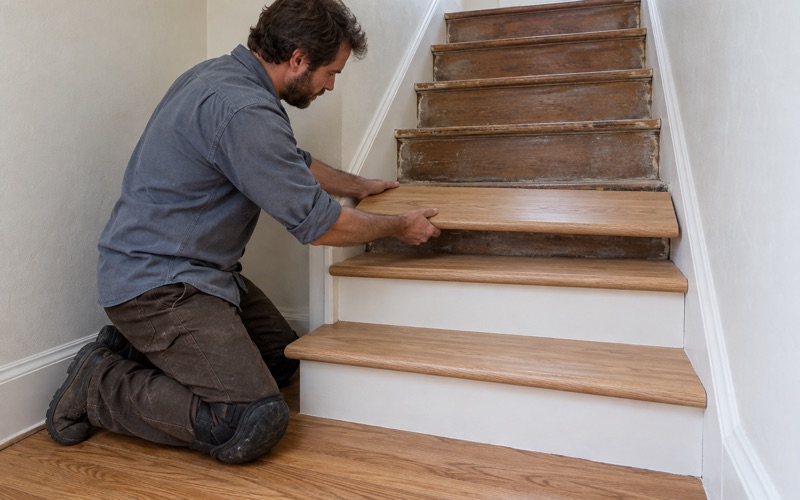
The front stairs in a two-family take more traffic than any room, and they are rarely a simple job. We quote stairs by the tread and riser, not folded into a square-foot price, because each stair tread is sanded by hand, the stair nosing is shaped separately, and painted stair risers may need their own lead check.
When treads are split or cupped beyond sanding, we replace them individually and match the new wood to what remains. The shared hall usually gets done on a day when both households can use a back entrance, and we plan that with you before the start date.
Rental Rules for Owner-Occupied Buildings
Owners with a second unit sometimes ask how refinishing fits the City of Boston’s rental rules. Boston requires annual rental registration and a five-year rental inspection, but owner-occupied buildings of six or fewer units are exempt from that inspection. A two-family where you live in one unit falls in that exempt group.
We mention it because it affects timing rather than paperwork. Without an inspection deadline pushing the calendar, owners can schedule the tenant’s floor around a lease change, and we can plan the sanding for the week the unit sits empty.
Planning a Floor Project in East Boston
Patches, Pests and Water Damage
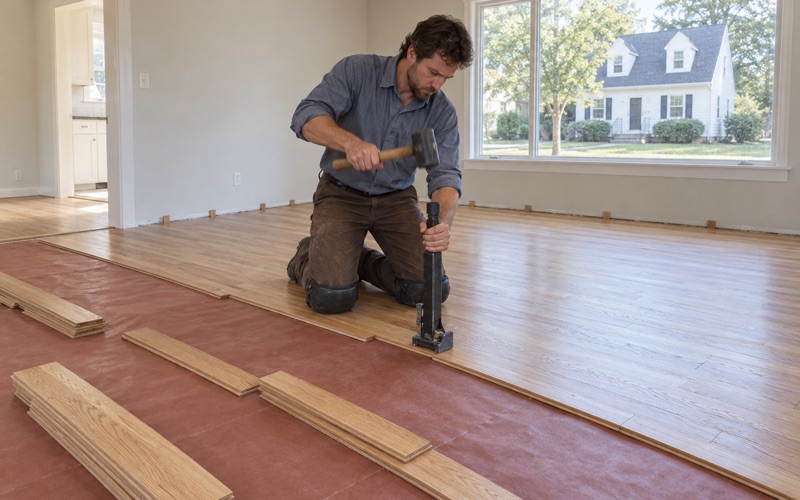
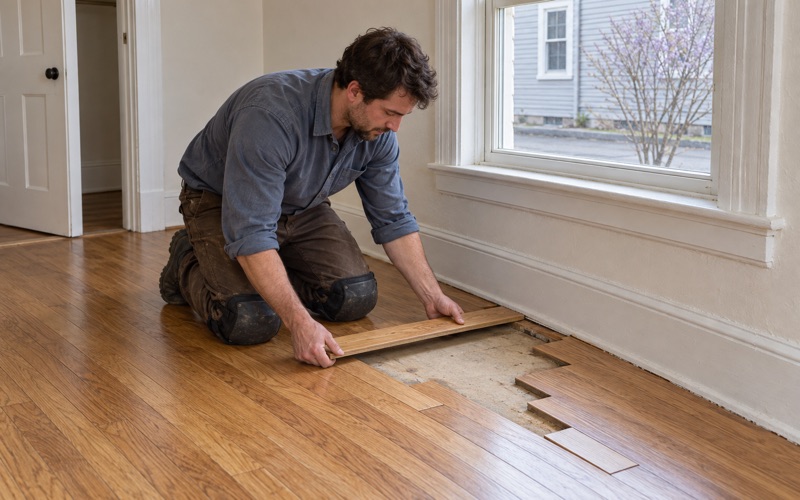
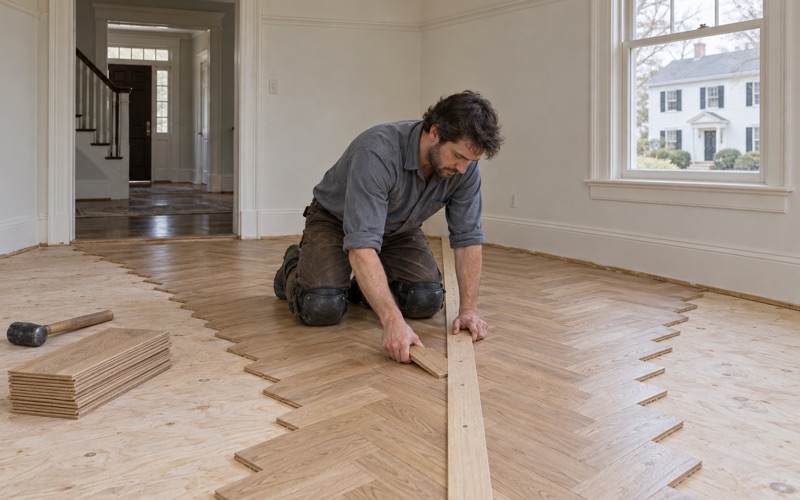
Many older houses here lost their radiators and pipes during heating upgrades, and the holes they left behind are still in the floor. We patch those spots with matching boards woven into the surrounding floor, not filled, so the repair disappears once the room is sanded and finished. The same weave-in repair handles pet urine stains and water stains too deep to sand out.
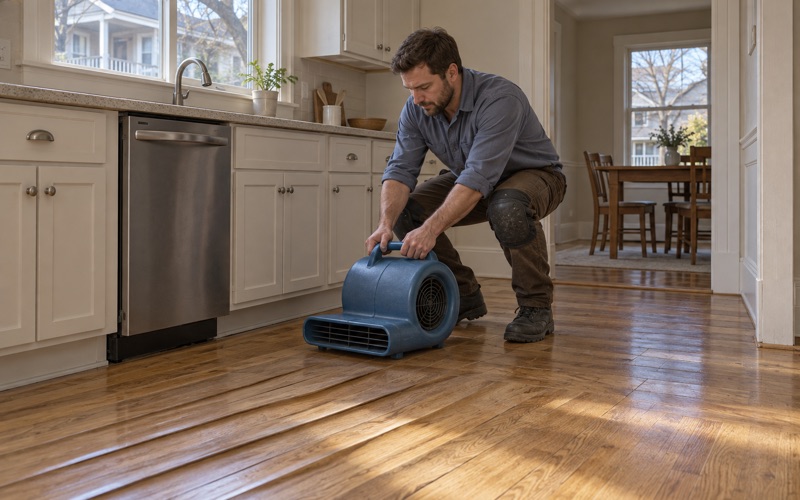
When water is involved, from a burst pipe, an overflowing appliance or a wet basement, we trace the source, dry the area and read it with a moisture meter before any board is replaced. Cupping and crowning settle only after the wood dries, so replacing boards too soon wastes money. For an insurance claim, we document the damaged floors room by room for the adjuster.
Lower Levels and the Seasons
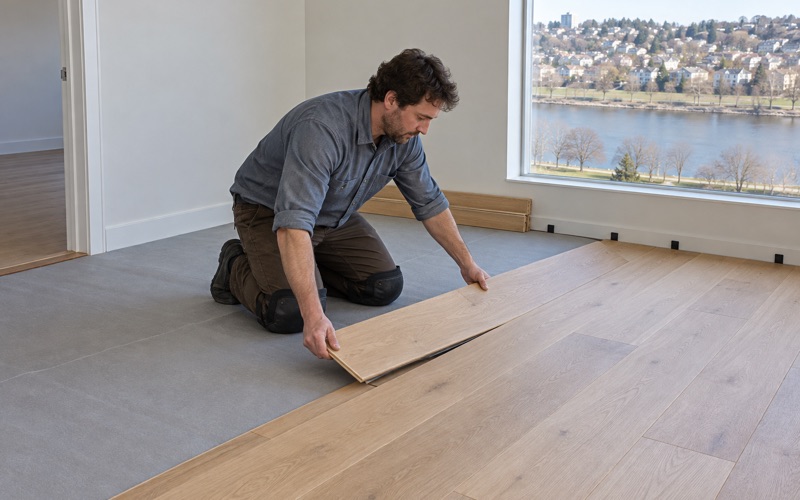
Lower-level rooms need a different product. We match basement floors to the moisture actually present, which usually means engineered wood with a proper vapor retarder rather than solid boards that will cup or buckle below grade. A sump pump that runs often is a sign we take into account before recommending anything.
Upstairs, East Boston floors move with the seasons like floors anywhere in the region. Winter gaps open between boards when the heat runs and close again in humid summer weather, and we explain that normal board gapping during the estimate so owners do not mistake it for a defect after the finish is down.
What We Need From You Before the Start Date
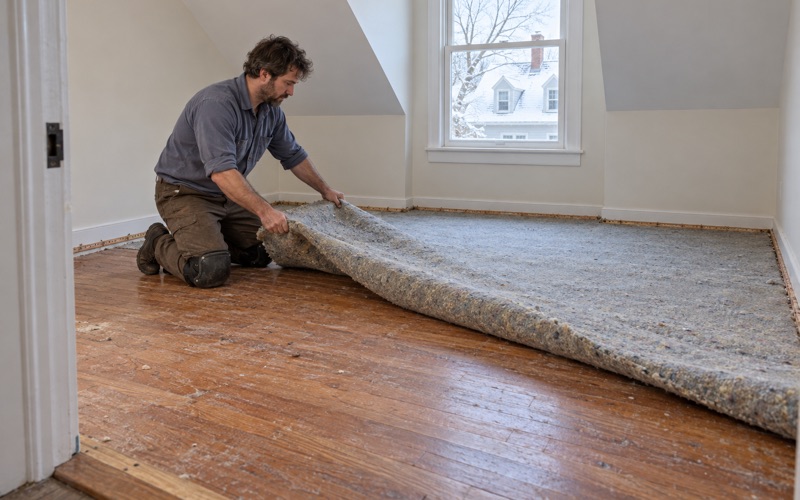
A good estimate starts with access. We ask to see every room on the list, a closet or two where the floor has been protected from wear, and any stairs or hallways that might be added. If carpet is coming up, a lifted corner shows us the carpet pad, tack strip and condition of the wood underneath.
If the work turns out to reach beyond the floor into framing or the subfloor structure, the City of Boston Inspectional Services Department is the office that oversees building work in East Boston, and we will tell you before anything changes. For most refinishing and repair projects, though, the plan stays simple: confirm the wood, protect the household, and leave a floor the owner will keep walking on for years.
- 20+ Years in Wood Flooring
- Stairs Priced by the Tread
- Moisture Readings Before Repairs