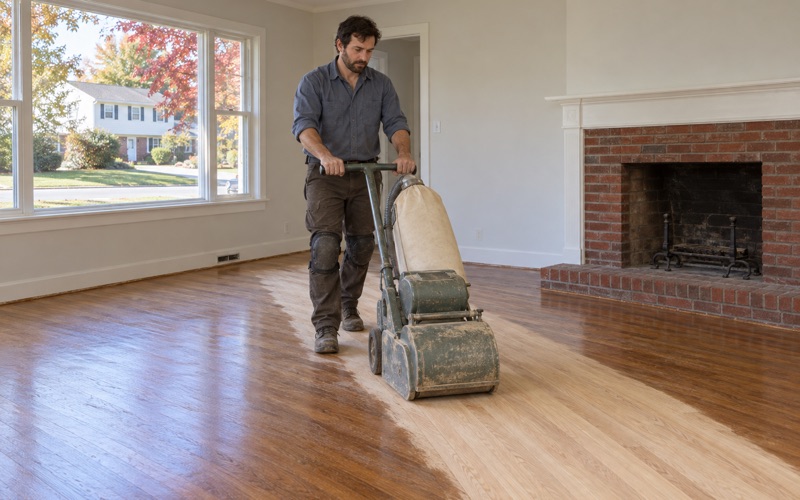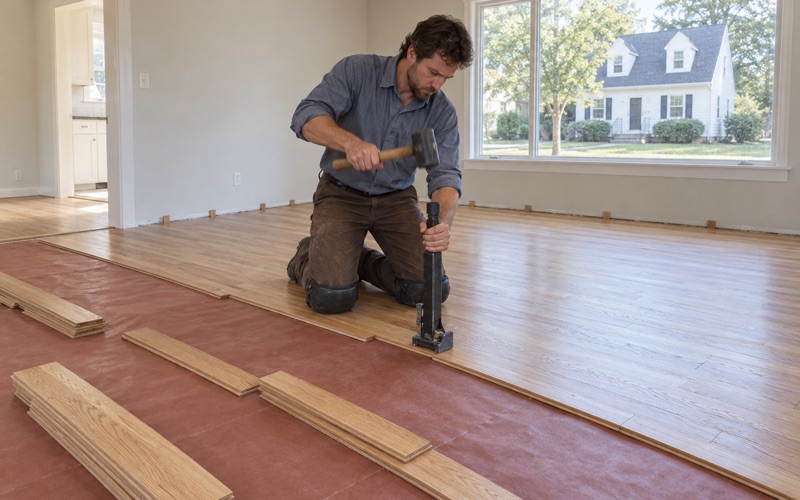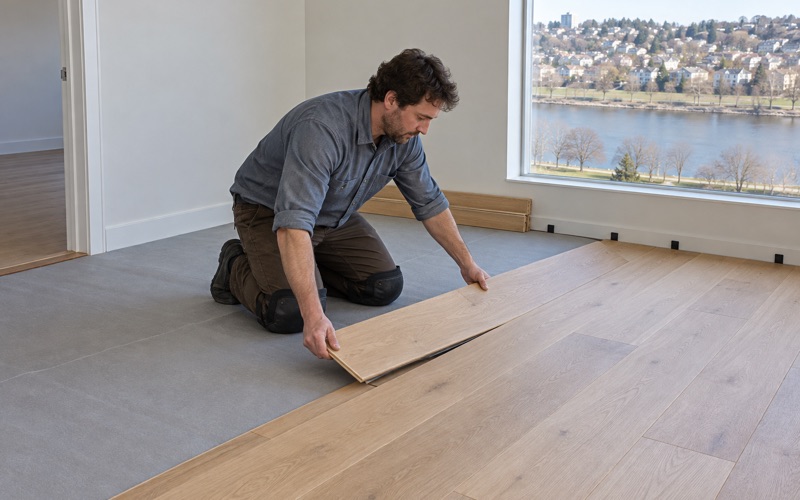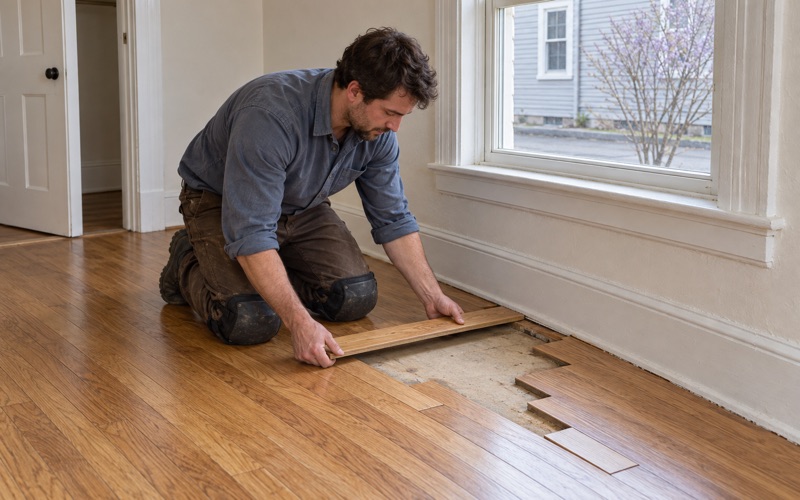
Medford Wood Flooring has spent more than 20 years on wood flooring in Dorchester and across greater Boston, and the work we do here is shaped by one fact: a single block can hold houses built a century apart. We sand, refinish, repair and replace hardwood, and we plan each job around the age of the house rather than a standard package.
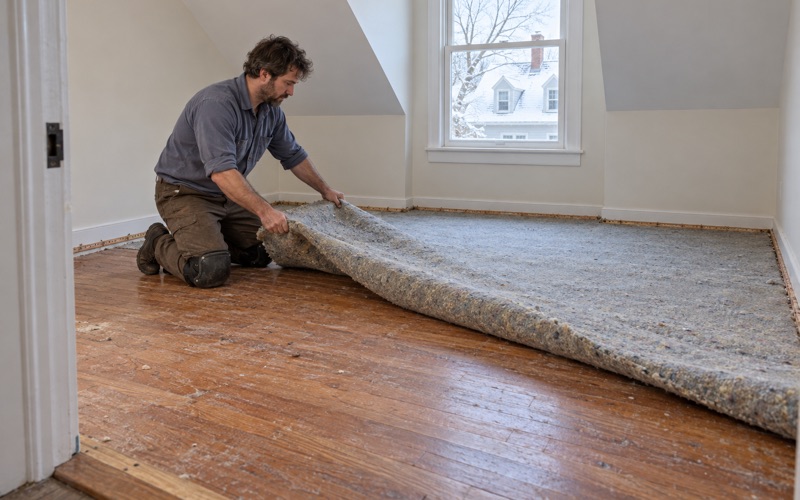
That approach matters most on old floors. Before a sander touches anything, we check how much wood is left above the tongue, what finish is already down, and whether earlier owners left wax or painted edges behind. A floor that has been sanded three or four times needs a lighter hand than one that has only ever been waxed.
We also work around the people living in the house. Many Dorchester homes hold more than one household, so we schedule floor by floor, keep dust contained with HEPA vacuums and dustless sanding, and tell you plainly when a room will be off limits and for how long.
Meeting House Hill’s Federal Houses and Oldest Streets
What the survey tells us about the hill
The Boston Landmarks Commission area form, reproduced by the Dorchester Atheneum, describes the part of the hill it calls Meeting House Hill as speaking to the area’s late 17th- to mid-19th-century development. The southwestern half, around Ronan Park, tends to represent development after 1870. That split is useful to us, because it tells us what kind of house we may be walking into before we see the floor.
The hill is one of the oldest settled parts of Dorchester. First Parish Church was established there in 1631 and the Mather School in 1639, and the town itself was not officially part of Boston until January 3, 1870. Houses on these streets have lived through a lot of owners, and their floors usually show it.
Church Street, Adams Street and the old toll road
The survey names specific Federal buildings still standing. The William D. Swan house at 8 Church Street dates from the early 1800s, and the five-bay, double-pile Federal building at 34 Adams Street housed an academy from 1804 until 1846. By 1804, Dorchester Avenue was already running as a Federal-period toll road connecting Meeting House Hill to Lower Mills, so these streets were a working corridor long before streetcars arrived.
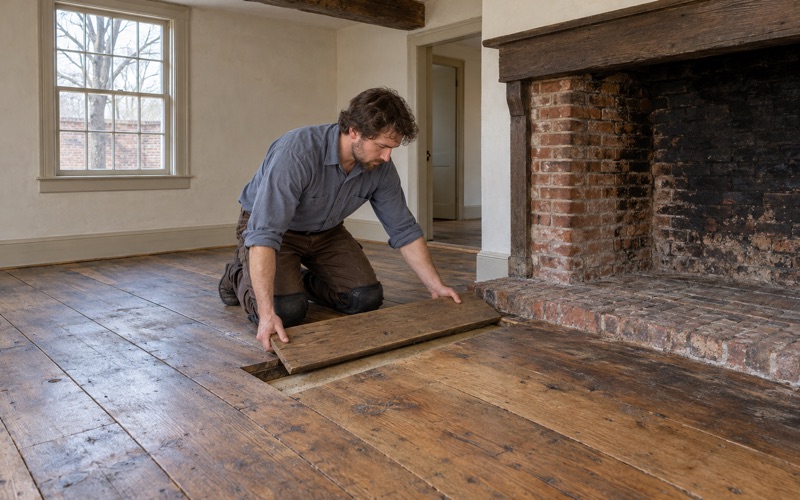
We do not assume what is underfoot in a house of that age. The survey does not describe the floors inside these buildings, and after two centuries a Federal house may hold boards from several different repairs, a later oak overlay, or linoleum and carpet over whatever came before. We lift a register cover or pull a threshold first, and we tell you what we find before quoting.
Careful work on a very old floor
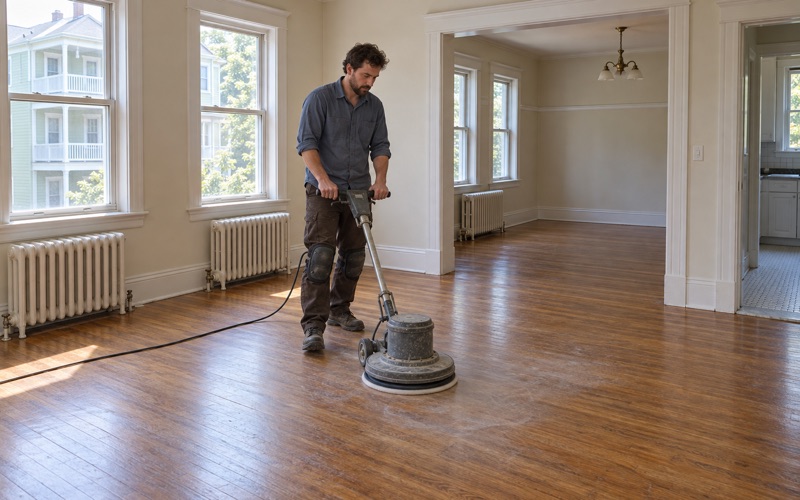
Old softwood and early hardwood floors rarely tolerate an aggressive drum sander pass. Boards may be face-nailed with cut nails whose heads sit near the surface, and a floor that has cupped or crowned over many seasons can lose too much wood if it is flattened in one go. We set the nails, start at a gentler grit, and switch to an orbital sander where the boards are thin or uneven.
Some owners of the oldest houses would rather keep the character of the wear than remove it. In that case we can clean off wax residue, repair loose or split boards, and apply a finish without chasing every traffic lane down to fresh wood. A shellac finish or hardwax oil can suit a room like that better than a thick film of polyurethane.
Looking for wood-flooring closer to Back Bay? See Wood-Flooring Services in Back Bay.
Percival and Potosi Streets: Queen Anne and Colonial Revival Floors
Estates subdivided between 1890 and 1930
According to the same survey, the remaining estates on the hill were subdivided between 1890 and 1930. The lots became substantial Queen Anne and Colonial Revival houses on Percival and Potosi Streets, and three-deckers bordering Fifield Street and parts of Church, East and Fox Streets. A walk of a few minutes can take you from one era of floor to the next.
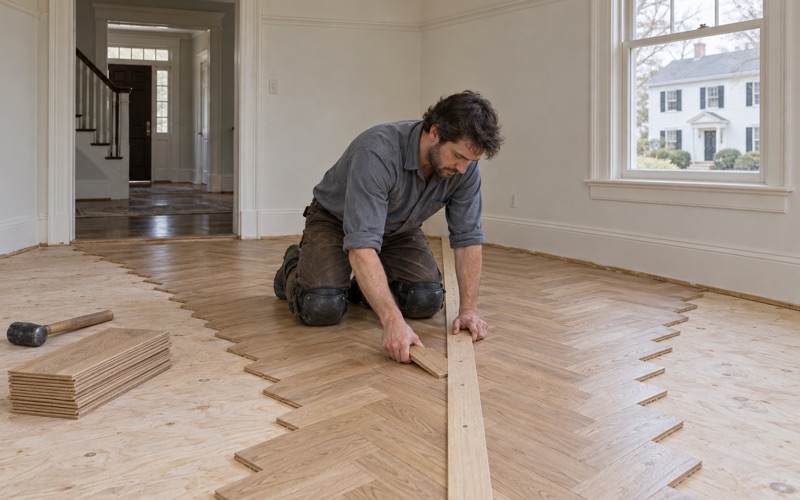
Those larger single-family houses from the subdivision years tend to have more rooms, more doorways and more transitions than a modern plan. That means more thresholds, reducers and borders to deal with, and occasionally a herringbone or border pattern in a front room that needs hand work along every edge.
Refinishing turn-of-the-century oak
When these houses carry oak strip floors, the most common problem we see is an old amber finish that has gone deep orange, dark traffic lanes through halls and dining rooms, and winter gaps between boards. A full sand with a proper grit sequence usually brings the wood back, as long as the wear layer above the tongue is still thick enough.
We measure that before we promise anything. If a floor has already been sanded close to the tongue, we recommend a screen and recoat instead, or targeted board replacement where the wood is too thin. Selling a full refinish on a floor that cannot take it is how old houses lose floors that could have lasted another generation.
Patches where radiators and pipes came out
Houses from this period often had radiators moved, removed or replaced, and each one leaves a hole or a painted rectangle in the floor. Rather than filling those spots, we weave in matching boards so the patch runs with the grain and the layout of the original floor.
The same weave-in repair works for pet urine stains and black water stains that have gone through the wood. Sanding cannot remove a stain that deep, so we cut out the affected boards and lace in replacements before the whole room is finished together.
Refinishing Floors From Three Centuries on One Hill
Federal, Victorian, Colonial Revival and three-decker on one block
On Meeting House Hill, a Federal house, a Colonial Revival single-family and a three-decker can share a block, and each wants a different plan. The Federal house calls for the most caution and the least sanding. The Colonial Revival house usually has the most floor to refinish and the most decorative detail. The three-decker adds another household’s schedule to the job.
This mix is not limited to one hill. Across the four Dorchester ZIP codes 02121, 02122, 02124 and 02125, Census estimates we use as a proxy count 30,800 of 58,234 homes as built in 1939 or earlier. Old floors are the rule here, not the exception, and we price and schedule accordingly.
Lead-safe prep and low-VOC finishes
Massachusetts runs its own lead-safe renovation rules for homes built before 1978, and nearly every house on the hill falls inside that date. Before sanding, we confirm the build year and look for painted surfaces such as baseboards, stair skirts and old painted borders, then plan containment and cleanup around what we find.
Finish choice is regulated too. Massachusetts limits VOC content in wood coatings more strictly than federal rules do, so we select waterborne polyurethane, compliant oil-modified products or hardwax oils that meet the state limits. We walk you through sheen level and durability rather than picking a product by habit.
Stain color chosen in the room it will live in
Light in an old Dorchester house comes through tall windows, porches and deep eaves, and a stain that looks right on a sample board can read very differently on the floor. We lay stain samples directly on your sanded floor, in the actual light, before you commit to a color.
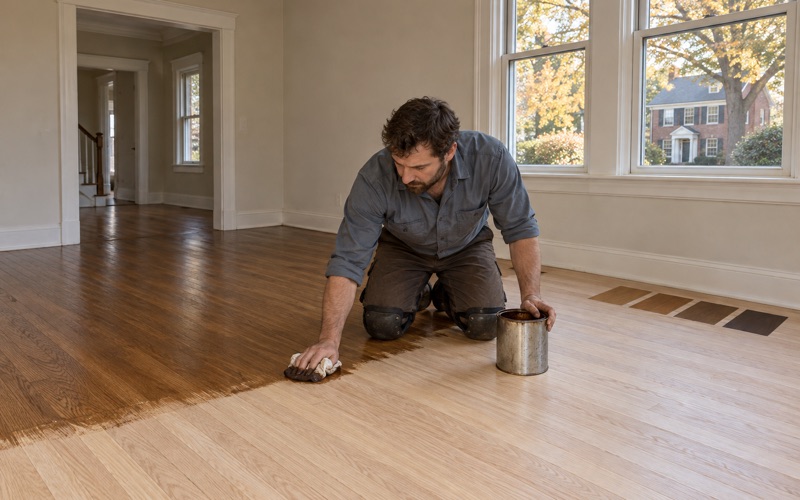
On old oak we often water pop the surface first, which opens the grain so the stain takes evenly. If you want the natural color of the wood, we can show a clear coat beside a light stain so you can compare them side by side.
Planning a Floor Project in Dorchester
Keeping the household in the house
The Boston Planning Department counts 49,565 housing units in Dorchester, and 38.4 percent of occupied homes are owner-occupied. Many of those owners live in one unit of a two- or three-family house, so we work one floor at a time and keep hallways and stairs usable for the people upstairs or downstairs.
We give each household a written schedule for sanding, coating and cure time. Tenants and family members know in advance when a floor is closed and when furniture can go back, which keeps the job moving without surprises.
Water damage, moisture and seasonal movement
A burst pipe, an overflowing washer or a wet lower level can leave cupping, buckling or board gapping that looks worse than it is. We trace the source, dry the floor, and read it with a moisture meter before replacing any board, because boards laid over wet wood simply fail again.
When there is an insurance claim, we document the damage room by room for the adjuster. For lower-level rooms where moisture is a constant, we match the product to the readings, which usually means engineered wood with a proper vapor retarder rather than solid hardwood.
Stairs, old coatings and what to expect
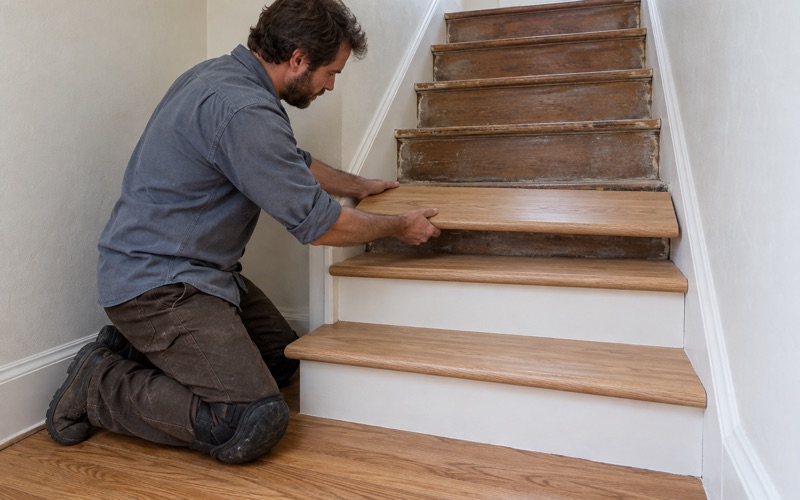
Staircases in these houses often have worn treads, painted risers and loose nosing. We quote stairs by the tread and riser rather than folding them into a square-foot price, so you can see exactly what the staircase costs on its own.
If a floor has old wax or cleaning-product residue, we test for it and remove it before any new finish goes down, since a finish laid over residue will peel. With that settled, we can give you a clear scope, a realistic timeline and a floor that suits the age of your Dorchester house.
- 20+ Years in Wood Flooring
- Stairs Priced by the Tread
- Moisture Readings Before Repairs