Medford Wood Flooring handles wood-flooring in Brookline with a focus most contractors leave for last: what happens when water gets to the boards. We have spent more than 20 years sanding, repairing and installing hardwood, and a good share of that work starts with a floor that got wet from a burst pipe, a leaking dishwasher or water coming up from below.
A wet floor is not automatically a lost floor. Solid hardwood that has cupped or started to lift can often be dried, flattened and refinished, as long as the source is found and the moisture is measured before anyone reaches for a pry bar. Tearing out boards too early costs more than the water did, and replacing them before the subfloor is dry just starts the damage over.
This page covers the two jobs we see most in town: bringing a water-damaged floor back, and choosing the right flooring for a lower-level room where moisture is part of the picture. Both depend on reading the house as it is, not on a standard price per square foot.
What the Muddy River Has Done Before
Brookline was first settled in 1638 under the name Muddy River, a hamlet of Boston, and the river it was named for still shapes how some homeowners here think about their floors. The town sits along the Emerald Necklace edge, and the Muddy River and Leverett Pond are part of the landscape between Brookline Village and the Boston neighborhoods next door.
The October 1996 Flood
In October 1996 more than 12 inches of rain fell, and the Muddy River and Leverett Pond overflowed onto the roads, train stations and buildings around them. Floodwaters damaged the public transit system in Boston and Brookline along with nearby residences, businesses and academic, medical and cultural institutions. Damages exceeded $70 million.
For wood floors, an event like that is the worst case. Water that sits on hardwood for days soaks into the boards, the subfloor and the underlayment all at once, and the floors that come through it best are the ones dried quickly and carefully rather than stripped out in a panic.
The Flood Risk Project, Phase 1 and Phase 2
The response was a flood risk management project led by the U.S. Army Corps of Engineers, New England District, working with the Commonwealth, the Town of Brookline and the City of Boston. Phase 1 was completed in 2016, installing two culverts, daylighting sections of the river and restoring its banks. Phase 2 is the final phase of the work.
That last phase runs from Olmsted Park to the Back Bay Fens, dredging accumulated sediment and removing invasive vegetation that constricts flow. Sediment removal from Leverett Pond was scheduled to begin in September, with the whole phase estimated at about 36 months.
Why Floors Still Need Planning
The project improves drainage, but it does not make a house immune to water. Pipes still burst, appliances still overflow, sump pumps still fail during a heavy storm, and a lower-level room can take on water for reasons that have nothing to do with the river.
That is why we treat water as a design condition when we plan a floor below grade, not as a one-time bad luck event. The right product and installation method make the difference between a drying job and a replacement job.
Looking for wood-flooring closer to Burlington? See Wood-Flooring Services in Burlington.
Brookline’s New FEMA Flood Maps
Updated FEMA flood maps for Norfolk County took effect on June 8, 2025. For a homeowner planning new floors, the map matters because it can change what a lender asks for and how much risk the household decides to plan around.
Zones A and AE
According to the town, if a property is in Zone A or AE or another designated high-risk flood area, federally regulated or insured lenders will require the purchase of flood insurance. The town’s flood map page also links a letter to homeowners in the 1 percent annual chance floodplain and FEMA guidance on a Letter of Map Change.
We do not tell anyone which zone their house is in; that answer comes from the map and the town. What we can do is help you plan floors that match whatever you learn, so a lower-level renovation is built with the actual risk in mind.
Outside the Mapped Zones
A house outside a mapped zone is not the same as a house that stays dry. Per FEMA, more than 40 percent of claims to the National Flood Insurance Program, the NFIP, come from homes that are not located in mapped high-risk areas.
For wood floors, that number is a reason to choose lower-level materials on moisture readings rather than on a map line alone. We check the room itself, and the flooring decision follows what the meter and the house tell us.
What the Map Means for a Floor Project
If you are finishing a lower level, the map date is a useful moment to pause before the flooring is ordered. Knowing where a property stands now, under the maps effective since June 2025, helps you decide how much to spend on the room and how easy the floor should be to lift and dry if water ever reaches it.
We build that decision into the estimate. A room with a history of dampness might get a floor designed to be dried in place, while a dry, well-sealed space can take a wider range of wood products and finishes without much added risk.
Repairing a Water-Damaged Floor in a Brookline Home
Most water we see on Brookline floors comes from inside the house: a supply line, a toilet, an ice maker or a washing machine upstairs. The repair process is the same whatever the source, and the order of the steps is what saves boards.
Tracing and Drying the Water
We start by finding where the water came from and where it traveled, because red oak strip flooring wicks moisture along the grain and under neighboring boards. A moisture meter tells us how wet the wood and subfloor are across the room, not just at the obvious stain.
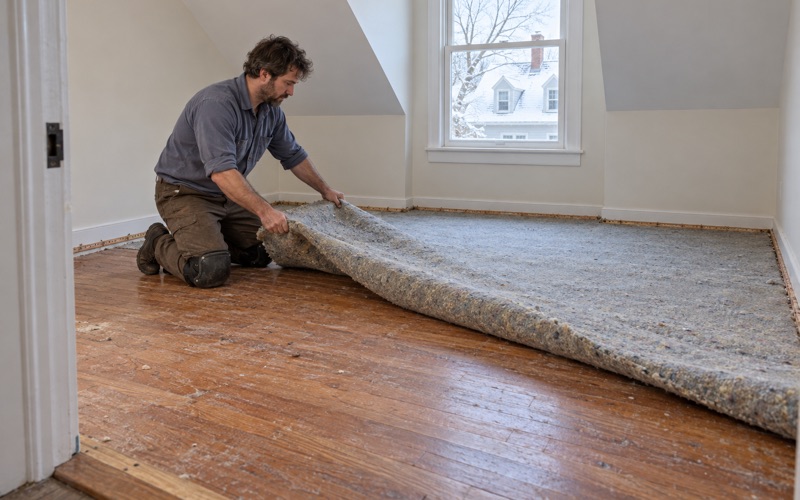
Drying comes next, with readings taken until the boards and subfloor settle back toward normal. No board gets replaced until those numbers say the floor is ready, because new wood laid over a wet subfloor will cup within weeks. Carpet pad, rosin paper and old linoleum trapped under the wood can hold water long after the surface looks dry, so we check what lies beneath before calling the job done.
Reading Cupping, Crowning and Buckling
Cupping, where board edges rise above the centers, usually means moisture is still coming from below. Crowning, where the centers sit high, often shows up when a cupped floor was sanded flat before it dried, and it is one of the most common mistakes we are called in to fix.
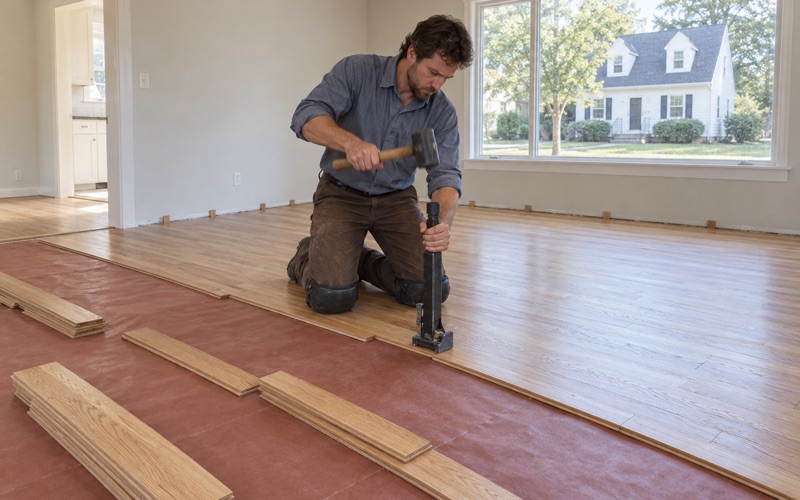
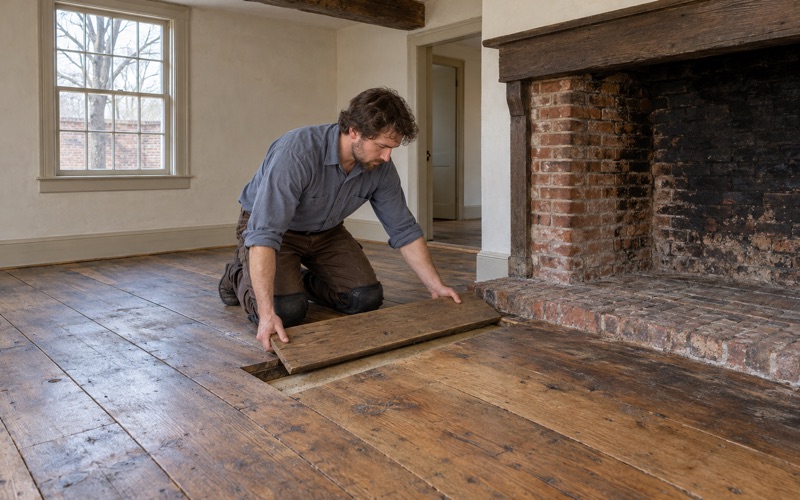
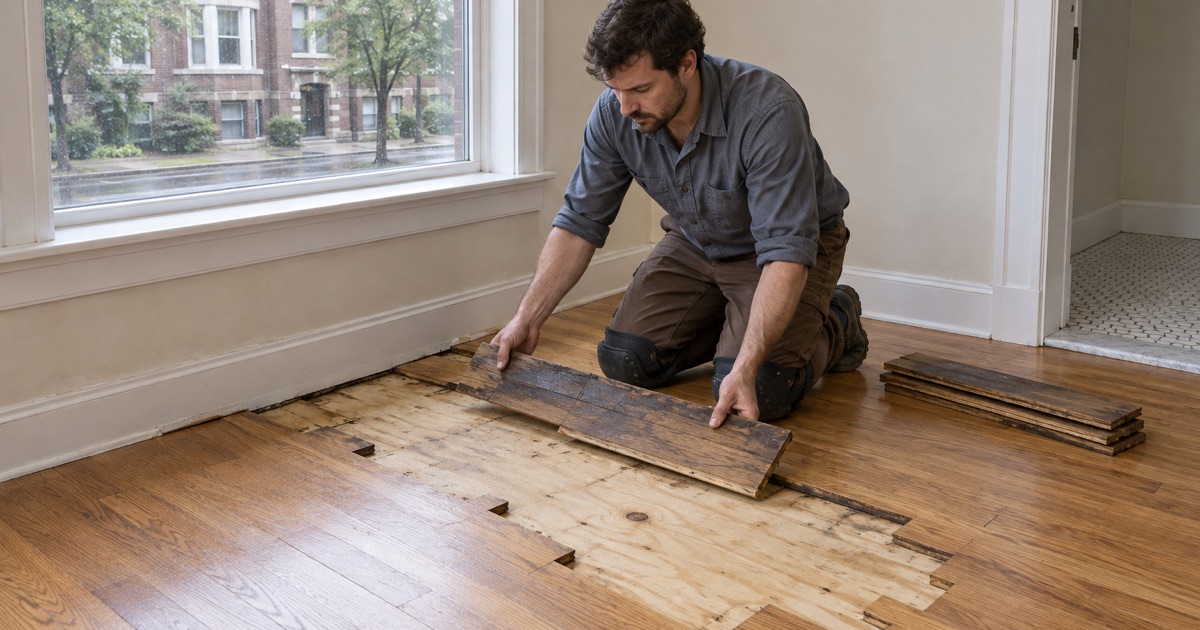
Buckling, where boards lift off the subfloor entirely, is more serious and usually means some board replacement. Even then, the undamaged part of the room can stay, with new boards woven in tongue and groove so the patch does not read as a patch. We source matching species and width, whether that is red oak strip, maple or wide plank eastern white pine, so the repair blends once the room is sanded.
Board Replacement, Refinishing and Documentation
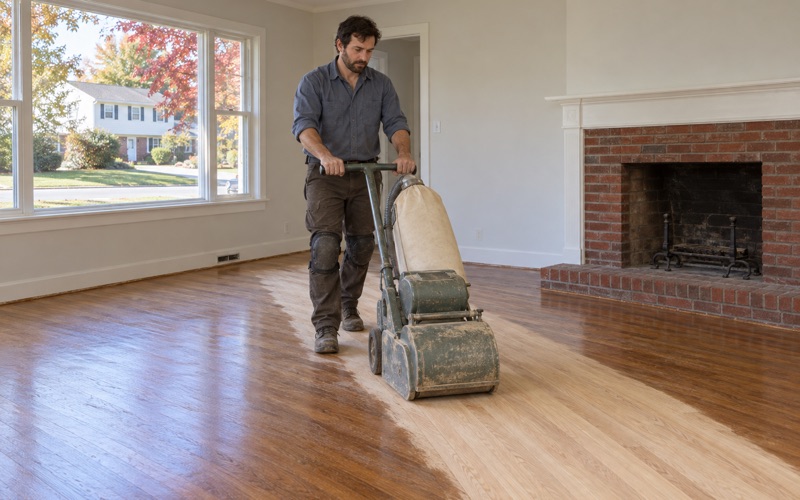
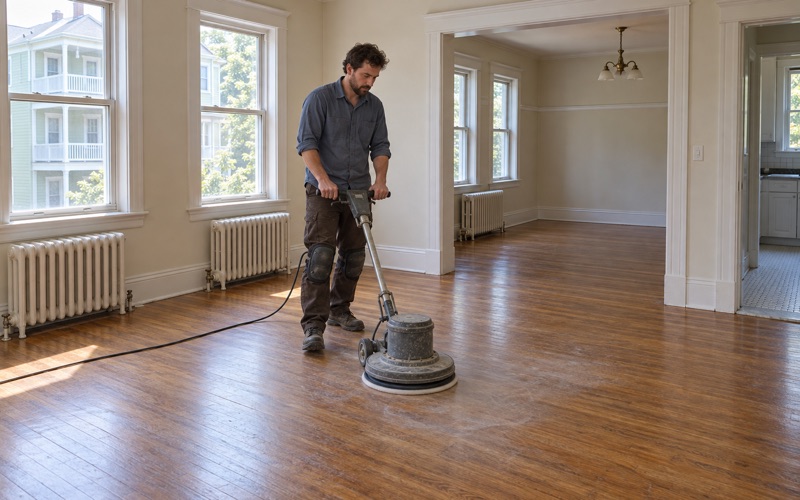
Once the floor is dry and flat, we replace what cannot be saved, then sand and refinish the room so old and new wood take the same color. We lay stain samples on the actual floor in your light before settling on a shade, and we test for wax residue so the new finish bonds instead of peeling.
We also document water-damaged floors room by room, with notes and photos an adjuster can follow. What any policy covers is between you and your insurer; our job is to record the condition of the floor clearly.
Planning Lower-Level Floors Near the River
A lower-level family room, office or guest space is where the flooring choice matters most. Solid hardwood is a beautiful material, but it is not always the right one for a room that sits below grade, and the cost of guessing wrong shows up the first humid summer.
Engineered Wood Over Solid Below Grade
For below-grade rooms, we usually recommend engineered wood over solid hardwood. Its layered construction moves less with changes in humidity, and a good engineered wear layer can still be sanded and refinished down the road. Solid white oak or red oak stays the better choice on the upper floors.
We match the product to the moisture that is actually there. A room that reads dry year-round gives more options than one next to a sump pump, and the meter readings, not a catalog, decide which products make the list.
Vapor Retarder, Acclimation and Expansion Gap
The installation details carry as much weight as the flooring itself. A vapor retarder under the floor, proper acclimation of the boards before they go down and a correct expansion gap at the walls all give wood room to move without cupping or buckling.
We follow the NWFA Installation Guidelines for below-grade work and finish the edges with quarter round and reducers that hide the gap. Where a wet event is a real possibility, we also talk through floating installation methods that make lifting and drying a section easier.
Older Homes, Lead and Finishes
Brookline’s housing is old, with 51.7 percent of homes built before 1940. Before we sand any floor in a house built before 1978, we check the build year and any painted surfaces, because Massachusetts runs its own lead-safe renovation rules under the Massachusetts Lead Law.
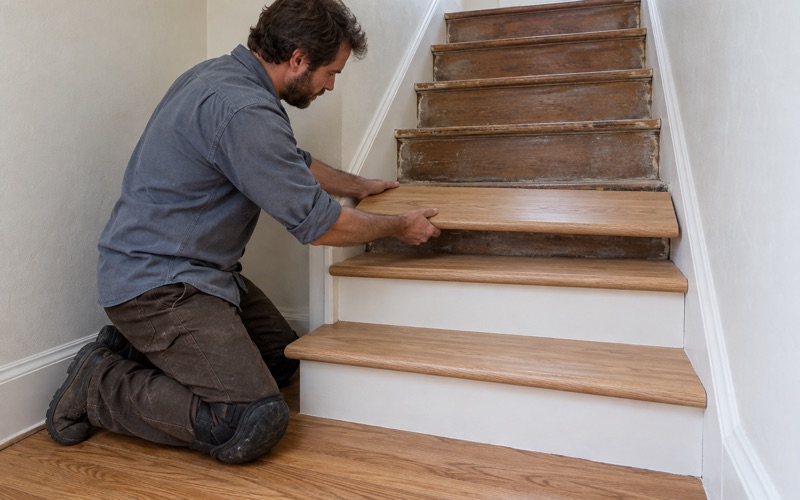
Finishes are chosen to meet the Massachusetts VOC limits for wood coatings, which are stricter than the federal ones. On a lower level with limited airflow, a low-odor waterborne polyurethane is often the practical choice, and we help you pick a sheen level that holds up to the traffic the room will see. If stairs lead down to the new space, we quote them by the tread and riser, since stair treads, risers and nosing take far more handwork than open floor.
In an owner-occupied two-family, we can work one floor at a time so the household on the other level keeps living in the house. That matters most when a water repair upstairs and a new lower-level floor are both on the list.
- 20+ Years in Wood Flooring
- Stairs Priced by the Tread
- Moisture Readings Before Repairs