Medford Wood Flooring has spent more than 20 years on wood-flooring in Belmont, and most of those jobs begin with the house rather than the floor. A strip floor laid in one decade and a plank floor laid in another want different sanding, different patching stock and different finishes, so we work out when and how a home was built before we price what its floors need.
That habit earns its keep here. More than half of the town’s housing went up before 1940, and roughly three quarters before 1960, which means we rarely walk onto a floor that has not already been sanded, patched, covered or painted around at least once. Part of every estimate is figuring out which of those happened, and in what order.
We sand and refinish, weave in replacement boards, rebuild stair treads, install new solid and engineered floors, and dry out and document water damage. The sections below are organized around Belmont’s own neighborhoods and the houses in them, because that is how the work actually divides.
Victorian-Era Floors in Payson Park and Belmont Park
The town’s 2016 Historic Resources Survey identified nine areas of Belmont with a distinctive shared historic association or character. Two of them are late-Victorian subdivisions: Payson Park, laid out and built between 1886 and 1920, and Belmont Park, built between 1894 and 1899. Queen Anne, Shingle and Colonial Revival houses dominate Belmont Park, while Payson Park’s longer run adds English Revival and Craftsman houses to the mix.
The survey describes what these streets look like from the sidewalk. It says nothing about what is under the carpet, and neither do we until we have looked.
Reading What Is Actually Down There
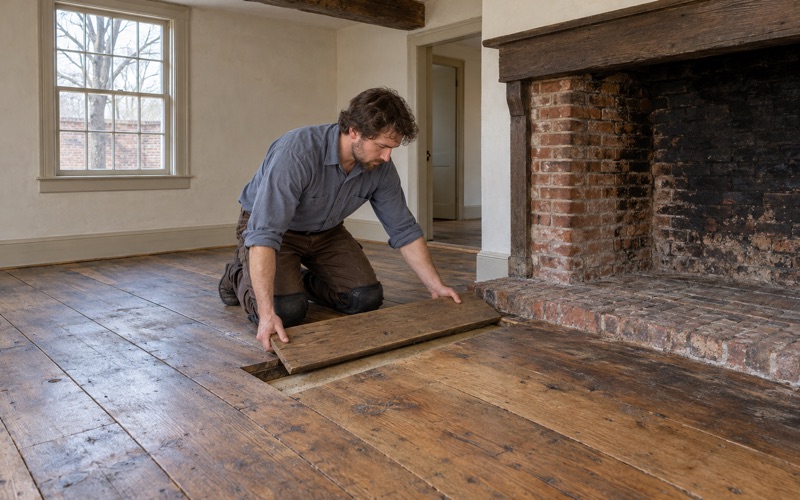
We start by lifting a heat register cover or checking a closet edge to read board width, species, direction and how much wood is left above the tongue. A floor in a house this old may have been sanded four or five times, and the remaining thickness decides whether it takes another full sanding, a lighter pass, or targeted board replacement.
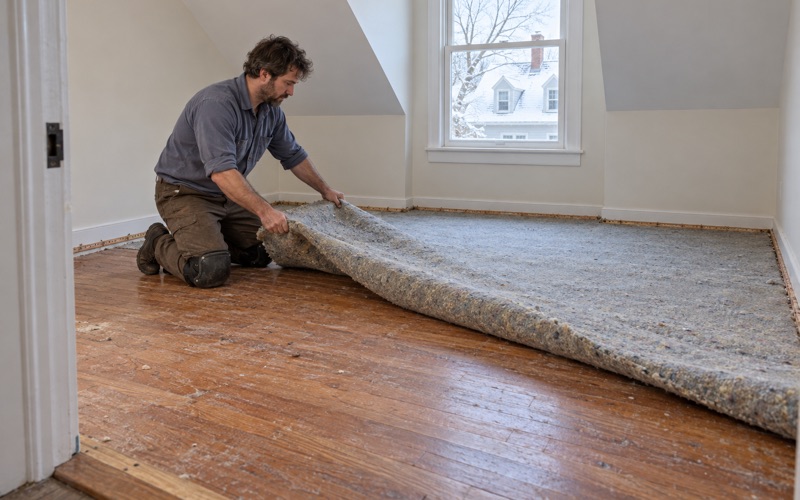
We also look for layers. Linoleum over rosin paper, carpet pad stapled every few inches and tack strip nailed along the walls are all common finds in older Belmont houses. Black mastic gets tested before anyone sands near it, because some older adhesives contain asbestos and a drum sander is the worst possible way to find out.
Wax, Shellac and a Century of Upkeep
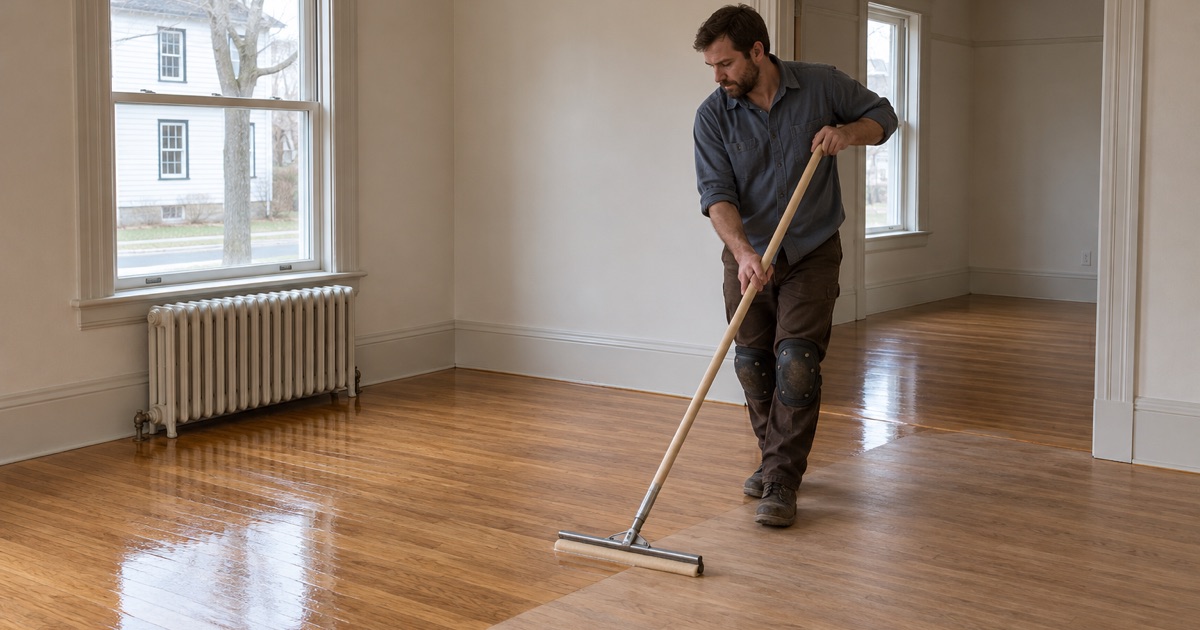
Many older floors were finished in shellac and kept up with paste wax for decades. Wax residue and modern cleaning products soak into the grain, and a new polyurethane laid over them will peel in sheets. We test for residue, strip it, and confirm the surface is clean before any coating goes down.
Where a floor still carries an intact shellac finish that the owner likes, we can talk through a gentler approach. More often the finish is worn through in the traffic lanes and gray at the doorways, and a full sanding is the honest answer.
Patching Where Radiators and Pipes Came Out
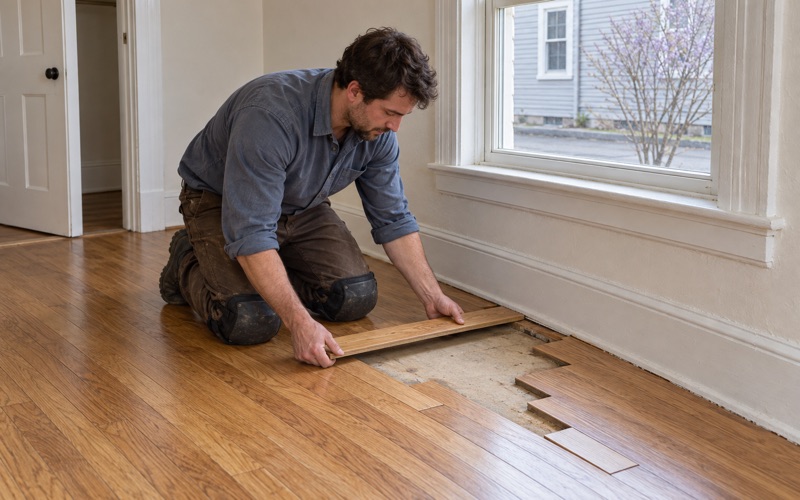
Decades of heating upgrades leave rectangles of raw subfloor where radiators, risers and pipes used to be. We close those gaps with a weave-in repair, toothing matching boards into the surrounding field so the patch runs with the floor instead of framing a visible square.
Because these houses predate 1978, we check the build year and any painted surfaces, such as baseboards and old thresholds, before sanding. Massachusetts has its own lead-safe renovation rules for pre-1978 homes, and we plan dust control around them rather than after the fact.
Looking for wood-flooring closer to Charlestown? See Wood-Flooring in Charlestown.
Craftsman and English Revival Homes on Clark Hill and Walnut Hill
Clark Hill was developed in 1909 by Belmont Associates, largely with English Revival and Craftsman houses. Walnut Hill was laid out a year later, in 1910, and filled in over the following twenty years. The town’s catalog of 17 architectural styles, running from Georgian to Tech/Pre-Fab, lists English Revival/Arts & Crafts and Craftsman/Bungalow among them.
These houses sit in the same early-20th-century stretch as Cushing Square’s commercial center, and their floors tend to show a hundred years of family life. Our job is to take out the damage without sanding away the character.
Sanding Without Losing the Character
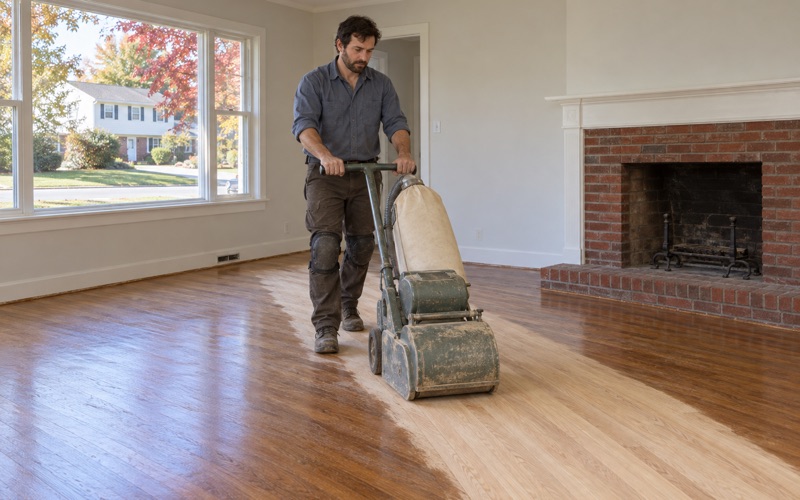
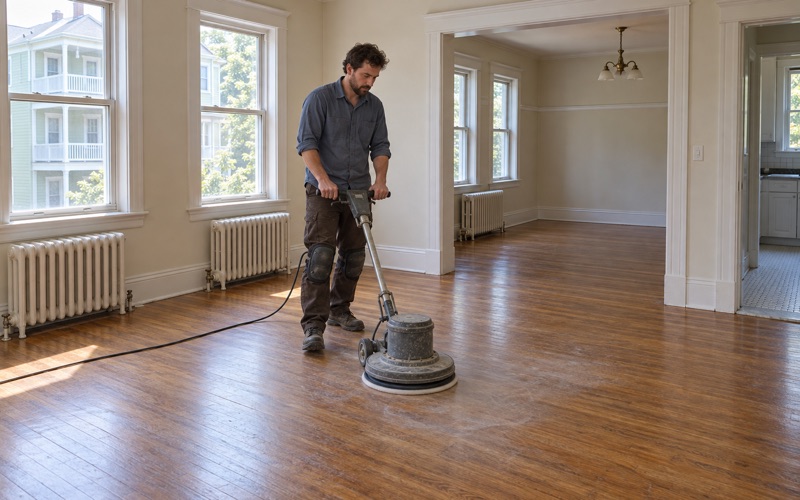
We run a drum sander through a measured grit sequence, then follow with an orbital sander to take out chatter and swirl marks. Skipping grits saves an hour and leaves scratches that every stain color will expose, so we do not skip them.
Many of these floors were refinished at some point with an oil-modified polyurethane that has since aged to a strong orange oak tone. Sanding takes that away completely, and dustless sanding with HEPA vacuum extraction keeps most of the fine dust out of the rest of the house.
Stain Samples in Your Own Light
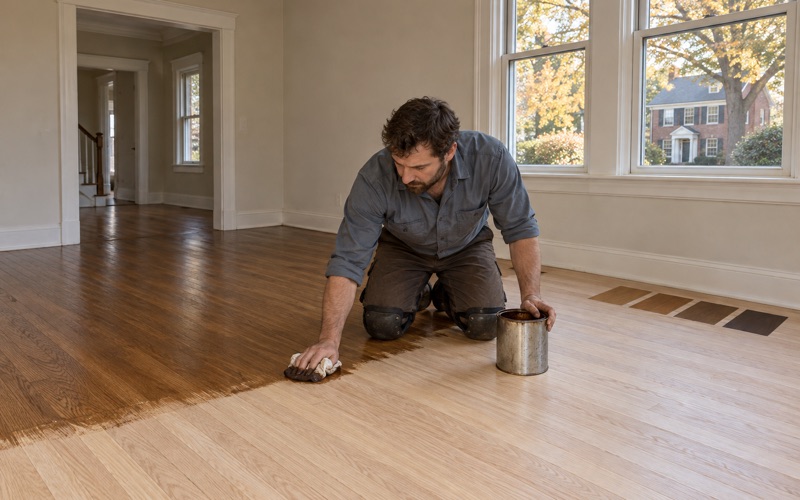
Deep eaves, porches and smaller windows make many Craftsman rooms darker than a showroom. We lay stain samples on the actual floor, in the actual light, and leave them for you to see morning and evening before a color is chosen.
On red oak we often water pop the surface first, which raises the grain so darker stains take evenly. For owners who want the wood’s natural color, we compare a clear waterborne polyurethane against a hardwax oil on the same boards, and settle the sheen level while the samples are still down.
Stairs, Landings and Transitions
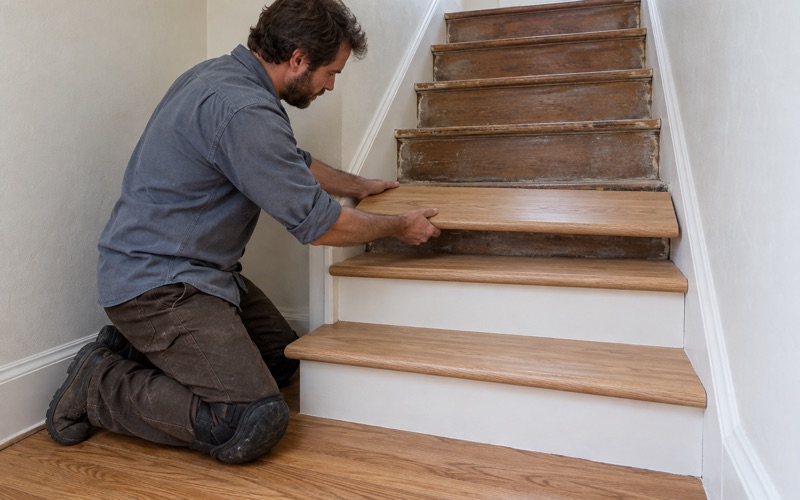
Craftsman and English Revival houses often have a main stair that takes as much wear as any room. We quote stairs by the tread and riser, not folded into a square-foot price, because each tread needs hand sanding and each stair nosing needs shaping.
Where a refinished floor meets tile, carpet or an older room, we set a reducer or threshold that matches the species and finish rather than leaving a raw edge. Quarter round goes back where it came from, or gets replaced if the old pieces split coming off.
Snake Hill’s 1940s Modern Houses
Snake Hill was developed by architect Carl Koch in the early 1940s, and the town describes it as one of the earliest and most significant Modern house neighborhoods in the country. It belongs to a building decade that shaped much of Belmont: Census estimates count 1,022 homes in town built between 1940 and 1949.
That puts floors of very different design intent into the same decade. A Koch house and a conventional house built a few blocks away in the same years were not planned the same way, and the floor work should not be either.
Treating a Modern Floor as Part of the Design
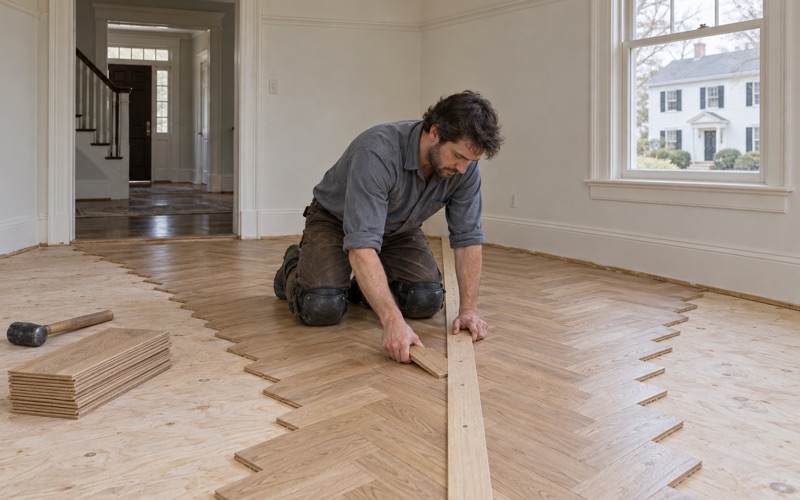
In a Modern house the floor is often part of an open, continuous plan, so patchwork and mismatched sheen show more than they would in a house of separate rooms. We do not assume what any one house was built with. We identify it, then match repairs to it, and keep new boards running the same direction and width as the field.
For finishes we lean toward low-sheen waterborne polyurethane or hardwax oil, which suit the restrained look these houses were designed around. Every finish we use fits the Massachusetts VOC limits for wood coatings, which are stricter than the federal limits.
Postwar Capes and Garrisons Across Town
Most of Belmont’s other 1940s houses are more traditional, and many of them carry red oak strip flooring worn through at the doorways and down the hall. We check the board thickness first, and where there is enough wood left, we sand and refinish instead of tearing out a floor that still has decades in it.
Those same houses tend to hide pet urine stains and water stains under area rugs. Light surface marks usually sand out; black stains that reach deep into the grain call for board replacement, woven in with matching red oak.
Planning a Floor Project in Belmont
Knowing the era tells us what to expect. The rest of the plan comes from how the house is lived in, the time of year, and whether water has ever gotten where it should not.
Two-Family Houses and Occupied Homes
Belmont has 3,228 housing units in two-unit buildings, and nearly 1,500 of its owner households live in one. When the owner lives on one floor and a tenant or relatives live on the other, we work one floor at a time so the household upstairs or downstairs keeps living in the house.
That means sealing off the work area, planning cure times around move-back dates, and keeping a clear path to shared stairs and entrances. We give each unit its own schedule rather than one date for the whole building.
Seasons, Humidity and Acclimation
Belmont sits in the National Weather Service’s Southeast Middlesex forecast zone, MAZ014, and like the rest of greater Boston it swings between dry, heated winters and humid summers. Winter gaps between boards that close up by July are normal movement, not failure; cupping or crowning that persists is a moisture problem worth tracing.
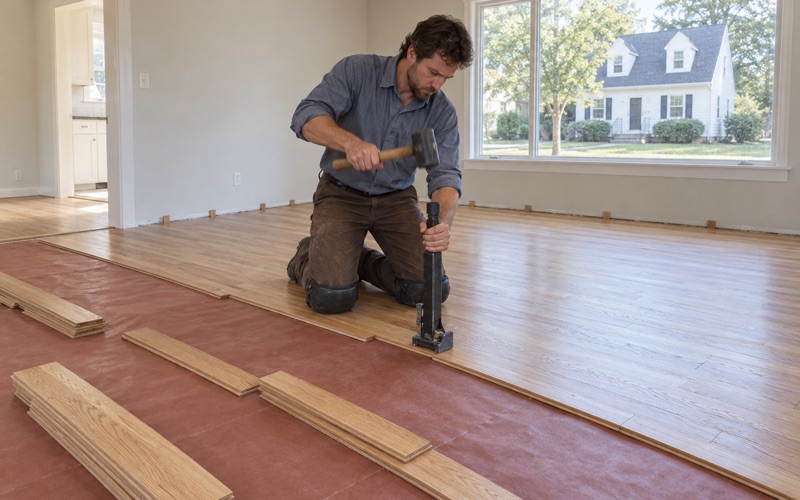
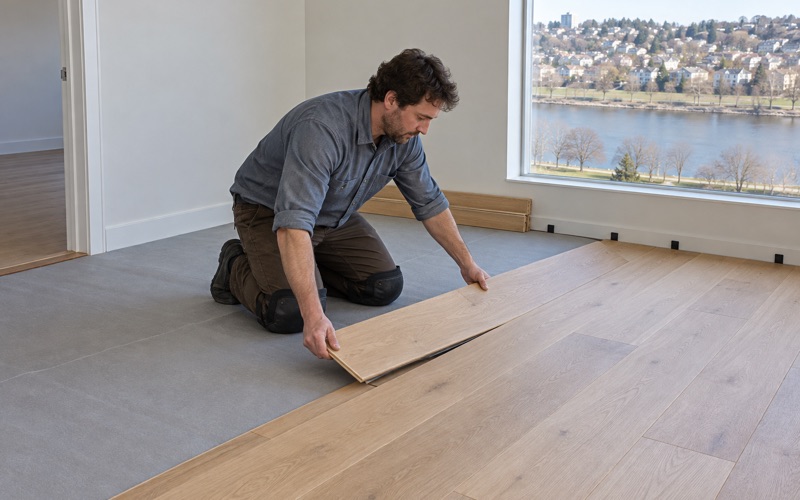
For new installs, we let solid hardwood acclimate in the house and check it with a moisture meter against the subfloor before a single board goes down. We leave a proper expansion gap at the walls, following NWFA Installation Guidelines, so the floor can move with the seasons without buckling.
Water Damage and Lower-Level Floors
When a pipe bursts, an appliance overflows or a lower level takes on water, we trace the source, dry the floor, and read it with a moisture meter before deciding which boards to replace. Floors that dry flat are often saved; boards that stay cupped or delaminated come out.
We document water-damaged floors room by room, with photos and readings, so you have what the adjuster needs. For below-grade rooms, we match the floor to the moisture actually measured there, which usually means engineered wood with a vapor retarder rather than solid hardwood.
- 20+ Years in Wood Flooring
- Stairs Priced by the Tread
- Moisture Readings Before Repairs